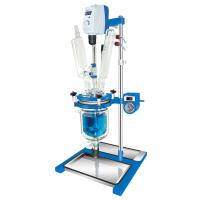
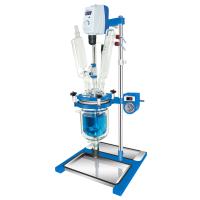
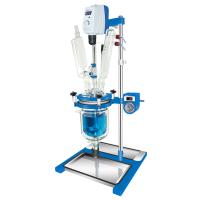
It is no exaggeration to say that jacketed reactors have effectively changed the way laboratories are run. The importance of the ability to accurately heat and cool a reaction for safety and quality of the final product cannot be overemphasized. Jacketed laboratory reactors are now common, and they have evolved from their original basic design, from being able to run reactions in parallel to quickly changing vessels.

When you need to buy glass reactors for your chemistry lab, you need to figure out several important specifications of glass lab reactors. For example: volume, pressure requirements, temperature requirements, reaction medium, etc. Specifically, the basic issues of purchasing glass laboratory reactors include the following aspects:
What volume is needed for a glass reactor in a chemistry lab?
The bigger the quantity, the higher the price. The choice of amount depends on the specific experimental requirements. Generally, the capacity is below 5 liters, and the ultra-large capacity glass laboratory reactor is not suitable for a narrow experimental environment, and it is easy to waste solvent.
Does my experimental glass reactor need stirring capability?
Our glass laboratory reactors all have stirring function, if not needed, you can choose hydrothermal synthesis, if you need high pressure reaction, please choose stainless steel or previous metal reactor.
What temperature is required for the experiment?
Our chemical laboratory glass reactors can react in the range of -80℃ to 250℃, if it does not meet your requirements, please consider using other types of reactors.
What is the reaction medium?
Common media include acids, bases, salts and hydrogen. Additionally, viscosity and pH valves should be considered. If the reaction material has a high viscosity, a large stirring torque is required. The pH valve is related to glass laboratory reactor material, we use high borosilicate glass to make glass reactor for chemical laboratory, this material is resistant to most chemicals.
What is the speed?
The general rotation speed reaches 280rpm/min, please consult a technician to suggest a suitable model for you.