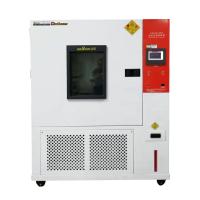
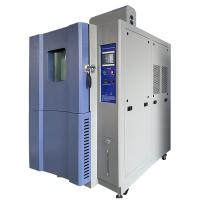
At present, the heating and cooling of high-temperature and low-Temperature Test Chambers and other equipment commonly used in my country are mainly completed by equipment such as circulation and condenser fans. The temperature environment in which the temperature occurs includes a large amount of water vapor. The appearance of lower temperature products is compatible with higher temperature and warmer air. If the exterior temperature is lower than the dew point temperature of the air, condensation will occur and liquid water will appear on the cooler exterior. The specific reasons for frosting in the high-low Temperature Test Chamber are as follows:
Generally speaking, the composition of air can be considered to be composed of absolutely dry air, water vapor and dust, and the temperature is the mass of water vapor contained in quasi-sonic air at a certain pressure and temperature. Saturation humidity is the maximum mass of water vapor that the air can contain under these conditions. The more water vapor contained in the air, the greater the saturation humidity. If the humidity of the air is maintained and the temperature of the air is lowered, when the temperature is low to a certain extent, the partial pressure of water vapor reaches the saturation pressure corresponding to the air temperature at that time, and in this case the water vapor in the air is saturated. If the temperature drops further, water vapor will condense out of the air and form "dew". This phenomenon is called "condensation".
In the temperature test of the high-low Temperature Test Chamber, the reason for the condensation phenomenon of the product is that when the ambient temperature in the Test Chamber rises, the temperature outside the product is lower than the ambient temperature due to thermal inertia. When the hot and humid ambient air meets the outside of the commodity below the dew point, water vapor condenses on the outside to form dewdrops. In addition, if the commodity is sealed, when the ambient temperature in the Test Chamber drops, the temperature of the inner wall of the commodity shell drops more than that inside the chamber. The temperature of the air is fast, and the humid air in the chamber will condense into dewdrops on the inner wall of the product casing. Because most commodities are not hermetically sealed, condensation usually occurs during heating.
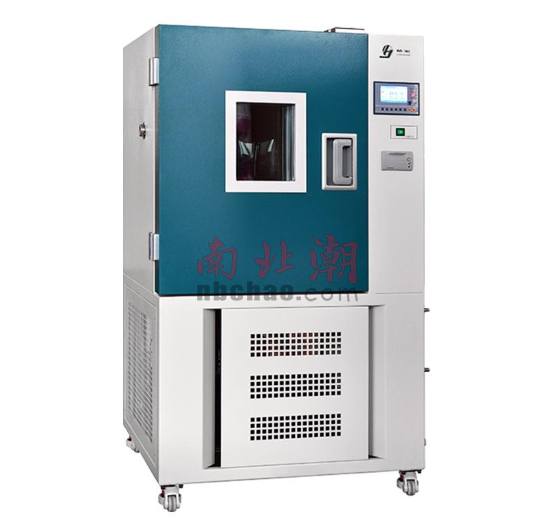
The condensation effect is related to the data used in the commodity, the size of the chamber, the rate at which the temperature rises and falls, and the relative humidity. The worse the heat absorption performance of the data, the larger the cavity, the faster the heating and cooling speed, and the higher the relative humidity, the more serious the condensation effect. Only by destroying any one of the conditions for the initiation of condensation can the initiation of condensation be avoided.
Under normal circumstances, the inherent characteristics of the commodity such as the size chamber selected in the experiment, the upper and lower limits of temperature stability, and the rate of temperature rise and fall are all predetermined.