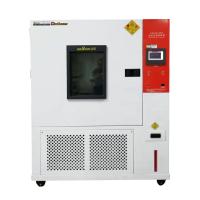
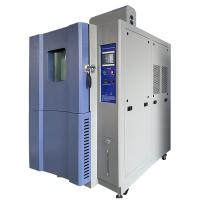
Refrigerants in high-low Temperature Test Chambers have many properties. When choosing a refrigerant, you also need to consider the price, reachable temperature, whether it is harmful, etc. The following is a detailed introduction to the refrigeration performance of 12 high-low Temperature Test Chambers.
1. Higher evaporation pressure
If the evaporation pressure of the refrigerant is lower than the atmospheric pressure, air will easily invade the system and the system will be difficult to operate. Therefore, it is desirable that the evaporation pressure of the refrigerant during low-temperature evaporation can be higher than atmospheric pressure.
2. Large latent heat of evaporation
The latent heat of vaporization of the refrigerant is large, indicating that a small amount of refrigerant can absorb a large amount of heat.
3. Higher critical temperature
A high critical temperature means that the refrigerant has a high condensation temperature, and normal temperature air or water can be used to cool the refrigerant to achieve condensation and liquefaction.
4. Condensing pressure should be low
Low condensing pressure means that the refrigerant can be liquefied at a lower pressure, and the compression ratio of the compressor is small, which can save the horsepower of the compressor.

5. The solidification temperature should be lower
The freezing point of the refrigerant in the high-low Temperature Test Chamber should be low, otherwise the refrigerant will freeze in the evaporator and cannot be circulated.
6. The specific volume of gaseous refrigerant is small
The smaller the specific volume of the gaseous refrigerant, the better. The volume of the compressor can be reduced to reduce the cost, and the suction pipe and the discharge pipe can use smaller refrigerant pipes.
7. The density of the liquid refrigerant should be high
The denser the liquid refrigerant, the smaller the tubes.
8. Soluble in freezing oil
Soluble in refrigeration oil, the system does not need to be equipped with an oil separator.
9. Stable chemical properties
Evaporation temperature varies with application temperature. For example, the evaporation temperature of the ice water machine is about 0~5℃. When the refrigerant in the high-low Temperature Test Chamber is cooled in the refrigeration cycle system, the refrigerant only undergoes physical changes, but no chemical changes and no decomposition.
10. Non-corrosive
It is non-corrosive to steel and metal, and ammonia is corrosive to copper, so copper tubes are not allowed in ammonia refrigeration systems; the insulation is better, otherwise it will damage the insulation of the compressor motor, so ammonia is not allowed to be used in hermetic compressors to avoid contact with copper The coils are in direct contact.
11. Non-toxic, non-flammable, non-explosive
12. Do not damage the environment