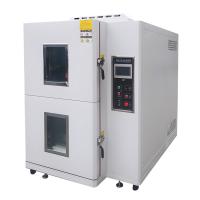
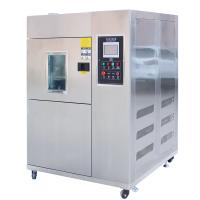
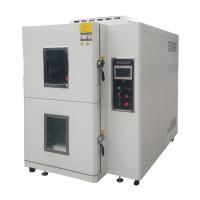
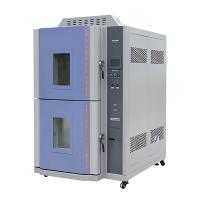
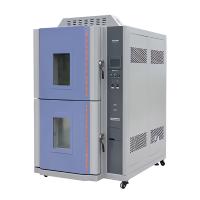
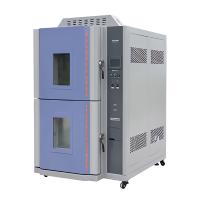
The thermal shock Test Chamber is a common environmental Test Chamber. There are many domestic and foreign brands and models. Users are often at a loss when purchasing and selecting models. They don’t know how to choose a suitable impact Test Chamber? Moreover, the market prices are intricate, ranging from hundreds of thousands to tens of thousands. Customers are more confused when choosing models.
Sometimes customers simply require that the equipment can move freely, have an observation window to monitor the actual status of the product in the box, set up a built-in glass door, and remote control. But these are just the most basic hard requirements. In addition, what are the hard indicators of equipment?
It is necessary to further select the model from several dimensions, whether the impact temperature, test load, reset time, defrosting time, and placement position meet the product test standards.
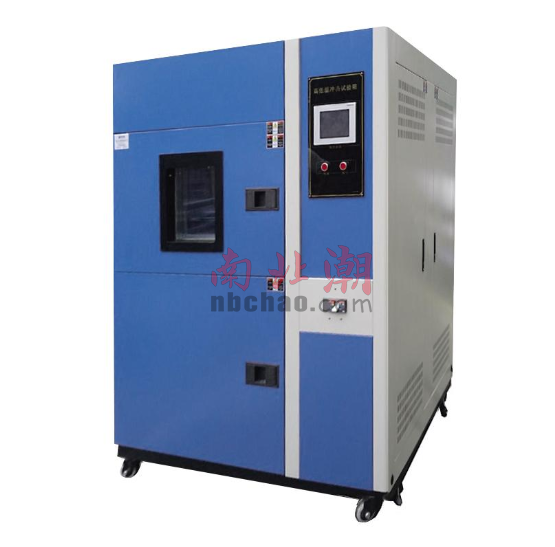
1. Shock temperature: Shock temperature refers to the maximum temperature range that can be reached in the test area. Note that this is not the limit temperature for preheating and precooling chambers.
2. Test load: This parameter directly affects how many test items can be placed. Generally speaking, the heavier the weight, the better.
3. Reset time: refers to the time it takes for the test product to switch from one temperature point to another. Our common standard agreement is ≤5min. The shorter the time, the better.
4. Sensor placement: According to the specification, the sensor needs to be placed in the test area. Some manufacturers place the sensor in the air duct, and even though it is only 10cm away from the test area, this energy difference can be significant. And it cannot really reflect the temperature change on the surface of the measured object.
5. Defrost time: The longer the defrost interval, the better. COSIDE brand thermal shock Test Chamber can achieve 1000 times of defrosting at one time, which is very satisfactory. The shorter the defrost interval, the less airtight the unit will be.