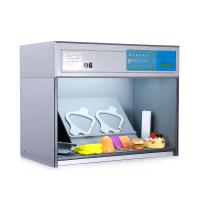
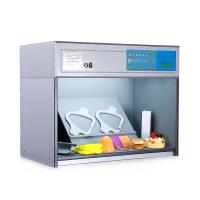
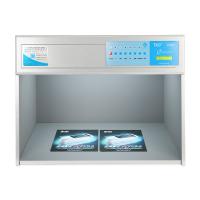
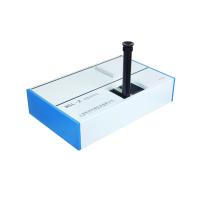
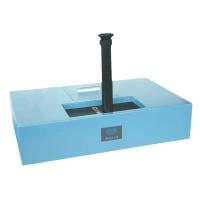
What is a Colorimeter?
A Colorimeter is a device used for colorimetry. It refers to a device that helps a specific solution absorb a specific wavelength of light. Colorimeters are generally used to measure the concentration of a known solute in a given solution with the help of the Beer-Lambert law. The Colorimeter was invented in 1870 by Louis J Duboscq.
Check out the derivation of the Beer-Lambert law here.
Colorimeter principle
This is a photometric technique which states that when an incident beam of intensity Io passes through a solution, the following happens:
A portion of it is reflected, denoted as I r
A portion of it is absorbed, denoted as I a
The rest of the light is transmitted and denoted as I t
Therefore, I o = I r + I a + I t
In order to determine I a of i measuring Ò and i t is sufficient so that i r is eliminated. The amount of reflected light is kept constant to measure Io and It.
Colorimeters are based on two fundamental laws of photometry. We discuss them below:
Beer Law:
According to this law, the amount of light absorbed is directly proportional to the concentration of solute present in the solution.
Log10 I o / I t = asc
where,
A trumpet is the absorption index
c is the concentration of the solution
Lambert's law:
According to this law, the amount of light absorbed is proportional to the length and thickness of the solution used for analysis.
A = log10 I o / I t = asb
where,
A is the absorbance of the test
as is the standard absorbance
b is the length/thickness of the solution

Colorimeter work
Step 1: Before starting an experiment, it is important to calibrate the Colorimeter. This is done by using standard solutions of known solute concentrations that need to be determined. Fill the standard solution into the cuvette and place it in the cuvette holder of the Colorimeter.
Step 2: Light of a specific wavelength specific to the assay is directed in the direction of the solution. The light passes through a series of different lenses and filters. The colored light is navigated with the aid of lenses, and filters help to split the beam into different wavelengths, allowing only the desired wavelengths to pass through and reach the cuvette of the standard test solution.
Step 3: When the light beam reaches the cuvette, the solution will transmit, reflect and absorb the solution. The transmitted light falls on a photoDetector system where it measures the intensity of the transmitted light. It converts it into an electrical signal and sends it to the galvanometer.
Step 4: The electrical signal measured by the galvanometer is displayed in digital form.
Step 5: Determine the formula for the concentration of the substance in the test solution.
A = ∈ cl
For standards and test solutions
∈ and l are constants
AT=CT…..(i)
AS = CS…..(ii)
According to the above two equations,
AT x CS = AS x CT
CT = (AT/AS) x CS
where,
CT is the concentration of the test solution
A T is the absorbance/optical density of the test solution
CS is the standard concentration
AS is the absorbance/optical density of the standard solution
Uses of Colorimeters
It is used in laboratories and hospitals to evaluate biochemical samples such as urine, cerebrospinal fluid, plasma, serum, etc.
It is used to make paints.
It is used in the textile and food industries.
It is used for quantitative analysis of proteins, glucose and other biochemical compounds.
Used to test water quality.
It is used to determine the concentration of hemoglobin in the blood.
Pros and Cons of Colorimeters
Some benefits are as follows:
It is an inexpensive method, widely used in the quantitative analysis of colored samples, and is easy to carry and transport.
Some disadvantages are as follows:
Colorless compound analysis is not possible, not suitable for IR and UV regions.