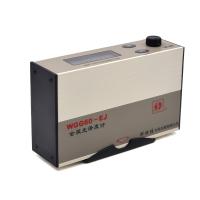
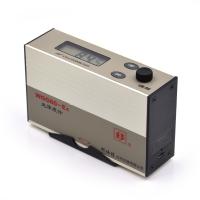
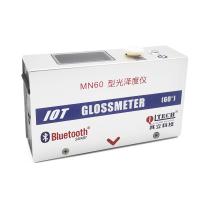
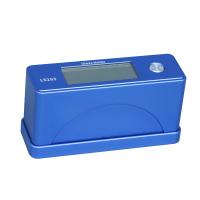
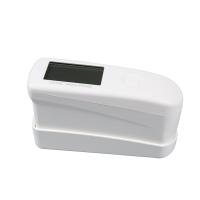
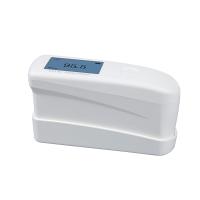
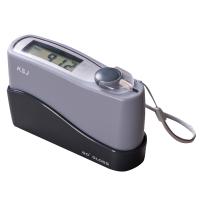
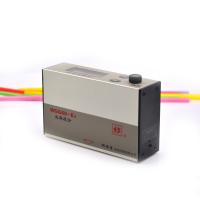
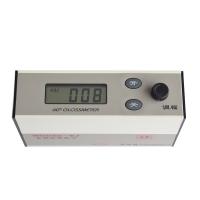
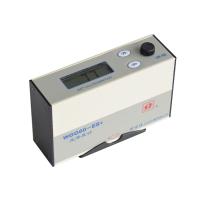
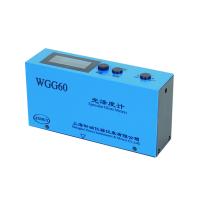
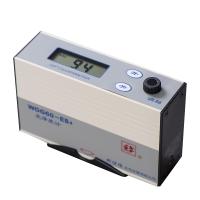
In CHINA, we usually say how much gloss, for example, if the gloss is 60°, it can be understood as 60GS or 60% gloss. What does Gs/GU mean? The unit of the gloss meter is called the gloss unit. According to the JIs standard, the gloss unit can be represented by a percentage sign or a number.
Gloss symbol gs and gu relationship:
Gloss English gloss, referred to as Gs. Gloss unit in English, glossunit, abbreviated as GU. So we say that the gloss is GS, and the gloss unit is GU.
For example, the measuring range of gloss meter DR61 is 0-199.9GS, and the range of measuring gloss is 0 to 199.9.
There are many names for gloss meters, and different industries have different names. There are gloss meter, gloss meter, light meter, portable gloss meter, portable gloss meter, gloss meter, gloss meter, gloss Detector, etc. They are all instruments specially used to measure the glossiness of the surface of objects.
Gloss calculation method:
Surface gloss Gs (θ) should be calculated according to the following formula:
Gs(θ)=φs/φos*Gos(θ)
Where φs is the reflected luminous flux on the surface of the specimen relative to the set incident angle θ
φos: is the standard surface reflected luminous flux relative to the set incident angle θ
Gos (θ): the standard surface gloss used (%)
Gloss is the property of directional selective reflection on the surface of an object. Different bright spots appear on the surface or images of objects superimposed on the surface are formed. Gloss is the reflection ability of the surface of an object when it is irradiated by light. It is usually expressed by multiplying the reflectance of the sample in the mirror (regular reflection) direction relative to the standard surface by 100, that is, G=100R/R.
R in the formula—reflectivity of the sample surface, /R. - the reflectivity of the standard plate. Taking the polished black glass as a reference standard plate, the refractive index of sodium D rays is 1.568, and the specular gloss for each geometrical optical condition is calibrated to 105 gloss units.
specular gloss symbol value
Specular gloss meter, under the specified light source and receiver aperture conditions, the ratio of the reflected light flux of the sample in the specular reflection direction to the reflected light flux of the glass standard sample in the specular reflection direction. For polished black glass with a refractive index of 1.567, set its specular gloss value to 100 (gloss units) at a geometric angle of 60 degrees.
Therefore, the measurement of gloss is a comparative measurement method, that is, under the same conditions, the sample is tested against the mirror gloss standard plate. The same condition means that the incident angle is constant, the default light source is stable, and the sample (or standard plate) is irradiated with the beam under the specified conditions to receive the reflected beam under the specified conditions in the specular reflection direction.
National standard for gloss:
1. Reference standards for gloss meter 20°: DIN-67530, ISO-2813, ASTM-D2457 GB 9754, GB 8807, ISO-8254, ASTM-D523, which are mainly used for high-gloss ink, paint, paper, plastic , stone, light casting coated paper and so on.
2. Reference standards for gloss meter 45°: ISO-2767, GB 8941.2, ASTM-D2457, ASTM-C346, GB 8807, which are mainly used for the measurement of marble, ceramics, plastics, aluminum alloys and aluminum oxide surfaces, etc.
3. Reference standards for gloss meter 60° ISO-2813, DIN-6750, ASTM-D2457, ASTM-C584, ASTM-D523, GB 9754, GB 8807, GB 9966, which are mainly used for medium glossy coated paper, marble, Ceramics, paints, inks, plastics and more.
4. The 85° gloss meter is ISO-2813, DIN-67530, ASTM-D523 GB9754, which is mainly used for camouflage coating, low gloss paint and so on.