Everyone's perception of color and deduction methods are very subjective. The reasons for each person's differences include personal preference, age, eye fatigue and other physiological factors. The perception of color such as myopia and hyperopia is also different.
Then, the testing instruments required for the measurement of various colors in various industries are also various. First of all, let's talk about the Colorimeter.

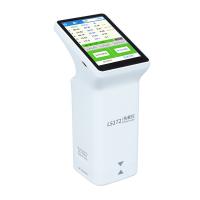
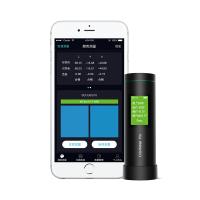
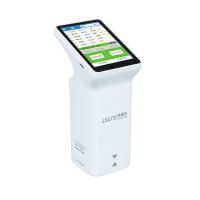
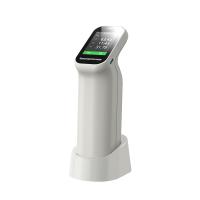
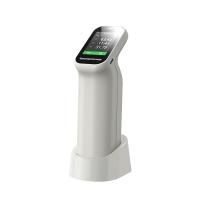
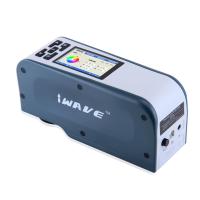
Common colors can be "spelled" out in different proportions with red, green, and blue primary colors. In order to facilitate the measurement of colors, physicists have introduced tri-stimulus values. According to the theory of chromaticity, any color of light can be expressed as tristimulus values. Therefore, the working principle of the general color difference meter is to measure the tristimulus value of the reflected light of the target sample and the sample to be tested based on the reflected light of the collected sample, and determine the color difference between the target sample and the sample to be tested. There is also a Spectrophotometer , that is, a Spectrophotometer . The Spectrophotometer is designed according to the principle of spectroscopic type. It can measure the reflectance curve at each wavelength, and can also accurately measure L, a, b. Value, more accurate and more stable than ordinary Colorimeters. Domestically produced Colorimeters, such as CS-220, CS-580, and CS-800 of Color Spectrum, are suitable for color difference control in various industries such as coatings, plastics, inks, textiles, and printing.
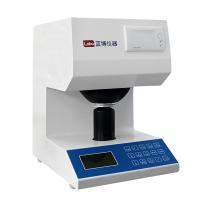
Followed by Whiteness Meter. In GB/T 17749 "Expression Method of Whiteness", whiteness is defined as the degree of whiteness of an object. The larger the whiteness value, the greater the measured whiteness. The Whiteness Meter uses an integrating sphere to measure the absolute spectral diffuse reflectance, thereby realizing the measurement of whiteness. The Whiteness Meter is used to measure the blue light whiteness of the surface of the object, suitable for textiles, printing and dyeing, chemical fiber, plastics, porcelain clay, talcum powder, white cement, paint, paint, ceramics, enamel, paper, pulp, etc. need to measure the whiteness of products department.

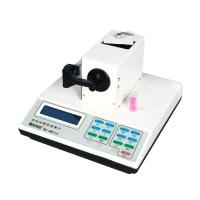
The third is the density meter. The density meter uses the built-in red, green, and blue optical filters to measure the light reflection or transmittance of yellow, magenta, and cyan colors, and calculate the density value. Densitometers are currently mainly used in the board industry and various types of printing, helping to implement comprehensive color control from prepress to workshop.
To sum up, although the three color measuring instruments can be used for color quality control, there are also great differences. The measured value is different depending on the industry used. The color difference meter is used for color difference measurement in almost all fields, mainly measuring the color difference between samples. For example, CS-820 can be used for the color difference measurement of milk, and CS-220 can be used for the measurement of colloidal powder and so on. It is also possible to measure the whiteness value, such as Ganci whiteness and Hunter whiteness. The Whiteness Meter is mainly used to measure the whiteness of the surface of the object, and the scope of application is narrowed compared with the color difference meter. The densitometer can only measure the density value of printed matter, but does not include the expression of hue, which cannot truly reflect the actual visual effect of the color, and the application field is also limited.
Therefore, the application of the Colorimeter is relatively comprehensive.