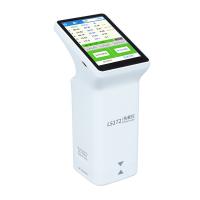
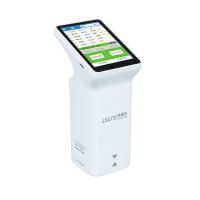
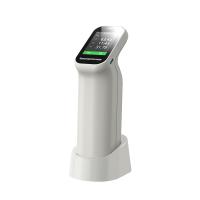
When choosing to use a Colorimeter, you often encounter the parameters of lighting conditions and observation geometric conditions. So what are lighting conditions and geometric conditions? Today I will share a wave of dry goods here. The human eye cannot accurately express the color with the quantity, but we can use the Colorimeter and Spectrophotometer to measure the color, which is very simple. The positional relationship between the lighting source, the sample to be tested and the sensor is the geometric condition of lighting observation in color measurement, referred to as the geometric condition. CIE15:2004 suggests that there are ten kinds of geometric conditions for reflective sample measurement:

1.di:8
Diffuse illumination, received in 8° direction, including specular component. The sample is illuminated uniformly and diffusely in all directions by the integrating sphere, and the illuminated area should be larger than the measured area. The angle between the axis of the receiving beam and the normal of the sample center is 8°, the angle between the axis of the receiving beam and any light should not exceed 5°, the response of the Detector surface is required to be uniform, and the absorbed beam Evenly illuminated.
2.de:8
Diffuse lighting, receiving in 8° direction, excluding specular reflection components. The geometric conditions are the same as di:8, except that the received beam does not include specular reflection components, nor does it include other rays within the range of specular reflection.

3. 8: di
8° directional illumination, diffuse reflection reception, including specular reflection components. The geometric conditions are the same as di:8, but the reverse light path of di:8°.
4. 8:de
8° directional lighting, diffuse reflection reception, excluding specular reflection components. The geometric conditions are the same as de:8, which is the reverse light path of de:8.

5. d:d
Diffuse lighting, diffuse reception. The geometric conditions are the same as di:8, except that diffuse light is received from all directions by an integrating sphere. Tested under this geometric condition, the illuminated area and the receiving area are consistent.
6. d:0
Diffuse lighting, receiving in 0° direction, excluding specular reflection components. d:0 is another form of diffuse lighting. The sample is diffusely illuminated by an integrating sphere, receiving in the direction normal to the sample. This geometric condition can well exclude the specular reflection component.

7.45ɑ:0
45° ring lighting, 0° direction reception. The sample is uniformly illuminated by the circular cone beam, the axis of the circular cone is on the normal line of the sample, the apex is at the center of the sample, the half angle of the inner cone is 40°, the half angle of the outer cone is 50°, and the beam between the two cones is used to illuminate the sample. Receiving in the normal direction, the half angle of the receiving light cone is 5°, and the receiving beam should evenly illuminate the Detector.
8.0:45ɑ
0° directional lighting, 45° ring receiving. The geometric conditions are the same as 45ɑ:0, but the reverse light path of 45ɑ:0. The sample is illuminated in the normal direction and received in a ring at 45° from the normal.

9.45x:0
45° directional lighting, 0° direction receiving. The geometric conditions are the same as 45ɑ:0, but the lighting direction is only one, instead of circular. "x" indicates the orientation of the lighting. Received in the normal direction.
10.0:45x
0° directional lighting, 45° directional reception. The geometric conditions are the same as 45x:0, but it is the reverse light path of 45x:0. The sample is illuminated in the normal direction and received at an angle of 45° to the normal in a certain azimuth.
After reading the above ten kinds of reflection sample measurement geometric conditions, are you a little confused?
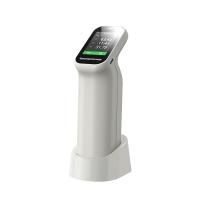
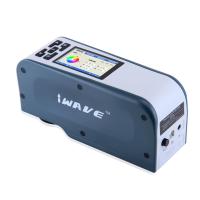
For the Colorimeters of CS-200, CS-210 and CS-220 models, the 8: di and 8: de geometric conditions recommended by CIE are used for measurement. When measuring the color of rough objects, the 8:di geometry is used to allow more light to enter the Detector. When measuring the color of high-gloss objects, 8:de geometric conditions are used to remove the influence of reflected light on color measurement.
CS-580, CS-600, CS-610, and CS-660 Spectrophotometer s adopt di:8 and de:8 geometric measurement conditions recommended by CIE. Through the design of the baffle and the light trap, the two geometric conditions are creatively combined into one instrument to achieve SCI/SCE compatible lighting observation conditions.
When using the integrating sphere, the light source should be prevented from directly irradiating the surface of the sample under test, which will destroy the diffuse lighting effect. A baffle should be added between the sample under test and the lighting source to block the direct transmission of light. In order to ensure the diffuse lighting effect, the opening area of the integrating sphere should not exceed 10% of the total area of the inner wall of the integrating sphere.