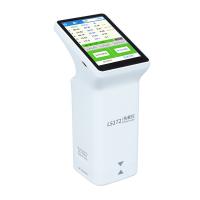
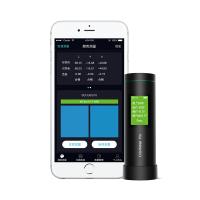
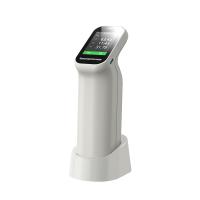
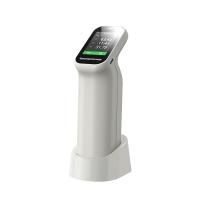
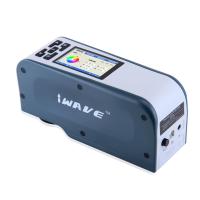
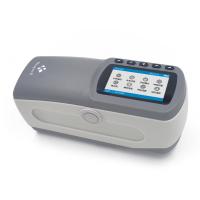
With the widespread application of Colorimeters, the principle of Colorimeters involves comprehensive knowledge of colorimetry, optics, mathematics, materials science, biology, psychology, etc., which is not covered in many of our existing studies and education. There are many questions and controversies about how people use Colorimeters. Here, in response to the situation reported by most users, we make a simple and practical solution to some basic conceptual issues.
Color is a subjective feeling produced by the human brain on the appearance and color characteristics of objects, which is difficult to describe mathematically. The measurement and data management of color is a measurement and management of visual perception (including physiological and psychological effects such as mood and age). Since the digital information provided by the modern Colorimeter has been connected with people's visual perception as far as possible, it has been widely used in scientific research and production activities.
The color difference meter is divided into a color filter color difference meter and a Spectrophotometer color difference meter. The three color filter color difference meter imitates the perception of the human eye, and converts the reflected light signal of the sample received through the three color filters of red, green and blue into XYZ or Lab tristimulus values.

The spectroscopic Colorimeter is calculated by the microcomputer in the instrument according to the mathematical model of colorimetry and converted into the colorimetric tristimulus value corresponding to the visual perception of the standard observation human eye. The Spectrophotometer is suitable for any kind of application, it can simulate all the standard light sources stipulated by CIE, it can give spectroscopic data and metamerism index, it has very good repeatability and reproducibility, it complies with the international common technical standard, and it is the most commonly used instrument today Technology.
The following are two basic problems that we often encounter in the use of Colorimeters.
Question 1: Why not use the color difference data △E instead of the Lab value of the color standard plate as the standard for controlling the color quality?
The quality management that people are usually used to will use some data indicators plus allowable upper and lower limit deviations, but the color is not good, and the real color palette must be used to determine the standard. This is because:
1. The existing deficiencies of color theory, coupled with the complexity of spectral measurement and mathematical processing, the Colorimeters developed by companies in various countries in accordance with international standards measure the results of the same color plate of the same color from red to blue There is always a certain difference.
2. The same type of Colorimeter from the same company will have a difference between the two instruments. If the same standard color plate is measured, the readings of the two instruments will be different. As the instrument is used for a long time, especially the storage and use of the calibration whiteboard brought by each instrument user is different, this difference will also expand.
3. Although the color tristimulus values measured by different instruments have deviations, when used to compare the color difference between the same reference standard and another sample, the color difference values measured by different instruments: △E, △a, △b are very close to. This also happens to be the basic requirement of people for color management. Therefore, with the reference standard, the color difference values measured by different instruments have practical application value. This is why Colorimeters are widely used. The parties will define the allowable color difference through agreement, that is, the acceptable tolerance avoids the management with the specific value of the tristimulus value Lab.

Question 2: Why does the current Colorimeter need to be calibrated every day? Why does it need to be returned to the factory for calibration? Why does the measured original color plate data change after returning to the factory for calibration?
1. Traditional Colorimeters widely used in the market are illuminated by xenon lamps or halogen tungsten lamps, and the brightness of the lamps will deviate each time the measurement is turned on. In addition, the bulb has a slow aging process (requires regular replacement). In order to overcome the above problems, the instrument needs to be calibrated with the white standard plate that comes with the instrument every time it is turned on or after several hours of use, to correct the error of the bulb and instrument system changes. With the prolongation of the use time, the white board slowly changes and the barium sulfate coating inside the integrating sphere of the instrument is polluted and turned yellow, and the instrument will gradually deviate from the original benchmark. At this time, although the user color standard data stored in the instrument has not changed, the retest results have slowly deviated.
2. In view of the above reasons, according to the requirements of the factory, the Colorimeter needs to be returned to the factory for calibration once a year, so that the deviation will not be too far. However, due to cost reasons, users often have to use the instrument to return to the factory for repairs. At this time, a common problem is that the calibrated instrument will measure the original color plate after returning, and the value will change a little. The reason is that before the calibration of the Colorimeter, it is a slow change, which is not noticed by people. The factory corrects the deviation error according to the benchmark calibration. This is a sudden change. The change will be noticed when the sample is re-measured.
The solution is to measure the standard plate data obtained when a large error has occurred before the calibration of the Colorimeter, the standard data deviation is relatively large, but because the general time interval is not long, as long as the standard color plate is properly kept, take it out, and then start again A new correct standard data can be obtained by measuring once. If the standard data is obtained when the instrument is qualified, the original standard data should be correct, but the product sample data before calibration is deviated due to instrument deviation.
The above are the common problems that we may have when using the Colorimeter, and briefly describe how to correctly understand the basic principles of these problems and specific suggestions for solving these problems.