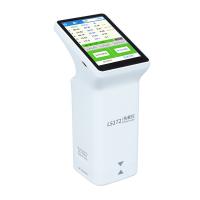
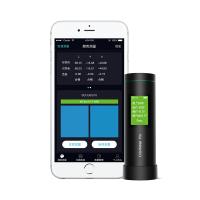
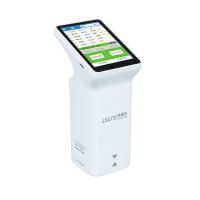
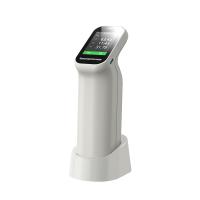
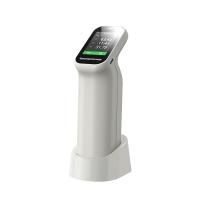
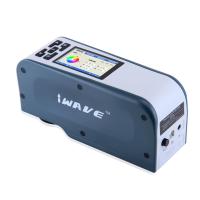
An introduction to the photoelectric sensor of the Colorimeter. People who are familiar with the structure of the Colorimeter know that the photoelectric sensor can be said to be its core technology. The photoelectric sensor directly affects the measurement results and accuracy of the Colorimeter, and also determines the function and performance of the Colorimeter, so the correct understanding and analysis of the photoelectric sensor is a way to better use and understand the Colorimeter.

An introduction to the photoelectric sensor of the Colorimeter. Photoelectric sensors (electric eyes) are sensors that use various properties of light to detect the presence or absence of objects and changes in surface states (Colorimeters use this to achieve measurement), etc.
Photoelectric sensors are mainly composed of a light emitting part that emits light and a light receiving part that receives light. If the projected light is blocked or reflected depending on the sensing object, the amount reaching the light receiving part will vary. The light receiving unit detects this change, converts it into an electrical signal, and outputs it. Most of them use visible light (mainly red, but also use green and blue to judge the color, and red, green and blue are the three excitation values of the Colorimeter) and infrared light.
Features of Photoelectric Sensors
1 The detection distance can reach a detection distance of more than 10
2. There are few restrictions on the detection object. Since the detection principle is based on the shading and reflection caused by the detection object, the detection object is limited to metal, such as the proximity sensor. This is the basis for the Colorimeter to realize multi-substance color detection. It can detect glass, plastic , wood, liquid and almost all objects for detection.
3 Short response time The light itself is high-speed, and the circuit of the sensor is composed of electronic parts, so the mechanical working time is not included, and the response time is very short. This Colorimeter provides a theoretical basis for the convenient and fast detection.
4. High resolution High resolution can be achieved by focusing the projected light velocity on a small light spot through high-priced design technology, or by forming a special light-receiving optical system. Detection of tiny objects and high-precision position detection are also possible. This is the origin of spot positioning and cross positioning commonly used in Colorimeters.
5. The sub-contact detection can be realized without mechanically contacting the detection object, so it will not cause damage to the detection object and the sensor. At the same time, some measurements of corrosion and inaccessible objects are realized.
6. Color discrimination can be realized. The reflectance and absorptivity of the light that detects the shape of the object vary according to the wavelength of the projected light and the color combination of the detected object. Utilizing this property, the color of the detection object can be detected.
7 Easy to adjust In the type of projecting visible light, the speed of projected light is visible to the eyes, which is convenient for adjusting the position of the detection object.
An introduction to the photoelectric sensor of the Colorimeter. These are the basic functions of the photoelectric sensor, and it also explains the reason why the Colorimeter can realize various functions. By learning these, it is not difficult to see the influence of the photoelectric sensor on the Colorimeter, and it is easy to understand. I started That is to say, the photoelectric sensor is the core of the Colorimeter.