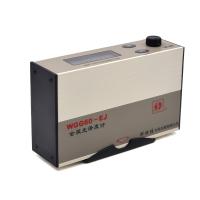
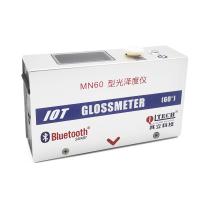
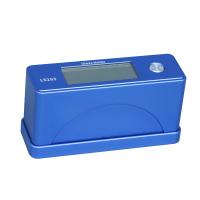
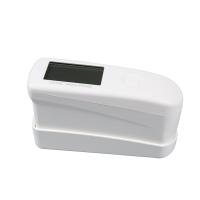
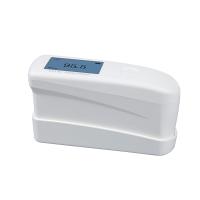
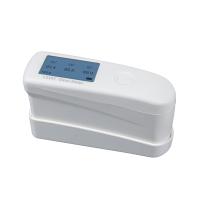
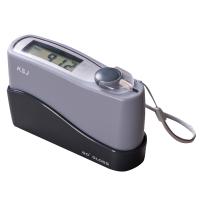
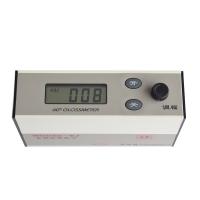
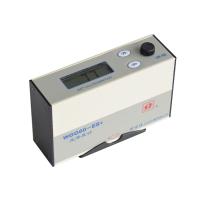
Gloss is the numerical representation of how close an object's surface is to a mirror surface. Gloss evaluation: Various methods (or instruments, such as a gloss meter) can be used. It mainly depends on the angle of light source illumination and observation. Instrument measurement usually adopts 20°, 45°, 60°, 85° angle illumination and detection signal. Different industries often use instruments that measure from different angles.
Application range of gloss meter: surface gloss measurement of ink, paint, baking varnish, coating, wood products, etc.; architectural decoration materials: surface gloss measurement of marble, granite, vitrified polished tiles, ceramic tiles, etc.; surface gloss measurement of plastic, paper, etc.; Surface gloss measurement of other non-metallic materials.

Factors affecting the gloss effect of the topcoat:
1) When mixing paint, increase the amount of curing agent, and the gloss will increase;
2) If the amount of curing agent is reduced, the gloss will decrease;
3) Increase the amount of thinner, the paint leveling property is good, thin brushing is enough, and the gloss is reduced;
4), reduce the amount of thinner, the paint leveling is poor, thick brush is needed, and the gloss is increased;
5), thick coating, high gloss; thin coating, low gloss. Regardless of the high or low gloss of the substrate, a matte finish will give a matte finish, and a glossy finish will give a glossy finish.
Second, gloss is related to the pigments and fillers used. Pigments and fillers have large particle sizes and usually have some extinction effect. The paint with too fine particle size and high oil absorption also has a certain influence on gloss. Someone above talked about the effect of fillers, basically all fillers affect gloss. But I have also seen ultra-fine barium sulfate, which basically has no effect on the gloss and even increases the gloss when added in an appropriate amount.
Again, the effect of the dispersant is very large. If it is a pigmented paint, the influence of the dispersant needs to be considered. Related tests have been done, the same formula, using different dispersants, one gloss is more than 80, and the other is more than 40. This is because when an inappropriate dispersant is used, the pigment will flocculate and the particles will become thicker, which will inevitably affect the gloss.