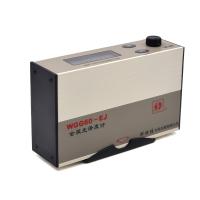
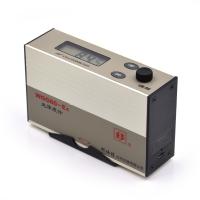
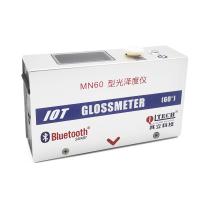
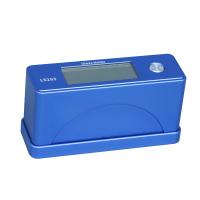
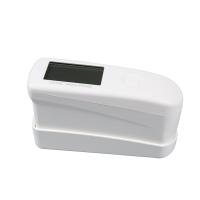
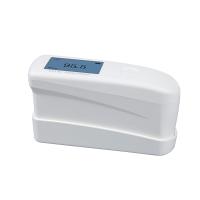
Signs of various materials have different appearance effects, and the surface gloss of the sign is an important feature that affects the appearance. In order to accurately evaluate the gloss of the sign, it is necessary to use a special instrument for detection. The following is an application case of our gloss meter to measure the quality of signs.

The importance of sign gloss performance:
Gloss is an appearance attribute of the surface of the sign. Signs with different levels of gloss give people different feelings. For example, very common metal signs have a high surface gloss and bright colors, giving people a bright feeling; while paper signs have a low surface gloss, giving people a softer sense.
Gloss is the reflective ability of the surface of the signboard, which should be different in strength. In order to evaluate the glossiness of the signboard, special instruments can be used to measure it. The glossiness of the signage is determined according to the difference in the smoothness of the surface of the signage, which leads to the difference in the specular reflection. Gloss is related to the smoothness of the surface of the sign, and is proportional to the degree of unevenness on the surface of the object.
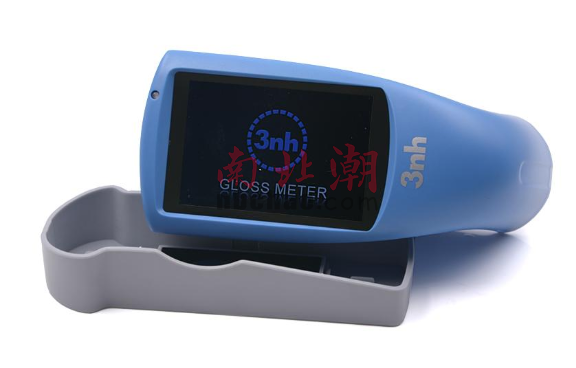
Gloss meter to measure the surface gloss of signs:
Gloss meter measurement principle: a certain light source irradiates the sample at a certain incident angle, accepts the amount of specular reflection light of the sample at the same reflection angle as the incident angle, and takes the amount of specular reflection light of the sample as the mirror surface of the standard gloss plate under the same conditions The ratio (%) of the amount of reflected light indicates the result. Therefore, when users use a gloss meter to measure a sign, they first need to use a standard gloss plate for calibration, and then measure the sign sample. What needs to be explained here is that the surface finish of the signage sample and the geometric angle measured by the instrument will affect the test results. Therefore, the user needs to choose a uniform measurement angle and follow the steps below to measure the signage gloss.
Test steps:
1. Turn on the power and calibrate the instrument.
Put the standard sample, that is, a black porcelain plate, on the test sample, and the gloss value will be displayed on the screen. If the gloss is consistent with the standard gloss or not much different, the calibration is over. If the color difference is large, it is necessary to find out the cause of the calibration failure and re-adjust the calibration.
2. Measurement
Put the label to be tested at the test sample port, press the measurement button, and the actual value of the instrument is the glossiness of the area.
3. Analysis of color measurement results
Take multiple points on the surface of the signage sample for measurement, and calculate the average of the measurement results to obtain the glossiness of the signage.