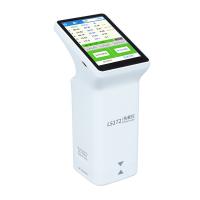
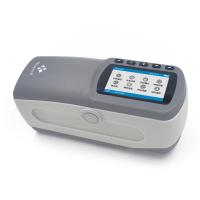
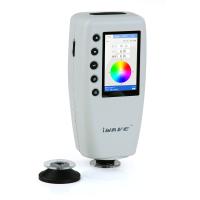
CIE LAB (CIE Lab) chromaticity space is a uniform color space suggested by the International Commission on Illumination in 1976, and GB7921-87 issued by my country in 1987 regards LAB space as a national standard. At present, CIE LAB space has been widely used in color correction, calculation and DTP systems in industries such as color design and reproduction. It is of great significance in precision Colorimeter.

Although the CIE LAB chromaticity space is a uniform color space suggested by CIE, the color uniformity is greatly improved compared with the Yxy space, but in fact the CIE LAB space is still uneven for the color perception of the human eye. Take two color sample points in a certain area of the space (such as the red area) and compare them with two color sample points at the same distance from another area (such as the green area), and you will find that the visual angle of the two color samples in the red area The sensory difference is not the same as the visual sensory difference of the two color samples in the green area, that is, in different color areas, the latitude value of the color is not equal. The inhomogeneity of this color space brings us errors in the color reproduction process. When using the CIE LAB space for color conversion and correction, if the red area and the green area are adjusted according to the same scale and ratio, it will be because Color cast due to the inhomogeneity of the color space. In actual work, when technicians adjust and correct the CIE LAB space in the color design software, they often operate based on experience. Therefore, it is urgent to study the uniformity of the space to find out the value of the color wide capacity in different color areas. And the change law of the unevenness of the color space, to formulate a suitable adjustment scale and proportion for the conversion and correction of the color during color reproduction, so as to reduce the reproduction error caused by the unevenness of the space.
The CIE standard colorimetric system is the basis for quantitative description of color. The CIE RGB system has real three primary colors, but the system has negative values; the CIE XYZ system eliminates negative stimulus values, and its xy chromaticity diagram plays an important role in the description of the color gamut, but the system has large inhomogeneity ;CIE LAB is a uniform color space recommended by CIE, and its uniformity has been greatly improved. This system has nothing to do with equipment. The chromaticity value and lightness value (gradation) can be adjusted independently, and when the color difference is greater than the visual recognition When the threshold (just perceivable) is smaller than the color difference between two adjacent levels in the Munsell system, it can better reflect the psychological effect of object color.