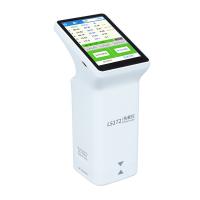
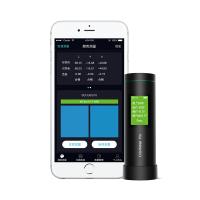
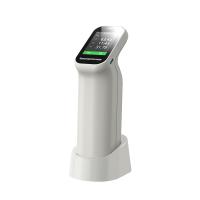
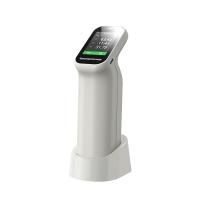
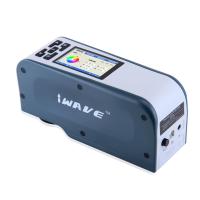
Both color difference and whiteness are important concepts of color management. In terms of color management, we usually use a color difference meter to measure the difference between color difference and whiteness and compare them. As important data for color management, what we see in the measurement of a color difference meter is a value. In fact, We don't quite understand what the specific color difference and whiteness are, or we only understand their literal meaning. Now let’s talk about the color difference and whiteness tested by the color difference meter.

Color difference has three meanings:
(1) Light of various wavelengths will be dispersed in different degrees. White light is dispersed into light of various wavelengths in the ultraviolet, visible and infrared ranges, and the image formed when passing through the lens has a colored edge, which is chromatic aberration. The test principle of the Colorimeter is also based on the change of light as a theoretical basis. The earlier Colorimeter was developed based on the principle of optical tristimulus value. The difference between the actual imaging of the optical system and the desired imaging is collectively referred to as aberration. Chromatic aberration is one of the aberrations, which is caused by the transmittance of the transmissive material varying with the wavelength, so it appears only for polychromatic light.
(2) Quantitative expression of color perception differences. It is represented by the difference of the three color attributes of lightness, hue and chroma. The lightness difference means the difference in depth, the hue difference means the difference in hue (that is, reddish or bluish, etc.), and the chroma difference means the difference in vividness. The evaluation of color difference is very important in industry and commerce, and is mainly used in color matching in production and color quality control of products. The modern color difference evaluation is based on the standard color difference formula recommended by the International Council of Illumination (CIE) and calculated by color difference instruments and computer measurements, expressed in accurate numbers. Commonly used such as CIE 1976L*a*b* and CIE 1976L*u*v* color difference formulas, etc.
(3) The phenomenon of color inconsistency between batches of dyed leather of the same color, or several color differences in the same drum and dyed leather is called color difference. Suede in particular is more prone to color shifts. It can refer to the color difference between different parts of the same piece of leather, or the color difference between the same batch of processed leather, or the color difference between different batches of leather originally intended to be dyed the same color. Therefore, the dyeing industry has high requirements for the color difference meter, and it is also an industry where the color difference meter is widely used. The color difference seriously affects the appearance image, so the application of the color difference meter is particularly important.
Whiteness, as the name implies, is the degree of whiteness on the surface of an object. It is defined as the whiteness of a satisfactory surface with a spectral reflectance of 100% is 100 degrees, and the whiteness of an absolutely black surface with a spectral reflectance of zero is zero degrees. The commonly used whiteness formulas are Ganz whiteness, Hunter whiteness, etc. The black and white calibration of the Colorimeter uses a similar principle.
Color difference and whiteness affect the appearance of the product. Most consumers pay attention to the appearance of the product. We use the color difference meter to adjust this change to satisfy our manufacturers and consumers.