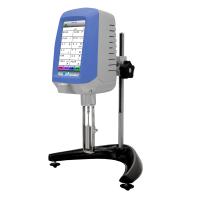
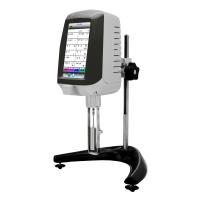
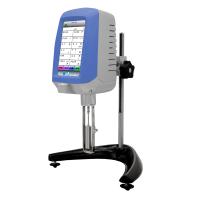
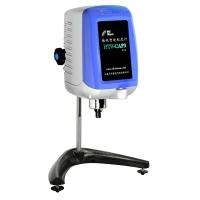
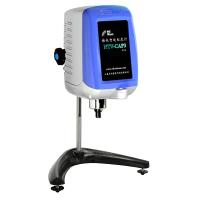
Capillary rheometers and torque rheometers are ideal for simulating processing conditions, troubleshooting and quality control. But a dynamic spin instrument can tell you a lot more about the resin's molecular structure.
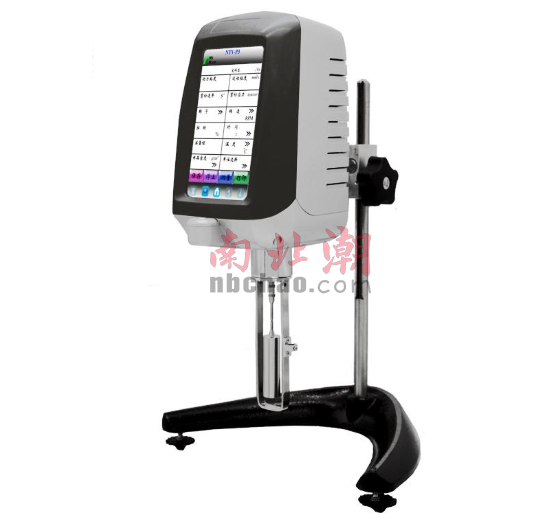
Materials suppliers have long used it to characterize the viscoelastic properties of polymer melts, and rheometers are also gaining popularity in plastic compounding machines. Both groups use rheometers to assess the processability of resins for routine quality control and as a research and development tool to help identify materials suitable for a process or application.
There are three main types of rheometers: capillary, torque, and dynamic rotary, each for a different purpose. For example, if you are looking for a more advanced version of a melt indexer, you might consider a capillary rheometer. Melt indexers measure only one point on the shear rate/viscosity curve, which provides only a rough indication of flowability or average molecular weight. Capillary rheometers measure multiple points on the curve to provide more realistic flow profiles under higher shear conditions in injection molding (10,000 to 100,000 sec-1) or extrusion (100 to 1000 sec-1).
There are also online capillary rheometers, which measure the viscosity of materials as they pass through the extruder.
Torque rheometers are essentially small mixers or extruders. They measure the torque on the mixing screw or rotor, which reflects the difficulty of mixing the material. Machine torque, which can be related to viscosity, is one of the primary ways processors characterize the processability of a material. Some also come with twin-screw extruder types.
Both capillary rheometers and torque rheometers typically provide data on viscosity and melt flow as a material passes through the instrument. In contrast, the purpose of dynamic rotational or oscillatory rheometers is to probe the molecular structure and viscoelasticity of polymers. These instruments place a plastic sample between two parts, one fixed while the other rotates back and forth at an adjustable speed. These instruments operate at relatively low shear rates. They provide information on how the resin will be processed and have proven to be invaluable to the R&D and quality control functions of material suppliers.
High shear viscosity data from a capillary rheometer can be compared to low shear data from a dynamic rotational rheometer because they both measure "true" or absolute viscosity. This is not the case for torque rheometers, which provide only a relative measure of viscosity through a correlation with torque.
Instrument suppliers generally agree that compounders and processors looking for a QC tool with some research capabilities are likely to choose a capillary rheometer first. The next scale is the torque rheometer, which enables you to troubleshoot flow problems in extrusion dies or injection molds, and can also be used for QC. In addition, the torque rheometer can mix material batches for testing and development, which is not possible with the other two rheometers.
When a processing problem cannot be diagnosed with a capillary or torque rheometer, the solution may require a deep understanding of molecular structure, which can be provided by a dynamic rotational rheometer.
Capillary rheometer
High-shear, controlled-stress capillary rheometers consist of a heated barrel and piston that drives molten material through a calibrated die, applying pressure at a constant velocity or constant shear rate. The geometry of the mold can be changed to measure rheological properties under different conditions. In addition to the wide range of single-well configurations available, there are also dual-well (two-tube) instruments that can perform two tests simultaneously under different conditions. There are also online capillary rheometers, which are mounted on the extruder.
Major suppliers of capillary rheometers include Ceast, Dynisco Polymer Test, Goettfert, Malvern Instruments (acquired Bohlin Instruments/Rosand in 2003) and Thermo Electron (formerly Thermo Haake).
Ceast US sales manager Gerard Nelson pointed out that although capillary rheometers can test a variety of plastics, PVC can cause difficulties due to the release of corrosive hydrochloric acid. Likewise, water corrosion of PET, nylon and other hygroscopic materials is also a concern, according to Thermo Electron product manager Alberto Correa. However, with an online capillary rheometer, oxygen is not excluded from the testing process, so hygroscopic materials are not a problem. Thermosets can also be processed in in-line capillary instruments, but not in benchtop capillary models because the resin cures quickly and cannot be removed.
A capillary rheometer measures how the viscosity of a material changes with temperature and pressure. One test cycles 10 different piston speeds at a controlled temperature and tracks how viscosity changes in relation to shear rate (flow rate) and shear stress (applied force). The result is a rheological curve plotting shear stress in Pascals (Pa) on the X-axis and shear rate (in sec-1) on the Y-axis. The ratio of the two is the viscosity, measured in millipascal seconds (mPas). 1 mPas is equal to 1 centipoise (cp), which is the viscosity of water at room temperature.
Benchtop capillary rheometers for quality control have a lower force range of 5 to 10 kN, while mid-range and higher-level units are 50 to 60 kN.
The most widely used capillary rheometers are single-hole models. Popular examples include Goettfert's RheoTester 500 Extruded Plastomer, which is both a rheometer and a melt indexer. Dynisco's LCR 7001; Ceast's Rheologic 2500; Malvern Instruments (Rosand) RH2100; and Thermo Electron (Haake) RheoCap S20.
A newer alternative is the dual-bore capillary rheometer.
They allow you to obtain two results in one test cycle, saving testing time. Another major advantage of theirs is that they can automatically calculate Bagley or other corrections, allowing for more accurate measurements of absolute viscosity. This is accomplished by using dies of the same diameter but different lengths, resulting in different shear stresses at the same shear rate.
According to Ceast's Nelson, dual-hole cells are also very useful in detecting sliding wall effects. Lubricants, pigments or other additives may cause high wall slippage. Excessive slippage may indicate the need to reduce additive levels, which will save formulation costs and improve processing.
Popular two-bore capillary rheometers include Ceast's Rheologic 5000, Goettfert's RheoTester 2000, Dynisco Polymer Test's LCR 7002, Malvern Instruments (Rosand) RH 2200, and Thermo Electron (Haake) RheoCap T100.
Viscoelasticity
相对于毛细管流变仪而言,相对较新的是硬件和软件,使它们能够测量或数学推导一些粘弹性质,例如拉伸粘度,模头膨胀和熔体强度。Goettfert总经理Tim Haake说:“拉伸或伸长粘度对薄膜,纤维和泡沫塑料的加工以及吹塑重要性无庸赘述,而典型的流变仪则无法获得。”
例如,Dynisco Polymer Test开发了新的软件程序,使用户可以从剪切速率和剪切应力测量中得出一些粘弹性质,例如伸长粘度。According to公司总裁Rich Pavero的说法,Dynisco还开发了可提供标准毛细管数据与PET特性粘度(IV)极好的关联的软件,据报道,这一特性引起了PET复合机和加工商的兴趣。
Malvern Instruments行销副总裁Randy Byrne表示,该公司的中型RH2000(Rosand)和高级RH10系列(Bohlin)流变仪现在都可以通过特殊的软件和硬件组合来测量模头膨胀。后者涉及高分辨率激光,该激光用于测量聚合物流离开模头时的直径。
Malvern的Rosand毛细管流变仪系列使用熔体强度仪测量拉伸粘度。这些流变仪执行其他与处理相关的测量,例如壁滑速度,熔体破裂,热降解和应力松弛。同样,Ceast的流变仪现在可以配备拉伸单元,以进行熔体张力分析,从而提供拉伸粘度。还提供激光冲模膨胀测量系统。
Ceast现在还提供了平衡应力预测(ESP)算法作为标准软件。纳尔逊说:“该算法无需等待流变曲线在每个活塞速度(剪切速率)下趋于稳定(表明达到了平衡应力),而是可以及早进行预测,从而节省了多达60%的测试时间。我们生成的数据显示出完整测试与早期ESP预测之间的很好关联。”
在线模型
混料商和树脂供应商不必等待每隔几个小时就对生产样品进行实验室测试的结果:他们可以使用在线流变仪保持对产品质量的几乎实时控制,在线流变仪可以处理从挤出机转移过来的熔体支流。在测试之后,将熔体丢弃或返回挤出机。Thermo Electron的Correa指出,主要的树脂生产商使用该公司的在线过程控制流变仪(PCR 630),其挤出机的运行速度为60,000 lb / hr。显然,他们迫不及待地想知道他们的材料是否合格。
据说Dynisco的ViscoSensor是最小的回流在线毛细管流变仪,据报道,它与高端设备的功能相匹配。Pavero说:“我们已经使用了复合机,还有PET和聚烯烃片材和薄膜挤出机,高端PET回收机以及尼龙形状和棒状挤出机。一家用于热成型托盘的PET板制造商正在将其用作粘度和水分分析仪,因为它们可以监控IV值,并在干燥机运行不正常时迅速做出响应。”
同时,Thermo Electron在德国开发了一个在线系统,现在可以在此处使用。
在高端型号中,Goettfert较小的在线装置MBR通常被PET加工商用来在加工过程中监控IV。该公司的实时流变仪(RTR)是一种回流系统,已经在塑料中得到了一些应用。“一些非常粘稠的材料可能要花费半小时才能通过挤出模头,这意味着您可以在半小时内制作不合格的材料。RTR配有一个额外的循环泵,可在5分钟内将材料样品[输送至流变仪]。” Tim Haake说道。
扭矩流变仪
扭矩流变仪的心脏是一种特殊的电机,可以测量其轴上的扭矩。它的驱动系统可以连接到可互换的附件,例如微型实验室混合器或单螺杆或双螺杆挤出机。这些仪器的供应商包括CW Brabender和Thermo Electron。
扭矩流变仪连接到数据采集软件,该软件可跟踪过程扭矩,驱动速度,温度和压力。这些数据表明材料加工的容易程度以及不同添加剂的分散程度。在聚合物工业中,由于所有配方中都含有添加剂,扭矩流变仪开始使用PVC和橡胶。例如,扭矩流变仪有助于评估制剂对降解的敏感性。“随着材料开始交联,这将显示为PVC扭矩曲线的增加,” Thermo Electron高级产品专业人士Scott Martin解释说。
CW Brabender应用实验室经理Andrew Yacykewych说,扭矩流变仪现在正在测试所有类型的热塑性塑料,包括纳米复合材料和木材填充塑料。现在的应用还包括热固性塑料,特别是不饱和聚酯和酚醛树脂,其中该仪器用于研究固化性能。
据Yacykewych称,使用扭矩流变仪的加工商主要是薄膜,片材,管材和涂料的挤出机。这些小型,精准控制的挤出机也已用于小批量生产产品,例如导管。
According toThermo Electron的马丁(Martin)的说法,扭矩流变仪的新的发展包括特殊的传感器,混料商和色母粒供应商使用该传感器来测量导热性和导电性,作为对分散质量或添加剂(如炭黑)性能的QC检查。
配混人员还使用扭矩流变仪在小规模上模拟其双螺杆挤出生产线。Thermo Electron的新型PolyLab系统是模块化扭矩流变仪,设计用于实验室或中试工厂的过程仿真。According toMartin的说法,许多配混者从小型批量混合器模块开始进行配制工作。“一旦有了基础配方,就希望使用双螺杆挤出机模块以连续的方式制备化合物。材料可以通过造粒机运行,然后将扭矩流变仪驱动器连接到单螺杆挤出机,该挤出机将通过微型吹膜生产线处理这些颗粒并制成实际的袋子。”
该公司的PolyDrive系列产品包括较便宜的流变仪,该流变仪带有无法互换的专用混合器或挤出机附件。例如,想要一个单元仅执行PVC熔融测试的PVC复合机可以使用专用的PolyDrive混合器来满足。
动态旋转流变仪
动态旋转流变仪的主要组件是电动机,光学编码器,扭矩感应机构,以及(对于塑料应用)沿转子轴施加力的装置。另一个关键组件是空气轴承,它可使转子和扭矩传感器“浮动”并使摩擦最小化。这种流变仪的主要供应商包括热电(Haake),TA Instruments(包括以前的Rheometric系列)和Malvern Instruments(Bohlin)。
这些仪器以连续旋转和振荡模式运行。窄角振动常用于塑料。这种小应变振荡可提供有关粘弹性能的信息,包括熔体粘度,分子量,分子量分布和聚合物松弛,所有这些都会影响材料的加工方式。这些仪器的软件可以绘制弹性模量和粘性模量相对于以弧度/秒为单位的振荡频率。这种低剪切测试从极短的来回来回扫描序列到宽幅振荡,以模拟加工剪切条件。
有三种不同类型的应力传感器附件:圆锥和平板,平板和平板或同心圆柱体。最后一种主要用于粘合剂和涂料。板和板(或平行板)的几何形状用于表征热塑性熔体和热固性材料(需要使用一次性板)。锥板主要用于稳态剪切力和法向力测试,后者与热塑性塑料的模头膨胀相关。固体塑料的蠕变研究也可以使用平行板或锥板传感器进行。在蠕变测试中,将恒定应力施加到样品上,并监测应变。
TA Instruments的AR系列是流行的用于塑料的动态流变仪。它使用CMT(电动机和变频器组合)技术。TA Instruments的专利SMT(分离的电动机和传感器)结构更昂贵,但在塑料中仍很流行,该结构可独立于驱动电动机测量扭矩,从而大大降低了校准要求。“对于CMT设备,需要校正系统的惯性,” Ulbrich说。Ulbrich解释说,他公司的Rheometric Ares SMT流变仪将扭矩感应与电动机解耦,从而克服了惯性贡献问题。
例如,CMT流变仪可能难以测量非常低的粘度,因为转子和传感器的惯性相对于材料所提供的阻力而言变得非常大。在分析诸如热固性材料之类的材料时,在加工过程中其粘度也会发生较大变化,也会出现问题。随着聚合物的固化,用户可能会在CMT流变仪上遇到惯性限制。但是据报道,采用SMT技术的Ares流变仪可以准确地测量整个粘度范围。
CMT设备可测量受控应力,但不可测量应变。“传统上,CMT设备只能使用迭代反馈回路来控制振荡中的应变,这需要几个振荡周期才能达到设定的应变。这延长了测试时间。SMT设备从未有此限制。” Ulbrich说。现在,CMT设备的进步使用户能够像SMT设备一样在第一次振荡内达到编程的应变,但随后需要进行额外的校准。TA Instruments的AR Mobius Drive 2000系统就是一个例子,该系统可以配备附件,例如用于热固性固化研究的烤箱。Ulbrich说:“该系统可以直接控制振荡中的应变和应力,并在一个平台上进行受控的应变率/应力松弛测试。”
Malvern的Bohlin Gemini和C-Vor CMT仪器也享有类似的好处,它们的Rotontic驱动器可以进行受控的应力和应变测量。Thermo Electron已有两年历史的RheoStress 600具有超低质量的电动机,可减少测试期间的惯性效应。另一个有趣的功能是法向力(沿转子轴线)的测量。应用工程师Jenni Briggs说:“垂直于流动方向作用的力在许多流变应用中起着重要作用。使用RheoStress 600时,法向力既可以用作设置参数,也可以用作测量变量。通过剪切粘弹性样品而产生的法向应力差是通过集成在空气轴承中的法向力传感器来测量的。”
仪器的MFC(微力校正)功能将可测力范围扩展到了0.01 N(0.002 lb)。在FLC(强制控制加载)模式下,样品会以预设法向力加载,以提高重现性。
低成本的替代品
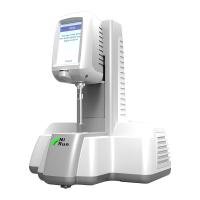
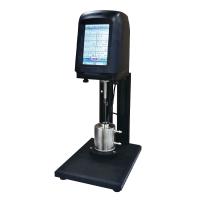
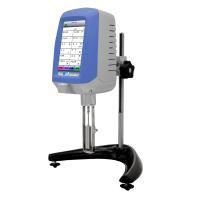
Brookfield Engineering Laboratories sells a very different type of dynamic rotational rheometer. Its "conical spindle" (cone and plate) instrument rotates continuously and has mechanical bearings. Although they are not as sensitive as air bearing instruments and do not perform oscillation testing, they are significantly less expensive. They are recommended for QC and certain types of polymer characterization. Bob McGregor, Director of Marketing, explains: “Air bearing instruments can more accurately tell you the yield value of a material and provide more detail about its modulus of elasticity, which is very important for analytical studies. But for more basic characterization, our instruments may be very suitable."
Brookfield's R/S controlled stress rheometers can hold constant or ramped speeds, and can also vary the magnitude of the normal force to directly measure yield and creep behavior.
Brookfield recently introduced the DV-III Ultra. It replaces the previous DV-III+ model, which was a rate-controlled instrument for measuring the behavior of materials at a constant shear rate. The upgraded Ultra version combines the capabilities of the DV-III+ with the yield stress measurement capabilities of Brookfield's YR-1 Yield Test Rheometer. The DV-III Ultra, when used with the vane spindle and Brookfield's EZ-Yield software, can provide viscoelastic data for storage and loss modulus comparable to what high-end air rheometers can provide, McGregor said. McGregor added: "We are now developing a method that will allow us to determine the phase angle - something that is currently only available with instruments that perform oscillation tests."