What are the common causes of porosity on powder-coated surfaces? How much porosity is considered acceptable? Is there a guide for this measurement? Is there a minimum mil thickness that won't cause this? If we know the surface is clean and ready to receive coating, what would cause porosity in the surface? Under the 25x microscope, we can see the small hole downwards. The coating appeared to outgas on top of the film. It looks like a black spot, but it's actually an air bubble with holes.

Common causes of porosity in powder coated films are trapped air or contamination on the substrate. Formed metal surfaces, galvanized steel surfaces, cast substrates, or any surface with metal porosity can cause outgassing (release of trapped air) during the cure cycle. If the substrate is the cause of the problem, you need to add an additional step to the process or investigate powder formulations with degassing additives. Preheating may help relieve trapped air. A double coat may be required. Castings can be impregnated with resin to fill the porosity.
It is also possible to obtain some pores in the powder film that are not generated by the substrate, but this rarely penetrates the substrate. Components of powder formulas may release from the film and leave some small depressions. If your surface has some small holes but an acceptable appearance, it's probably fine. If you need good properties such as corrosion resistance, the surface must not have any holes through the coating to the substrate. Holes leading to the substrate are more unusual and troublesome than some surface eruptions. This is most likely related to the condition of the substrate. You may wish to sandblast or otherwise clean some of the parts to ensure you have the clean surface you want, or try the other methods mentioned above (preheat, double sided).
The thickness of the coating may also be a factor. Certain powder materials may be sensitive to films above 3 mils. Make sure to use the material within the thickness tolerances specified by the manufacturer on the technical data sheet. Certain materials are more sensitive to thickness. You can experiment a little with the powder to find out what's wrong. Paint certain panels different thicknesses and look for pores. This will test the thickness and show if the problem is with the base material or the powder.
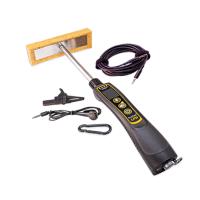
You could use a pinhole Detector to determine severity and see if the holes actually go through the substrate, but I don't know of a way to quantify the results. If porosity exists in the film and is related to the powder formulation, it would be wise to consider changing to another powder (if possible).