The epoxy emulsion carries active epoxy groups, and undergoes a group crosslinking reaction with the water-based silicone-modified acrylic copolymer to form a dense coating on the metal surface with excellent wear resistance, high tensile strength, and good salt spray resistance. In this paper, when other experimental conditions are the same, the effects of emulsions with different epoxy values on the reaction with water-based silicone-modified acrylic copolymers and coating properties are investigated.

It can be seen from Table 2-1 that as the epoxy value in the epoxy resin decreases, the molecular weight of the epoxy resin increases, and the hardness and flexibility of the coating film decrease due to the crosslinking density of the epoxy group and water-based silicone-modified acrylic copolymer. sex decline. However, when the epoxy value is too large, there are too many active groups in the resin, which affects the short pot life of the product. Therefore, after comprehensive consideration, it is more appropriate to choose a medium epoxy value emulsion. In this paper, the WE-319 water-based epoxy emulsion produced by Jili Company is selected as the water-based oxygen emulsion with an epoxy value (calculated by solid content) of 0.20.
Selection of Carboxylic Acid Waterborne Epoxy Resin Curing Agent
The performance of epoxy resin coating is relatively single, and there is a shortage of poor light resistance; in order to obtain epoxy resin coating with superior performance, it is necessary to find a way to modify the epoxy resin. Therefore, this article selects the AC-832G silicone-modified acrylic copolymer water-based resin produced by Jili Company as the carboxyl-containing resin as the curing agent for the water-based epoxy resin. The water-based resin is grafted with silicone and acrylic acid copolymer. , The resin has the advantages of weather resistance, oil resistance, corrosion resistance and good film-forming properties of acrylic resin, and also has the characteristics of low surface energy and high molecular chain toughness of silicone resin.
Experimental content
laboratory apparatus
According to the needs of the coating preparation process and product performance testing in this experiment, the instruments and equipment used in this experiment are shown in Table 2-2.
Multipurpose machine for dispersing and mixing
Pendulum Hardness Tester
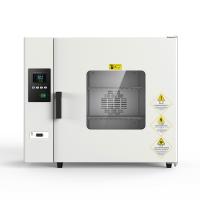
Electric constant temperature Forced Air Drying Oven
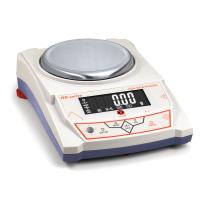
Electronic Balance
Flexibility Tester
pencil hardness
Impact Tester
Adhesion Tester
Fourier transform infrared Spectrophotometer
Coating Test Method
Infrared analysis
The Fourier transform infrared spectrometer adopts the KBr tablet method, directly coats the coating on the KBr salt sheet, and performs the test after drying, and scans 32 times under the condition of a resolution of 4cm‐1.
pencil hardness
Use 6B-6H pencils with different hardness to test the hardness of the coating, according to GB/T 6739 Method B pencil hardness
There are 13 different hardnesses from 6B‐1B, HB, 1H‐6H to illustrate the hardness of the paint film, among which 6H indicates the hardest hardness of the paint film, and 6B indicates the softest.
Impact Test
According to GB/T 1732, the laboratory uses GGD-302 paint film impactor to conduct impact resistance test on the coating, and the impact height is 50cm. After the coating film is dry, place the coating sample on the groove of the impactor, and make the distance between the impact point and the edge of the test greater than 15mm.
Lift the weight at a certain height, let it fall naturally, take out the test panel, use a 5x magnifying glass to observe whether there are cracks or peeling off of the coating film, and perform three parallel tests on the same sample at different positions.
Adhesion
Adhesion is an important physical and mechanical property of the coating. The cross-hatch method is used to test the adhesion of the coating. According to GB/T T9186, the level is 0-5 , where 0 indicates better adhesion of the paint film, and 5 A grade indicates that the adhesion of the paint film is the worst.
flexibility
Flexibility is an important physical and mechanical property of the coating. The flexibility of the coating is tested with a shaft rod. According to GB/ T 1731 , the level is 1 mm‐7mm, and there are 7 levels in total. The smaller the number, the greater the thickness of the paint film. The better the flexibility, the worse it is.
Experimental Results and Discussion
Effect of activity of different catalysts on curing rate
The reaction rate between epoxy group and carboxyl group is very slow in the absence of a catalyst, so choosing a suitable catalyst to accelerate the reaction between carboxyl group and epoxy group becomes particularly critical for practical applications. Commonly used catalysts are tertiary amines, pyridine derivatives, quaternary ammonium salts, etc., such as: N,N-dimethylaniline, triethylamine, 2-picoline, triphenylphosphine, tetraethylammonium bromide, acetylacetone Chromium (III) complexes, etc. The activity of catalysts is different, the required reaction time and reaction temperature requirements are also different, and the performance indicators of the obtained paint films are also different. In order to examine the influence of different catalysts on the reaction rate, triphenylphosphine, tetraethylammonium bromide, N,N-dimethylaniline and triethylamine were selected for experimental comparison. The catalyst dosage is 1.50%, the reaction temperature is 95±2℃, and the paint film performance of different catalysts with curing time.

Figure 2-2 We can know that at 85±2°C, the catalyst activity is triphenylphosphine>tetraethylammonium bromide>triethylamine>N,N-dimethylaniline, from Figure 2-3 we can know that 95 Catalyst activity at ±2°C Tetraethylammonium bromide>triphenylphosphine>triethylamine>N,N-dimethylaniline Ammonium bromide>triphenylphosphine>triethylamine>N,N-dimethylaniline. From this, it can be known that triphenylphosphine is more active at low temperature, and tetraethylammonium bromide is the most active at high temperature. Combining the energy consumption and temperature of the coating line, triphenylphosphine is selected as the catalyst.