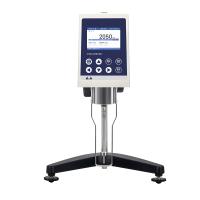
Rotational viscometer and rotational rheometer are two rheological testing instruments with different performance . The viscometer does not have dynamic characteristics and can only measure the viscosity of the sample under steady flow. The rheometer has good dynamic properties. In addition to measuring the viscosity of the sample, it can also measure the dynamic rheological properties .

The Rotational Viscometer was originally named and classified according to the structural characteristics of the torque transmission device (including the measuring head and the measuring cup or sample cup ) . The flat-shaped sample cup is composed of the coaxial cylinder viscometer. The torque transmission device is composed of a cylindrical measuring head and a cylindrical sample cup. The torque transmission device of the cone-cone viscometer is composed of a cone-shaped measuring head. Composed of a cone-shaped sample cup, the torque transmission device of the ring- ring viscometer is composed of a ring-shaped measuring head and a ring-shaped sample cup.
Later, the Rotational Viscometer/rheometer was equipped with several, more than a dozen or even more than fifty kinds of torque transmission devices with different structures. If the torque transmission devices with different structures are still named, it will not only make an instrument Multiple names, or several different instruments with the same name, and such naming does not reflect the fundamental difference between the various types of viscometers/rheometers. Therefore, it is more reasonable to name and classify rheometers according to the support form of the measuring shaft and the control variables.
1 Named and classified according to the support form of the measuring shaft
The performance of a Rotational Viscometer/rheometer mainly depends on the type of support for the measuring shaft (the shaft connected to the measuring head or sample cup). According to the different forms of measuring shaft support, it can be divided into the following categories:
1.1 Jewel-supported jewel-bearing viscometer
此类粘度计的结构与感应式单相电度表(俗称火表)相仿,转轴(即测量轴)的下端由锥形宝石轴承支撑 ,上端由定心罩支撑 。电磁部件(或驱动部件)的电流线圈和电压线圈所产生的交变磁通形成了移进磁场,使置于该磁场中的铝园盘感应出涡流。在涡流和磁通的作用下 ,铝园盘就产生了磁场移进方面的转动力矩 ,驱动转轴旋转 。
基于它的结构特点 , 出现了 6 项不利的因素。其一 ,锥形宝石轴承、定心罩和转轴之间的摩擦力矩很大, 而且与其转动方向相反的滑动摩擦力矩是随机的 ,无法定量扣除它所造成的测试误差。其二, 轴向负荷除了有铝园盘和加长了的转轴之外, 还有频繁装卸的测量头 ,加剧了轴尖的磨损,缩短了使用寿命。其三 ,依靠定心罩来定位与转轴滑动配合的锥形测量头 ,保证不了锥一板之间的准确距离、锥一板轴线的重合精度 ,从而增大了测试误差 。其四 ,因为锥形测量头与转轴是滑动配合 ,所以在测定粘弹性流体时 ,由于法向应力的作用而产生 weissenberg 效应(也称爬杆效应), 驱使测量头向上移动,加大了锥—板之间的距离 , 从而进一步增大了测试误差 。其五,无法实现稳定的低切变率 ,不能测定低切变率下的流体粘度。其六, 由于转动部分的转动惯量较大 ,来不及跟随转距瞬时值的变化 ,因此它不具有动态特性, 不能测定非牛顿流体的触变性和粘弹性 。此类粘度计由于样品杯是固定不动的, 因此便于加装温控系统 。
1.2 弹性支撑扭簧式粘度计
The axial load of the measuring shaft of this type of viscometer is supported by spring plates, and its warp load is supported by through-hole jewel bearings to keep the axis vertical. The reed here also undertakes the measurement of the viscous moment. If a soft spring is used, it can be twisted by 90゜; if a hard spring is used, the maximum rotation angle is 0.5゜. The angle of the spring leaf being twisted is a direct measure of viscosity. This type of viscometer does not have dynamic characteristics and can only measure the viscosity of fluids.
1.3 Elastic support hanging wire viscometer
The axial load of the measuring shaft of this type of viscometer is supported by a wire, and its longitudinal load is supported by a through-hole jewel bearing to keep the axis vertical. The hanging wire here mainly plays a supporting role, and the measurement of the viscous moment is undertaken by the moment Detector installed on the measuring shaft. This kind of viscometer does not have dynamic characteristics and can only measure the viscosity of the fluid. The viscometer hanging wire is vulnerable to damage during the test and needs to be protected from excessive stress.
1.4 Elastically supported suspension wire viscometer/rheometer
The axial load of the measurement shaft of this type of instrument is supported by a wire, and its longitudinal load is supported by a permanent magnetic force to keep the axis of the measurement shaft vertical . The hanging wire here mainly acts as an axial support, and the viscous moment is borne by the moment detection system on the measuring shaft. Since the radial friction of the measuring shaft is eliminated , if the structural design is reasonable and the processing accuracy meets the requirements, this type of instrument can have certain dynamic characteristics and can measure rheological parameters such as storage modulus G' of non- Newtonian fluids. In addition, the determination of fluid viscosity with low shear rate is also more accurate than hanging wire viscometer.
1.5 Air Film Pressure Support Air Flotation Viscometer/Rheometer
此类仪器测量轴的轴向和径向均由气膜压力支撑,测量轴就是静压空气轴承的转轴。粘性力矩由测量轴上的力矩测量系统承担 。气浮轴承的特点是无摩擦 , 寿命长 , 回转精度高。由空气轴承组成的力矩测量系统灵敏度高, 精确度高,并具有良好的动态特性 。气浮式流变仪既能准确地测定血液的低切变率下的表观粘度, 还能精细地描绘血液等非牛顿流体的触变性和粘弹性。
1.6 磁力支撑磁浮式粘度计/流变仪
此类仪器测量轴的轴向负荷和径向负荷均由磁力支撑,测量轴就是磁浮轴承的转轴 。粘性力矩由测量轴上的力矩检测系统承担。磁浮测量轴无摩擦 ,寿命长, 力矩测量系统具有动态特性 。磁浮式流变仪可以测定低切变率的血液表观粘度 ,也能测定血液的触变性和粘弹性等流变特性 。
磁浮与气浮相比较 ,省略了无油空气压缩机 、蓄压器和过滤减压阀等部件。磁浮支撑已经在陀螺仪表中应用 。但由于制造磁浮轴承(即三轴磁浮支撑)非常困难 ,因此磁浮式流变仪尚不见有商品出售 。
According to磁浮轴承所依托的磁力形成的方式不同,又可分成三种磁浮结构 。
1.6.1 永磁磁浮式粘度计/流变仪
此类仪器的磁浮轴承是基于永磁磁场所产生的磁力 ,其结构设计难度很大, 超精加工要求高。它的突出优点是不必引入电子线路。
1.6.2 无源磁浮式粘度计/流变仪
无源三轴磁浮支撑是通过调整激磁电路本身的品质因数等参数, 利用激磁电路谐振特性对电流的调整作用 ,以产生不平衡拉力使悬浮轴始终稳定在中间位置 。无源三轴磁浮支撑比较简单,体积也小,但其恢复力较小, 刚度较差。
1.6.3 有源磁浮粘度计/流变仪
有源三轴磁浮支撑是采用伺服回路, 通过连续或周期地测量磁浮轴的位置, 并将所测得的信号经放大后控制磁拉力的变化, 从而使悬浮轴稳定在规定的位置上。有源三轴磁浮支撑刚度好, 响应速度快, 但其结构复杂 ,体积较大 。
2 按控制变量命名和分类
如果在考虑测量轴支撑形式的同时, 还顾及到控制变量 ,那么旋转粘度计/流变仪的命名和分类就会更加清晰确切。
由于粘度计/流变仪的受控变量只有两个———切变率γ.和切应力 τ, 因此可分为控制切应力型和控制切变率型两类:即 CS 型粘度计/流变仪和 CR型粘度计/流变仪 。
2.1 控制切应力(CS)型粘度计/流变仪
CS 型粘度计/流变仪是设定切应力 τ(自变量),测定切变率γ.(应变量)。它通常的结构是电机的驱动力矩和产生的测量头速度, 作用于同一测量头的转动轴上 ,样品杯固定不动。由特种电机(电枢电流与电机所产生的力矩成线性关系)以设定的力矩驱动测量头,而样品对测量头所旋加的力矩产生阻力 , 使测量头以一定的速度转动, 其转速与样品的粘度成反比关系 , 粘度越高 ,转速越低。通过光学传感器测出测量头的转角 ,再换算成切变率, 即可获得粘度 。
如果此类仪器的测量轴是由气膜压力支撑 ,则可称为气浮式 CS 型流变仪 。CS 型流变仪适合测定流体的屈服应力。由于样品杯是固定不动的, 因此便于加装温控系统 。
2.2 控制切变率(CR)型粘度计/流变仪
CR型粘度计/流变仪是设定切变率 γ.(自变量),测定切应力 τ(应变量)。如果此类仪器的测量轴是由气膜压力支撑 ,则可称为气浮式 CR 型流变仪。据有关资料报道 ,全世界使用的旋转粘度计/流变仪大约有95%是属于CR型的。鉴于被测样品的流动形态取决于力矩传递装置的运行状况,因此CR型粘度计/流变仪又可分成两种结构形式。
2.2.1 样品为Searle 流动的 CR 型粘度计/流变仪。
提及 Searle 流动就意味着 :测量头为主动旋转 ,样品杯为被动旋转或固定不动 。也就是说驱动电机、力矩检测器和测量头均安装在同一测量轴上 。以设定的电机转速驱动测量头转动, 样品在随之流中反抗被剪切的阻力, 而产生与粘度成正比的反力矩作用在测量头上 ,力矩检测器测出粘性力矩, 再换算成切应力, 并得粘度 。
由于被测样品是 Searle 流动, 离心力必然产生径向矢量的影响, 所以在高切变率下低粘度的样品会产生湍流和非层流 , 从而造成错误的测试结果。但对双狭缝(或环一环型)力矩传递装置而言, 外面狭缝的样品是 Searle 流动 , 里面狭缝的样品却是Couette 流动 。此类结构的仪器便于加装温控系统。
2.2.2 样品为 Couette 流动的 CR 型粘度计/流变仪
提及 Couette 流动就意味着 :样品杯为主动旋转,测量头为被动旋转。也就是说电机驱动力矩作用于样品杯的转动轴上, 粘性力矩检测器安装在测量头的转动轴上。电机以设定的转速驱动样品杯转
When the sample moves, the sample also flows and drives the measuring head to rotate. At the same time, the torque measurement system generates a reverse torque to prevent the measuring head from rotating. When the reverse torque is equal to the viscous torque, the measuring head stops rotating . Convert this reverse torque to shear stress to obtain viscosity. Since the sample to be tested is Couette flow, the influence of the meridional vector produced , so the sample with low viscosity will not produce turbulent flow and non-laminar flow under high shear rate, and the test result is accurate. But for the double-slit torque transfer device, the sample in the outer slit is Couette flow, and the sample in the inner slit is Searle flow. Due to the rotation of the sample cup, the technology and cost of installing a temperature control system are relatively high for instruments with this type of structure