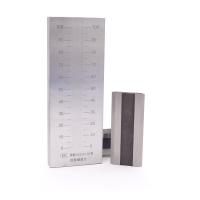
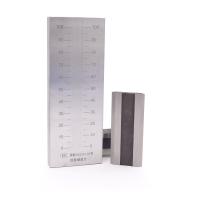
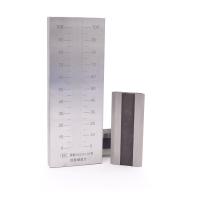
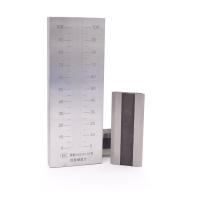
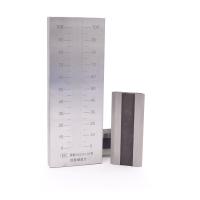
In order to investigate the effect of the amount of dispersant on the fineness of latex paint pigment slurry, sodium hexametaphosphate, SN-5040 and quick-easy dispersant were respectively selected as dispersants, and the dosage was 0, 0.4%, 0.8%, 1.2% of the total mass of latex paint % and 1.6% for research. The pigment is 25% rutile titanium dioxide, the filler is 15% 1250 mesh calcined kaolin, and the stirring speed is 1500r/min. The fineness of latex paint pigment slurry is tested according to the scraper Fineness Meter method stipulated in the national standard GB/T 6753.1-1988, and the results are shown in Figures 3-8, 3-9, and 3-10 respectively.


It can be seen from Figures 3-8, 3-9 and 3-10 that the fineness of latex paint pigment slurry prepared with three dispersants respectively decreases with the increase of dispersion time. When the amount of dispersant increases from 0 to 1.2%, the fineness of the pigment slurry decreases with the increase of the amount of dispersant, but when the amount of dispersant increases to 1.6%, the fineness of the pigment slurry remains unchanged or slightly increases. When the amount of dispersant is 1.2%, and the dispersion time is 30min, the fineness of the pigment slurry with sodium hexametaphosphate as dispersant is 55µm, the fineness of SN-5040 as dispersant is 40µm, and the dispersion with fast and easy dispersant The fineness of the agent is 50µm. This is mainly because, as the amount of dispersant increases, the stable dispersion effect of dispersant on pigment particles in the suspension medium is enhanced, and the dispersion effect is better. When the amount of dispersant is insufficient, the surface of the pigment particles is not effectively covered by the dispersant or the thickness of the adsorption layer is too thin to play the role of steric hindrance; but when the amount of dispersant reaches the saturated adsorption value, the excess dispersant enters the dispersion medium, Bridging between particles leads to flocculation, which makes the dispersion stability worse, the dispersion effect worse, and the fineness increases.