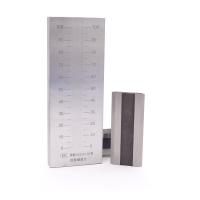
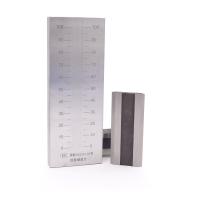
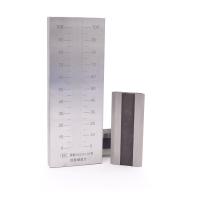
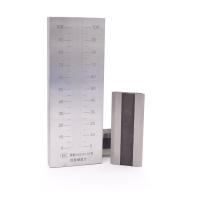
Stirring speed is the key factor that should be controlled in the production of latex paint. In order to investigate the influence of stirring speed on the fineness of latex paint slurry, four points of stirring speed were selected in this study: 800r/min, 1200r/min, 1500r/min, and 1800r/min. To investigate. The pigment is rutile titanium dioxide, the dosage is 25%; the filler is 1250 mesh calcined kaolin, the dosage is 15%, the dispersant is SN-5040, and the dosage is 1.2% of the total mass of the latex paint. The fineness of latex paint pigment slurry is tested according to the scraper Fineness Meter method stipulated in the national standard GB/T 6753.1-1988, and the results are shown in Figure 3-11.

It can be seen from Figure 3-11 that when the dispersion time is 15 minutes and the stirring speed is 800r/min, 1200r/min, 1500r/min, 1800r/min respectively, the fineness of the pigment slurry is 75µm, 70µm, 65µm , 55µm; when the dispersion time is 30min, the slurry fineness is 60µm, 45µm, 35µm, 20µm respectively. As the stirring speed increases, the fineness of the pigment slurry that can be achieved within the same dispersion time decreases, and the dispersion time required to achieve the specified fineness decreases. This is because pigments and fillers are easier to disperse evenly under greater mechanical stirring, so choosing a greater stirring speed is conducive to shortening the production cycle of latex paint. However, if the stirring speed is too high, a large amount of air will be mixed in, more air bubbles will be generated, and the production energy consumption will be increased; if the stirring speed is too low, the pigments and fillers will not be wetted and dispersed evenly, and the storage stability of latex paint will be affected [57]. Therefore, in the dispersion stage of pigments and fillers, in order to bring the pigments and fillers into the pigment slurry quickly and fully disperse, the stirring speed should be selected moderately, generally 1500r/min.