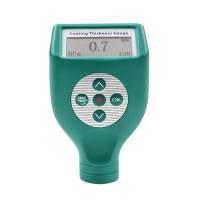
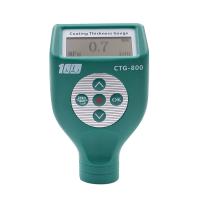
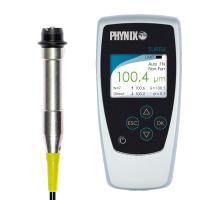
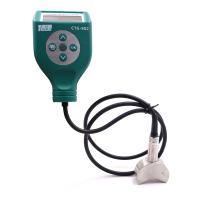
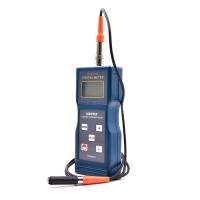
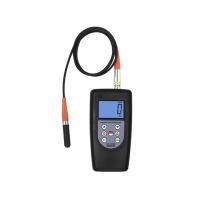
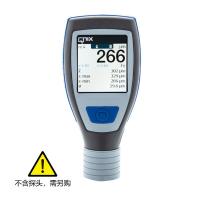
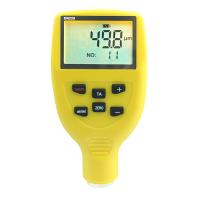
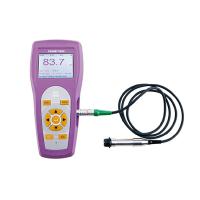
Thickness measurement of both conductive and non-conductive coatings requires precision. The importance of accurate coating measurements in the aerospace industry cannot be overemphasized, as loss of coating material can compromise safety standards and can lead to dangerous failures. Even a small loss of thickness can cause the asset to degrade over time until it becomes severe.

This is why non-destructive testing (NDT) is so important in the routine maintenance of aircraft. Coating thickness measurements using the best possible non-destructive testing methods and equipment help ensure that no defects will be found and enable analysts to make repair or replacement recommendations early on, preventing further complications (which can be costly) more money to settle). The following tips further help analysts enhance and simplify the inspection process to achieve great results.
Tips for Measuring the Thickness of Conductive Coatings
Since conductive coatings can be laminated, sprayed or painted, they are an excellent option for retrofitting or upgrading an aircraft without changing materials. Conductive coatings such as silver, copper, or molybdenum transfer heat and electricity to protect against lightning strikes or freezing.
Any loss of coating thickness can negatively affect the integrity of the coating and expose the substrate layer to several hazards. Ice formation is especially dangerous because it can change the aerodynamics of an aircraft and increase its weight to the point where it is too heavy to operate safely. Additionally, thin or damaged conductive coatings can expose sublayers to corrosion. Therefore, analysts need an instrument that can test for thickness variations while pinpointing areas of potential corrosion.
Tip 1: Choose Good NDT Equipment
To detect thinning early and prevent more dangerous complications, analysts need sophisticated instruments specifically designed to measure the thickness of conductive coatings. Older or substandard instruments may cost less to obtain pre-orders than higher quality alternatives. However, using inferior equipment can lead to increased costs in the future, as it increases the risk of analysts overlooking certain hard-to-detect defects until they become more prominent and require more expensive solutions.
Tip 2: Use a Modular Measurement System
The correct conductivity measurement system depends on various factors such as coating type and material type. However, one method commonly suggested for conductive thickness coatings is the Modular Measurement System (MMS). In addition to substrate materials, the modular system also automates conductivity and thickness measurements. Furthermore, MMS integrates various modules that allow flexible technology. For example, one module can test the thickness of zinc-nickel coatings on non-ferrous materials, while another module can test copper coatings. Another module enables the non-magnetic coating of metals such as copper or zinc using magnetic induction and eddy current measurement techniques.
Tip 3: Use eddy current testing when appropriate
If the top layer of the coating is non-magnetic, eddy current testing (ECT) is also a useful method for measuring the thickness of conductive coatings.
Ultimately, a good way to check the thickness of a conductive coating is determined on a case-by-case basis.
Tips for Thickness Measurement of Non-Conductive Coatings
A non-conductive coating protects components from overheating, electricity and corrosion. For example, if a layer of epoxy is applied to steel, the non-conductive paint protects the steel surface from acidity or rust. The thinner the coating, the more the component is exposed, making it more likely to suffer damage such as thermal fatigue or warping.
Tip 1: Eddy Current Testing Non-Conductive Materials
Eddy current testing is one of the best methods for measuring non-conductive coatings because it can test anodic coatings in addition to most non-conductive coatings based on non-magnetic metals. ECT instruments have features that simplify the examination process and produce comprehensive data. Also, with enhanced technology and software, ECT instruments are more likely to produce fast, accurate results. Modern ECT instruments and scanners with high signal-to-noise ratios (SNR) tend to be more efficient and effective than other testing methods which may require more intensive setup and clean-up and may even damage coatings (such as those methods, The analyst is asked to scrape a sample from the coating itself for testing).
Tip 2: Integrate Surface Array Probing
While even conventional eddy current testing tends to produce higher quality data than other methods, testing that includes surface array probing can further improve data quality and test comprehensiveness. Surface array probing can accommodate non-flat surfaces while detecting thickness variations with impeccable accuracy. A good probe includes a high-quality coil pack for increased accuracy and reliability.
Tip 3: Utilize Portable Instruments
In order to better improve efficiency and convenience, analysts should be equipped with portable ECT equipment. Handheld devices are at the forefront of eddy current testing, offering analysts increased mobility and easy access to certain hard-to-reach areas without sacrificing high SNR. High quality eddy current array handheld instruments can reduce inspection time by up to 95% compared to traditional pencil probes.
Improved Coating Thickness Measurement
More and more people are taking to the skies — airlines carried nearly 4.5 billion passengers to their destinations last year alone. This makes aircraft inspections more urgent than ever. Components can be scanned more thoroughly, and all those passengers (not to mention the crew) will be much safer.
Whether an analyst is testing conductive or non-conductive coating thickness, having the right technique and NDT solution for each application is the key to success. In all cases, high-quality instrumentation, scanners and probes can help improve test efficiency and better reduce the chances of causing coating traps, while the possibility of coating thinning is overlooked.