From simple visual and leak testing to specialized ultrasound or radiography, countless types of non-destructive testing have evolved over the centuries. Each different material to be tested has different properties, some of which are more favorable for a type of nondestructive testing. NDT's methods vary in how it tests, the equipment required, the speed and coverage it provides, and in some cases the safety precautions required.
There is no one-size-fits-all "good" NDT method. In any case, the best approach is the one that best meets the needs of the organization using it. In modern industry, speed, ease of use and range of applications are often optional qualities in an NDT solution.
Ultrasonic testing (UT)
Ultrasonic testing has been proven to be one of the most effective methods for modern non-destructive testing. The method works by introducing high-frequency sound waves into a solid object, usually a metal or composite material. The propagation of sound waves is affected by irregularities such as density changes, cracks, voids, honeycombs or foreign objects. By collecting and interpreting the returning sound waves, ultrasonic testing equipment can map the interior of many solid objects. Depending on the equipment used and the requirements of the application, waves reflected back or through the material being scanned can be collected.
Ultrasonic testing relies on transducers to convert electrical energy into ultrasonic waves. While older methods used only one transducer at a time, modern Phased Array Ultrasonic Testing (PAUT) equipment uses multiple transducers operating in series. This technology greatly improves inspection speed, coverage and specificity.
More recently, higher capabilities have been added to specialized PAUT instruments, including Time-of-Flight Diffraction (TOFD) and Total Focusing Method (TFM). These newer technologies are well suited to handle more complex inspections.
Ultrasonic equipment is commonly used in volumetric testing throughout the industry due to its several advantages. PAUT provides fast, accurate readings with minimal setup. The equipment itself can be light enough for on-site handling, yet strong enough to handle harsh environments. The range of testing applications for ultrasonic overlays makes the technology attractive to large organizations as it simplifies the company's equipment procurement and training scenarios.
Like all NDT methods, ultrasonic testing is not great for every application. Coarser-grained materials such as iron interfere with wave propagation. Odd geometries, including curved surfaces, sometimes create coverage difficulties without defined expertise or a complete solution. Additionally, probe quality can significantly affect penetration depth and image quality.
Eddy Current Test (ECT)
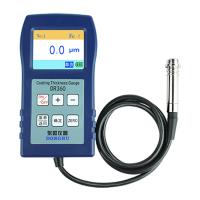
Eddy current testing uses a magnetic field to create an image of a conductive material. Variations in material properties create discontinuities in the wild, similar to the way rocks create eddies in a stream. These changes provide signs of corrosion, cracks, voids, honeycombing, delamination and loss of thickness.
Eddy current technology is used regularly in the industry for its portability, speed and accuracy. One of the most critical uses of eddy current testing is in the power generation industry. The eddy current technique has proven to be effective and economical for inspecting heat exchangers and cooler tubes. Handheld eddy current devices allow for in-situ inspections, reducing the downtime required to perform inspections.
A new innovation in eddy current testing is the eddy current array (ECA) technology, which is ideal for surface and near-surface mapping in numerous industries including aerospace, rail, manufacturing, oil and gas. ECA is a very fast, cost-effective and easy-to-use technique that provides highly accurate results.
Although eddy current technology can penetrate thin, non-conductive coatings, such as zinc on galvanized steel, its use is limited to conductive materials. Additionally, eddy currents can have difficulty with complex geometries or large areas. Although these limit the range of the eddy current device, within its parameters it remains an effective tool.
Vision Test (VT)
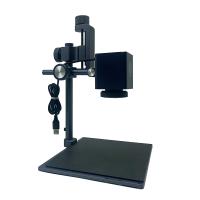
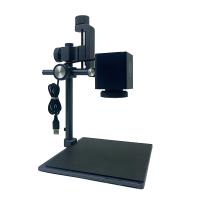
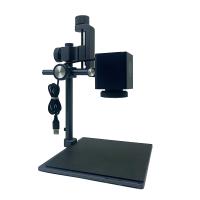
An older type of NDT is visual inspection. It uses low-power equipment, including borescopes and fiberscopes, to monitor for defects. Quick, inexpensive, and straightforward visual testing can serve as an initial tool for identifying asset and infrastructure problems ranging from cracks to corrosion. But when trying to identify many different types of material failures early enough to safely repair or replace equipment, visual testing is not enough. Vision inspections will fail when the line of sight is obstructed or the defect is small or internal. In fact, various shortcomings of visual inspection have led to the necessity of other forms of nondestructive testing.
Remote Ultrasonic Testing (LRUT)
Remote UT is an ultrasonic testing method specifically for pipelines. Ultrasonic transducers or coils are built into loops that travel along the pipe. The transducer sends out waves, which provide an image of the inside of the tube wall. Irregularities and thickness variations alter the waves, revealing themselves to the technician. This method does not require a liquid couplant between the transducer and the surface.
Leakage Flux (MFL)
Flux leakage is an effective field testing technique primarily used to inspect large pipes, pipes and tank bottoms. Powerful magnets are used to saturate materials with magnetic fields. The sensor detects magnetic field fluctuations caused by differences in material properties such as corrosion, pitting, thickness loss or cracks. Using a magnet and a sensor that moves along the length of the cylinder, the pipe can be scanned without removing the insulation. The tank floor needs to be scanned using field generators arranged in series. The technique is suitable for ferrous materials and is an effective method for detecting defects in large infrastructures.
Laser Test Method (LM)
Three types of laser-based NDT dominate—profilometry, shear imaging, and holographic testing. Profilometry uses a rotating laser to image the outer surface of a pipe, detecting cracks, corrosion or pitting.
Shear imaging is a highly accurate "before and after" method for detecting material defects. The laser records images of the material before and after stress is applied, and uses the detected differences to infer internal structure.
Holography uses a similar "before and after" approach to infer micron-scale defects. The two techniques differ in the equipment and software used to generate the results. For larger surfaces, the shearing method is optional. Small holograms.
Radiographic Test (RT)
Radiographic testing entered the public imagination with the X-ray machine. This method uses radiation to penetrate the object and recording medium. Darker areas on the recording medium indicate more radiation passing through that area of the object, indicating cracks, voids or density changes. X-rays are typically used for thinner materials. Gamma rays are more concentrated. Film or computer sensors can be used as the recording medium. Radiographic testing requires extensive equipment and expertise, as well as safety precautions to prevent overexposure to radiation.
Neutron radiography tests use concentrated neutron rays rather than X-rays or gamma rays to penetrate an object. A linear accelerator or an electron accelerator is required to generate these neutron beams. Neutrons pass through metals, but not through most organic materials. When combined with standard radiography, it can provide more detailed images of the interior of an object. This technique should only be used in a laboratory environment.
Magnetic Particle Testing (MT)
Magnetic particle testing uses the motion of indicator particles to demonstrate discontinuities within ferromagnetic materials. The parts to be tested need to be coated with dyed magnetic particles, either as a dry powder or as a liquid suspension. A magnet induces an electromagnetic field into the material to be tested. The magnetic field moves the magnetic particles toward any discontinuity transverse to the direction of the magnetic field, visually revealing the defect.
Magnetic particle testing is a broad discipline and a variety of methods can be used to sense magnetic fields. Magnetic particle testing requires extensive setup and cleanup, making it not easily available in the field.
Acoustic Emission Testing (AET)
Acoustic emission testing relies on a similar principle to ultrasonic testing, namely the transmission of sound waves through solid objects. However, wave propagation and measurement are done in different ways. Waves are induced by a sharp application of force to an object, such as the impact of a hammer or other mechanical load. Changes in temperature and pressure also cause appropriate fluctuations.
Rather than listening for changes in wave properties and the mapping of those properties, acoustic emission testing detects the physical movement of the medium itself. Changes or inconsistencies in the material of an object (such as voids) can be detected by differences in motion detected by separate sensors. Acoustic emission testing, while effective for plastics and other materials, is less common and more equipment-intensive than other nondestructive testing methods. This technique is often found in laboratory settings.
Thermal/Infrared Testing (IRT)
Thermal testing uses captured infrared radiation emanating from an object to provide an image of the object's surface. Thermal imaging can indicate corrosion, voids, foreign matter or delamination. In order for the thermal imaging camera to have a direct line of sight, the area to be scanned needs to be masked. While thermal testing can be effective, the defects it detects can also be corrected by other methods that require far less extensive setups.
Vibration Analysis (VA)
Vibration analysis excels at testing the integrity of rotating parts, including turbines, gears, shafts and bearings. Three types of vibration analysis are commonly used: accelerometers, velocity sensors, and eddy current displacement sensors.
Accelerometers are sensitive to high speeds and are therefore effective for high speed applications. Speed sensors use magnets to generate an electric field from a rotating part, making it effective to measure parts moving at slow or moderate speeds.
Eddy current displacement sensors measure the physical motion of rotating parts on unwanted horizontal or vertical axes. They can detect changes in play or shaft motion, indicating the need for repair.
Liquid Penetration Test (PT)
Liquid penetrant testing can visually reveal cracks or other imperfections attached to a material's surface. Liquid penetrants are primarily used on non-porous materials, as porous materials will mask signs of defects. This test method involves coating or immersing the material in an indicating solution. The fluid flows into openings in the surface of the material. When the liquid remaining on the surface is removed, the liquid returns from the crack. Anywhere the liquid resurfaces shows a defect; the more liquid, the bigger the defect.
Without channels connecting the blemish to the surface, liquids cannot get in. Therefore, other methods are needed to detect closed voids or cellular structures. The surface of the material also needs to be cleaned, as oil and other residues must not interfere with the ability of the fluid to enter the crevices. Additionally, liquid penetrants require extensive equipment, setup and cleanup to handle the liquid itself. Although this technique can be used effectively, it is generally slower and more cumbersome than other NDT methods.
Leak Test (LT)
Leak testing is a class of non-destructive testing that involves several methods of determining whether a leak exists in a sealed container. There are four common methods of detecting gas leaks, although they are somewhat similar. A pressure change test applies pressure or creates a vacuum in a sealed container. Loss of pressure or vacuum indicates a leak. Bubble testing also relies on pressure indicators. The part is pressurized and then submerged in the liquid. The presence of air bubbles indicates the location of the leak.
Halogen diode and mass spectrometer tests are similar in that both use an identifying gas to detect the presence of a leak. Halogen or helium gas (usually mixed with air) is introduced into the pressurized container. A halogen diode Detector or mass spectrometer located outside the pressurized area alerts technicians to the presence of halogen or helium, indicating a leak.
Some bubble testing can be performed in the field using specialized equipment to create sealed areas on large and/or flat surfaces. However, bubble testing and other leak testing methods are time-consuming and require cumbersome equipment and setup. They are better performed in a laboratory setting.
Comparison of Nondestructive Testing Methods
Comparing different types of NDT can be difficult. Each is unique and designed for its purpose. This also means that depending on the application, a specific type of NDT may be required or optional. Still, when the choice is unclear, it is important to understand the relative merits of each NDT technology in order to make the right equipment decision.
The table below provides a general comparison of the different types of NDT, the materials they typically use, and practical considerations such as speed, setup requirements, and hazards.