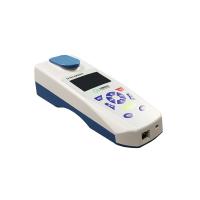
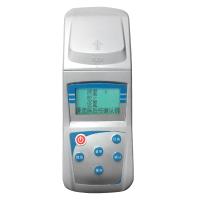
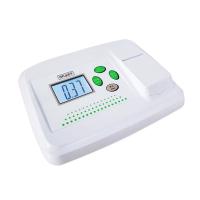
Cloudy water contains particles or sediment that make it thick or cloudy. Laboratory test equipment for drinking water, wastewater treatment, and water treatment applications that measure turbidity are best accomplished with turbidimeters.

Good Laboratory Equipment Practice for Turbidity Measurements
Avoid samples containing air bubbles, coarse debris or floating sediment, all of which can lead to erroneous measurements.
For high accuracy, calibrate the nephelometer with appropriate calibration standards in each measurement range.
Etched, scratched, or dirty vials can scatter light and cause inaccurate readings; be sure to use clean vials or extra-long tubes with protective sleeves for handling outside the measurement area.
Wear gloves to avoid soiling or fingerprints on the vial surface and keep surfaces clean.
Take readings on a smooth, solid surface - vibration can cause measurement errors.
Regulatory Methods for Turbidity Measurements
Depending on your needs, look for instruments that meet one or more of the following criteria:
ASTM D6855-03 — EPA-approved standard test method for the static determination of turbidity below 5 NTU, primarily for municipal potable and ultrapure water.
ISO 7027 (DIN EN 27027) - Commonly used worldwide; it specifies a light source with a wavelength of 860 nm, most commonly a Light Emitting Diode (LED).
US EPA Method 180.1 - Also commonly used in the US; it specifies tungsten light sources with wavelengths between 400 and 600 nm. Products that comply with EPA standards and regulations are designated by this icon.