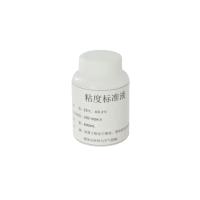
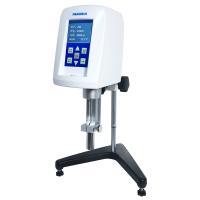
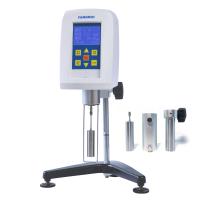
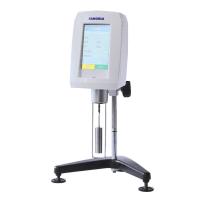
Accurately measuring viscosity, or the resistance to flow of liquids, is an essential part of quality control in the cosmetics industry. Some liquids need to have a certain type of viscosity in order to prove effective for the purpose for which they were designed. For example, lip balm needs to be highly viscous in order to adhere properly and protect the skin. In contrast, body mist needs to have a very low viscosity to allow it to flow freely from the dispenser in an even manner. Some cosmetics need to have a specific viscosity to satisfy customer impressions and research recommendations; marketed "rich" or "luxury" cosmetics may have a high viscosity, while products touted as "light" or "natural" may have a low viscosity .
QC
Whatever the reasons behind product design, it cannot be overstated how important to customer satisfaction is consistent and controlled viscosity quality throughout the production line. Additionally, viscosity can affect the chemical stability of cosmetics in their packaging over time. Therefore, given the many reasons why viscosity is important to the overall quality of cosmetic products, measuring viscosity has become critical to the success of cosmetic production companies.
Instrument and Viscosity
Although viscosity testing can be performed on cosmetic manufacturing equipment in a variety of ways, in general the most common test in the industry is the mechanical viscometer. The exact type of viscometer required for each cosmetic type depends on the nature of the liquid and the expected viscosity. For example, oil-based and water-based cosmetic compounds would be ideal for testing with a glass capillary or falling ball viscometer. Glass capillary viscometers measure the viscosity of a product by using gravity as the driving force only. Falling ball viscometers can be used with any Newtonian liquid or gas and operate according to Newtonian physics as the ball passes through the cosmetic mixture.

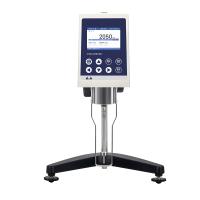
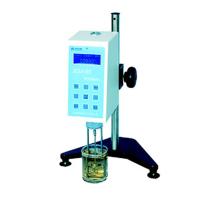
However, other cosmetic compounds, such as certain elastic soaps, should be tested with a Rotational Viscometer. These non-Newtonian liquids measure the viscosity of a liquid as a measure of the torque required to move an object through a cosmetic compound. There are many types of Rotational Viscometers on the market with variable measuring range width and accuracy. Ultimately, regardless of the viscometer, the machine will only measure the viscosity of cosmetics under one condition. For more complex materials whose viscosity changes under certain conditions, a rheometer is required.
For most cosmetic compounds, a viscometer is a low-cost, precision instrument ideal for viscosity control testing required for stable production. Often, these devices are also small enough to be moved around the production area so multiple products at multiple points in the production line can be routinely tested on one production line. For smaller cosmetic companies, even those that do not produce large volumes of complex compounds, viscometers provide a unique, valuable, and versatile quality control device. However, many cosmetic companies will use rheometers during the development phase because they provide more data on how a compound's elasticity and viscosity will react under various conditions, including pressure and heat.
Of course, there are manual methods to test viscosity, although a mechanical viscometer with accurate, reliable and easily calibrated results is highly recommended. All it takes is a cup, or an extra graduated cylinder, and a small ball to determine the viscosity of one liquid relative to another. However, these relative viscosities are of little interest for internal documentation or quality control. Mechanical viscometers and rheometers will provide absolute viscosity to measure future production lines.

For those who are developing cosmetic products, it is essential for the serious developer to use both rheometers and viscometers to isolate any compound instabilities or weaknesses, ensure product reliability and performance, and benefit consumers and other stakeholders Ensure the consistency and quality of the production line. A good viscometer will be able to provide high accuracy readings in a short amount of time and offer easy-to-use features including absolute values, simplified cleanup, mobility and a wide measurement range. With the increase in the variety of modern machines, the versatility of the machines makes the initial investment cost much lower.
Manual Viscosity Test
Finally, those developing cosmetic products may wish to initially employ manual viscosity testing during the actual conception phase of a formulation. At this juncture, before serious production problems, it may be economical and most prudent to use the manual method. Newtonian fluids are well suited to the simple formula that viscosity equals shear stress divided by shear rate. Alternatively, for a simple comparison of viscosities, many developers list the viscosity of a compound as a measure of viscosity relative to water. Very low viscosity water is a good low point of comparison for cosmetic compounds, which are usually formulated much slower than pure water.
Regardless of the method used, it is clear that viscosity and consistency of viscosity are important in developing and producing good cosmetics. By using a mechanical viscometer or rheometer, developers can ensure accurate readings and benchmarks for production from the start of a production project.