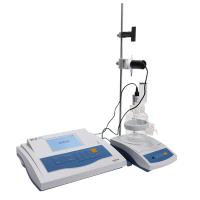
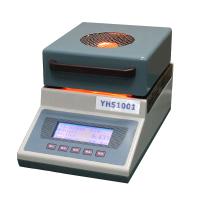
At first glance, determining the moisture content of a liquid may seem contradictory. Liquid is moisture after all, right? However, consider the difference in taste between a good vegetable juice brand and the watered down flavor of a cheaper brand. That's why processors of good liquid products such as juices and syrups use moisture analyzers to determine whether their products meet their own and industry standards.
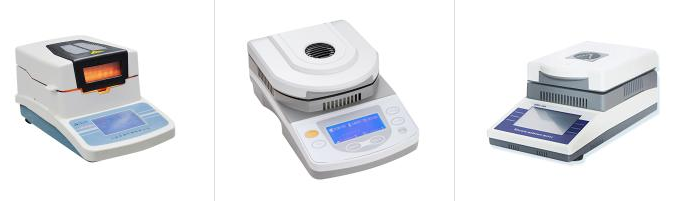
Drying the oven to remove excess moisture is part of the process step in preparing products such as vegetable juices. However, spot checks should be performed with a moisture analyzer prior to packaging. Also known as moisture balances, these devices consist of a halogen heater mounted on a precision analytical balance. Program them to determine moisture content by thermogravimetry and display loss on drying (LOD). "Dry" seems to be the wrong term here, since liquids are never completely "dry". What we are looking for is a target moisture content for the suspended solids in the liquid.
Setting Up Your Moisture Analyzer
Sample preparation is slightly different for measuring the moisture content of liquids such as carrot juice and/or orange juice than for "dry" products such as sugar, coffee or dried vegetables. The sample is not "opened" by the sample pan, but is covered by a glass fiber filter. This ensures an even distribution of liquid over the sample pan due to the capillary effect, prevents droplet formation and supports rapid evaporation due to the large surface exposed to the heat of the halogen.
Target moisture levels will vary depending on the product being tested and are determined by industry or government standards. These parameters are programmed into a moisture analyzer such as the Torbal ATS 60 available from Tovatech. For liquids, such as vegetable juices, the moisture analyzer should be set to fast drying rather than standard drying. During the initial stages of the quick dry cycle, the output of the heater is 40% above the set temperature. This compensates for the heat absorption of vaporization and speeds up the drying process.
Place the sample pan and glass fiber filter in the moisture analyzer's sample pan holder and tare them before performing the test. Remove the glass fiber filter and pipette 4 g of the vegetable juice sample onto the sample pan and cover with the filter. The process is started by closing the lid of the moisture balance. For vegetable juices, a typical time/temperature cycle might be 14-16 minutes at 140°C.
The moisture analyzer will shut off after (1) a fixed period of time or (2) when the weight loss is no longer stable because no more water is being expelled. The moisture content is displayed on the LCD screen. For record keeping, information can be logged to a printer or PC.
What is the moisture content of the liquids handled in your facility? How often do you check moisture content as part of your quality control program?