First, liquid surface tension and viscosity share a common feature: they both relate to the properties of fluids. After that, things start to get murky.
Let's start with surface tension. This is related to surface tension - the property of the floating pulp's resistance to the surface of the liquid. Not only does it block foreign objects, but it also keeps liquids together. This ever-present property is caused by unbalanced forces on the surface molecules that pull towards the bulk of the liquid.

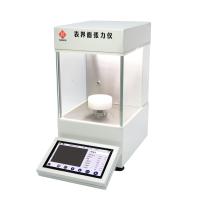
Surface tensiometer
Viscosity, on the other hand, is related to the ability of a viscous shear rate fluid to resist deformation or movement. This is due to friction between molecules.
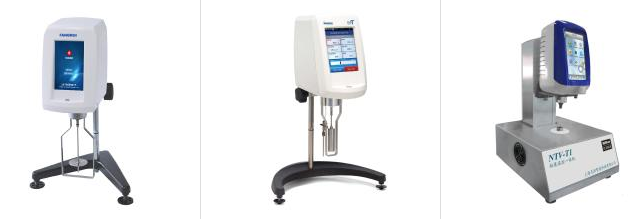
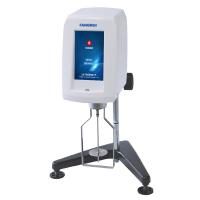
Rotational Viscometer
Surface tension is a simple phenomenon compared to viscosity. It is basically stable and is mainly affected by temperature and chemicals that alter the bonding properties of the molecule. As the temperature decreases, the surface tensio n increases. The example of putting soap (a surfactant) in water to lower surface tension illustrates the effect of adding extraneous substances, which can make dirt on your hands mix more easily with water.
When it comes to viscosity, the importance of knowing the type of liquid cannot be overemphasized. For example, there are Newtonian fluids that respond to a force (sometimes called shear rate) that moves the liquid in a direct, linear fashion (sometimes called shear stress).
However, non-Newtonian fluids follow a different set of rules. The reduced viscosity of the shear-thinning fluid increases the ketchup pressure or force. Thixotropic fluids change viscosity over time - like gels and colloids, and yes, ketchup is stable at rest but becomes fluid when agitated.
Therefore, we find that finding the true value of viscosity (which some of us may see as simple thickness) is a complicated process. Viscosity is different from thick to thin surface tension (which tends to be a static phenomenon), which is related to motion. With regard to measuring surface tension, we should be concerned whether to use the Wilhelmy Plate or the duNouy Ring. (That's enough to make me happy.)
The last question, and probably should be the first, is about the relationship between surface tension and viscosity. You'd think that a thick fluid would translate to high surface tension, while a thin fluid would produce lower surface tension. wrong. In fact, my research shows no conclusive correlation.
This is more theoretical entanglement than might be expected when initially considering a simple comparison of international numbers. However, the answer is clear: there is no correlation. The reason is not that simple. A good summary is that surface tension is related to homeostasis whereas viscosity is related to motion.