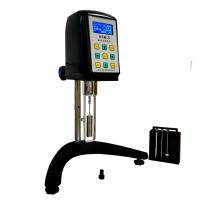
When a liquid flows, the property of internal friction between its molecules is called the viscosity of the liquid. The viscosity is expressed by viscosity, which is used to characterize the blocking factor related to the properties of the liquid. Viscosity is divided into dynamic viscosity, kinematic viscosity and conditional viscosity.
The property of internal friction of a liquid as it flows inside is called the viscosity of the liquid. Viscosity is expressed in terms of viscosity and is used to characterize the drag coefficient associated with a fluid. Viscosity is divided into dynamic viscosity, kinematic viscosity and conditional viscosity.
The flowing liquid heights are parallel to each other, and the velocity of each layer is different, forming a velocity gradient (dv/dx), which is the basic characteristic of flow. Due to the existence of the velocity gradient, the slow-flowing liquid layer is blocked. In order to maintain a certain velocity gradient movement of the liquid layer, it is necessary to exert a relatively opposite reverse force on the liquid layer. The shear rate (D) of this force applied on the unit liquid layer area (D) D = dv/dx (S-1) The shear stress and the shear rate are two basic parameters that characterize the rheological properties of the system. Fluids in different planes but parallel, having the same area "A", separated by a distance "dx", and flowing in the same direction with different variables "V1" and "V2", Newton postulates that the forces maintaining this difference are proportional to the relative velocities of the fluids Or the velocity gradient, namely: τ=ηdv/dx =ηD (Newton's formula) where η is related to the material properties, which we call "viscosity".
A flowing liquid is viewed as many liquid layers moving parallel to each other. The velocity of each layer is different, forming a velocity gradient (dv/dx), which is the basic characteristic of flow. Due to the velocity gradient, the slower-flowing liquid layer blocks the flow of the faster-moving liquid layer, so the liquid creates resistance to motion. In order to keep the liquid layer moving with a certain velocity gradient, it is necessary to apply a counter force against the resistance to the liquid layer. This force exerted on the unit liquid layer area is called shear stress or shear force τ (N/m2). Shear rate (D) D = dv/dx (S-1) Shear stress and shear rate are two basic parameters to characterize the rheological properties of the system. Two different planar but parallel fluids have the same area "A", are separated by a distance "dx", and flow in the same direction with different flow velocities "V1" and "V2". Newton assumed that this force of different flow rates is proportional to the relative velocity or velocity gradient of the fluid, namely: τ=ηdv/dx =ηD (Newton's formula) where η is related to the material properties, which we call "viscosity".
Two plates with an area of 1㎡ are immersed in the liquid, and the distance between the two plates is 1 meter. If a shear stress of 1N is applied to make the relative velocity between the two plates 1m/s, then the viscosity of the liquid is 1Pa.s .
将两个面积为1平方米的板浸入液体中。两块板之间的距离为1m。如果施加1N的剪应力,则两块板之间的相对速度为1m / s。液体的粘度为1Pa·s。。
粘度只与温度有关,与切变速率无关,τ与D为正比关系。牛顿流体:符合牛顿公式的流体。
牛顿流体:符合牛顿公式的流体。粘度仅与温度有关,与剪切速率无关。τ和D彼此成正比。
非牛顿流体:不符合牛顿公式τ/ D = f(D),以ηa表示一定(τ/ D)下的粘度,称表观粘度。
非牛顿流体:不符合牛顿公式τ/ D = f(D),ηa表示在一定值(τ/ D)处的粘度,这称为表观粘度。
又称粘性系数,剪切粘度或动力粘度。流体的一种物理属性,替换为流体的粘性,对于牛顿流体,可用牛顿粘性定律定义之:
也称为粘度,剪切粘度或动态粘度。用于测量流体粘度的流体的物理特性。对于牛顿流体,牛顿粘度定律可以定义为:
式中μ为流体的粘度;τyx为剪切应力; ux为速度分量; x,y为坐标轴; dux / dy为剪切应变率。流体的粘度μ与密度ρ的比值称为运动粘度,以v表示。
其中μ是流体的粘度;τyx是剪切应力;ux是速度分量;x,y为坐标轴;dux / dy是剪切应变率。流体的粘度μ与密度ρ之比称为运动粘度,用v表示。
粘度随温度的不同而有显着变化,但通常随压力的不同发生的变化较小。液体粘度转移温度升高而相反,气体粘度则随温度升高而增大。对于溶液,常用相对粘度μr表示溶液粘度μ和溶剂粘度μ之比,即:
粘度随温度变化很大,但通常随压力变化较小。液体粘度随温度升高而降低,而气体粘度随温度升高而升高。对于溶液,相对粘度μr通常用于表示溶液粘度μ与溶剂粘度μ之比,即:
相对粘度与浓度C的关系可表示为:
相对粘度和浓度C之间的关系可以表示为:
μr= 1 +【μ】C + K′【μ】C +…
式中【μ】为溶液的特性粘度,
【μ】,K′均与浓度无关。
其中μ是溶液的特性粘度,
K'是一个系数。μ和K'都与浓度无关。
在压强为101.325kPa,温度为20℃的条件下,空气,水和甘油的动力粘度和运动粘度为:
不同流体的粘度差异很大。在101.325 kPa的压力和20°C的温度下,空气,水和甘油的动态粘度和运动粘度为:
空气μ= 17.9×10⁻⁶Pa·s,v = 14.8×10⁻⁶ m2 / s
水μ= 1.01×10⁻³Pa·s,v = 1.01×10⁻⁶m2 / s
甘油μ= 1.499Pa·s,v = 1.19×10⁻³m2 / s
由于粘度的作用,使物体在流体中运动时受到摩擦阻力和压差应变,导致机械能的损耗(见流动阻力)。
由于粘度的影响,当物体在流体中移动时,会引起摩擦阻力和压差阻力,从而导致机械能的损失(请参阅流阻)。
各种流体的粘度数据,主要由实验测得。常用的粘度计有螺杆式,落球式,锥板式,转筒式等。在工业上有时用特定形式的粘度计来测定特定的条件粘度。如炼油工业中常用的恩氏粘度(或恩格拉粘度)作为石油产品的一个指标,它表示特定温度下200cm油品与同体积20℃纯水,从恩氏粘度计中所需的时间之比。恩氏粘度与动力粘度的关系可按经验公式换算。又如橡胶工业中常用门尼粘度为特定橡胶平均分子量及可塑性的一个指标。
各种流体的粘度数据主要通过实验测量。常用的粘度计包括毛细管型,落球型,锥板型和鼓型。在工业上,某些类型的粘度计有时用于确定特定的条件粘度。例如,炼油工业中通常使用的Enzi粘度(或Engela粘度)是石油产品的指标。它表示在一定温度下200厘米的油和20度的纯水从恩氏粘度计流出所需的时间比率。。Enzi粘度和动态粘度之间的关系可以通过经验公式进行转换。
对于压力不太高的气体,输出结果较准;对于液体则较差。对非均相流体(如低浓度悬浮液)的粘度。 ,可以用爱因斯坦公式估计:
In the absence of viscosity test data, the viscosity can be estimated from theoretical or empirical formulas. For lower pressure gases, the estimates are more accurate; for liquids, they are worse. Einstein's formula can be used to estimate the viscosity of heterogeneous fluids (such as low-grade
suspensions): where μm is the viscosity of the suspension; μ is the viscosity of the continuous phase liquid; φ is the volume fraction of the dispersed phase in the suspension; dd is the dispersed phase viscosity. When the dispersed phase is solid particles, μd→∞; when the dispersed phase is air bubbles, μd→0, μm=(1 +φ)μ.
Where μm is the viscosity of the suspension; μ is the viscosity of the continuous phase liquid; φ is the volume fraction of the dispersed phase in the suspension; μd is the viscosity of the dispersed phase. When the dispersed phase is a solid particle, μd→∞, and when the dispersed phase is a bubble, μd→0, μm=(1+φ)μ.
Viscosity is a measure of the viscous retention of a fluid and an indication of the internal friction phenomenon caused by fluid flow forces. The greater the viscosity, the greater the internal friction, the higher the molecular weight, and the more carbon and hydrogen are combined, the less this force will be. Viscosity is decisive for various lubricating oils, quality identification and determination, usage and combustion performance and cost of various fuel oils. At the same distillate temperature, petroleum products with alkanes as the main components have low viscosity and better viscosity-temperature properties, that is, higher viscosity index, that is, the ratio of viscosity change with temperature; cycloalkanes (or aromatics) Oil products with reduced components have higher viscosity, that is, poor viscosity-temperature properties; heavy fuel oil has high viscosity, and the kinematic viscosity can reach 18~ after preheating. Oils containing lipids and aromatic hydrocarbons have the highest viscosity and the worst viscosity-temperature properties, that is, the lowest viscosity index. 20mm2/s (40°C), which is conducive to the uniform injection of oil from the injector.
粘度是流体粘度的量度,并且是流体流动力的内部摩擦现象的表示。粘度大表示内部摩擦大,分子量越大,烃的结合越多,功率越大。粘度对于各种润滑油,各种燃料油的质量鉴定和确定,用途以及燃烧特性和成本具有决定性的意义。在相同的蒸馏温度下,以烷烃为主要成分的石油产品具有较低的粘度和良好的粘度-温度特性,即较高的粘度指数,即粘度随温度变化的变化较小。并含有环烷烃(或芳烃具有较高的油组成粘度,即较差的粘度和温度;胶和芳族化合物具有很高的粘度,粘度和温度具有最低的粘度指数,即最低的粘度指数。粘度通常表示为运动粘度,单位为mm2 / s。重质燃料油具有大的粘度,并且在预热之后,运动粘度达到18-20mm 2 / s(40℃),这对于燃料喷射器的均匀喷射是有利的。
粘度测定有:动力粘度,运动粘度和条件粘度三种测定方法。
粘度通过三种方法测量:动态粘度,运动粘度和条件粘度。
(1)动力粘度:ηt是二液体层相距1厘米,其面积各为1(平方厘米)相对移动速度为1厘米/秒时所产生的粘度,单位为克/厘米·秒。1克/厘米·秒= 1泊一般:工业上动力粘度单位用泊来表示。
(1)动态粘度:ηt是当两个液体层分开1cm并且每个区域为1(平方厘米)且相对移动速度为1cm / s时产生的电阻,单位为g / cm·sec。1g / cm·sec = 1 poise概述:工业上的动态粘度单位以泊位表示。
(2)运动粘度:在温度t℃时,运动粘度用符号γ表示,在国际单位制中,运动粘度单位为斯,即每秒平方米(m2 / s),实际测定中常用厘斯,( cst)表示厘斯的单位为每秒平方毫米(即1cst = 1mm2 / s)。运动粘度广泛用于测定喷气燃料油,柴油,润滑油等液体石油产品深色石油产品,使用后的润滑油,原油等的粘度,运动粘度的测定采用逆流法
(2)运动粘度:当温度为t℃时,运动粘度用符号γ表示。在国际单位制中,运动粘度为S,即m 2 / s,实际测量通常在COS中使用。Cst)表示厘秒的单位是平方毫米每秒(即1 cst = 1 mm2 / s)。运动粘度被广泛用于确定液体石油产品的粘度,例如喷气燃料油,柴油和润滑油,深色石油产品,使用过的润滑油和原油。运动粘度使用逆流法测量。
(3)条件粘度:指采用不同的特定粘度计所测得的以条件单位表示的粘度,各国通常用的条件粘度有以下几种:
(3)条件粘度:是指通过不同比粘度计以条件单位测量的粘度。以下条件在各个国家/地区通常使用:
是一定量的薄片,在规定温度(如:50℃,80℃,100℃)下,从恩氏粘度计改为200毫升一块所需的粘度。温度t时,恩氏粘度用符号Et表示,恩氏粘度的单位为条件度。的时间与蒸馏水在20℃相同的体积所需要的时间。
①恩氏粘度也称为恩格勒粘度。给定数量的样品在指定温度(例如50、80和100)下从Enzi粘度计中流出的200 ml样品和在20相同体积的蒸馏水流出所需的时间是否是多少?(秒)比率。在温度t下,Enzi的粘度用符号Et表示,Enzi的粘度单位为条件度。
是一定量的片断,在规定温度下从赛氏粘度计代替200毫升所需的秒数,以“秒”单位。赛氏粘度又分。②赛氏粘度,即赛波特(sagbolt)粘度。为赛氏通用粘度和赛氏重油粘度(或赛氏弗罗(Furol)粘度)类型。
②盐度粘度,流挂粘度。给定数量的样品在指定温度下从Siegel粘度计流出200 ml所需的秒数(以秒为单位)。叙利亚粘度分为两种:叙利亚通用粘度和Saybolt重油粘度(或Furol粘度)。
是一定量的片断,在规定温度下,从雷氏度计替换50毫升所需的秒数,以“秒”为单位。雷氏粘度。又分为雷氏1号(Rt表示)和雷氏2号(用RAt表示)两种。
③Rayleigh viscosity is mahogany viscosity. The number of seconds (in seconds) required for a given quantity of sample to be expelled from the Raeometer in 50 ml at a specified temperature. Rayleigh's viscosity is divided into two types: Rees 1 (Rt) and Reb 2 (expressed as RAt).
The above three conditional viscometry methods are commonly used in European and American countries. In addition, except for the measurement of dark lubricating oil and residual oil with the Engel viscometer, the other two viscometers are rarely used. Various conditional viscosities have different representation methods and units, but the relationship between them can be converted through graphs. At the same time, Engel's viscosity and kinematic viscosity can also be converted, so it is convenient and flexible to combine.
The above three conditions of viscosity measurement methods are commonly used in Europe and the United States. Except for the dark lubricating oil and residual oil measured by the Enzi viscometer in CHINA, the other two viscometers are rarely used. The three conditions of viscosity show that the methods and units are different, but the relationship between them can be converted by graphs. At the same time, Enn's viscosity and kinematic viscosity can also be converted, which is more convenient and flexible.
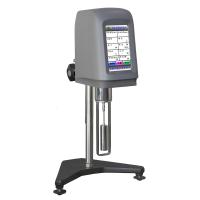
There are many methods for measuring viscosity, such as rotating barrel method, falling ball method, damped vibration method, cup viscometer method, screw method and so on. For fluids with low viscosity, such as water, ethanol, carbon tetrachloride, etc., viscometers are commonly used to measure; for fluids with viscous stress, such as castor oil, transformer oil, engine oil, glycerin and other transparent (or translucent) liquids, falling balls are commonly used method for determination; for liquids with a viscosity in the range of 0.1 to 100 Pa·s, the drum method can also be used for determination.
There are many methods to determine viscosity, such as barrel method, falling ball method, damped vibration method, cup viscometer method, capillary method, etc. For water, ethanol, carbon tetrachloride and other small viscosity fluids, capillary viscometer is commonly used for measurement; for large viscosity fluids, such as castor oil, transformer oil, engine oil, glycerin and other transparent (or translucent) liquids, the falling ball method is usually used for measurement ; For the viscosity range of liquid is 0.1~100Pa·s, also can measure by drum method.