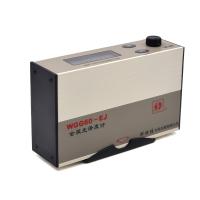
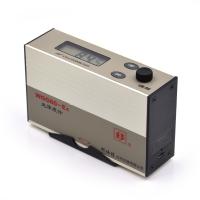
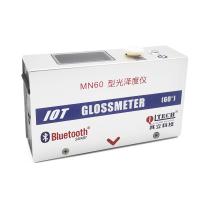
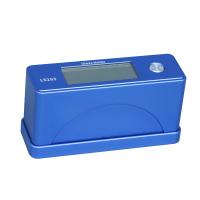
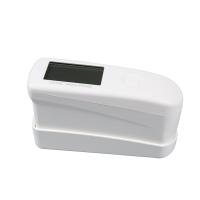
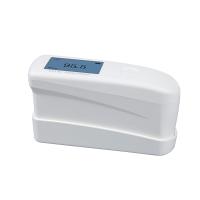
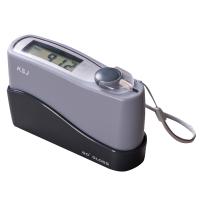
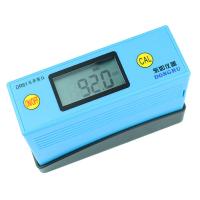
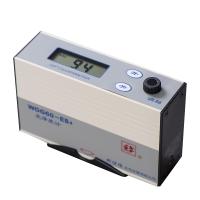
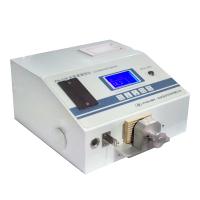
Traffic safety signs provide instructions for people's safe operation, so not only the color but also the gloss requirements are relatively high. Gloss is one of the important indicators for the surface quality inspection of safety signs. The gloss of the reflective film can be measured with a gloss meter. This article mainly introduces the measurement of gloss on the surface of safety signs by gloss meter.

First understand the requirements for the surface gloss of safety signs:
Reflective film is a retroreflective material that has been made into a film and can be directly applied. It is made by glass bead technology, microprism technology, synthetic resin technology, film technology and coating technology and micro-replication technology. For the reflective film on the surface of the safety sign, in order to have a better warning effect, the reflective film on the surface of the safety sign is required to have a higher gloss, so that the color is bright and helps the driver to quickly identify.
Due to its good reflective effect, retroreflective materials are widely used in traffic road signs, vehicle reflective signs, special operating clothing, fire signs, railway signs, mining area signs and other fields. Its bright reflective effect can effectively enhance people's recognition ability, improve night visibility, and play a major role in ensuring safety and other fields. The retroreflective material is made of high refractive index glass beads or prism lattice as the core material, and is made by the principle of optical refraction and reflection; the incident light is incident within a certain range, and the reflected light basically returns along the opposite direction of the incident light, and when the incident light This characteristic can still be maintained when the direction of the
Gloss meter to detect the surface gloss of safety signs:
If you want to accurately evaluate the surface gloss of safety signs, you can use a gloss meter to measure it carefully.
All kinds of objects selectively reflect and selectively absorb the light projected on it. Different objects have different degrees of reflection, absorption and transmission of light of different wavelengths, and different reflection directions, resulting in different glossiness of various objects. The glossiness of safety signs usually refers to the specular reflection ability of its surface to light, which not only depends on the surface characteristics of safety signs, but also has a great relationship with the lighting source and the angle of observation. For the detection of the glossiness of safety signs, a digital Glossmeter can be used for measurement, and the angle of exposure is 60°. The Glossmeter used must comply with the national standards of ISO-2813, GB9754, GB9966, and GB/T13891. Three points were measured for each specimen, each point was measured twice, and the average value was taken as the measured value.