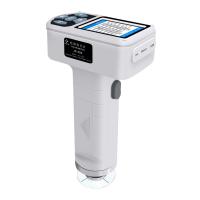
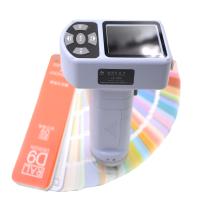
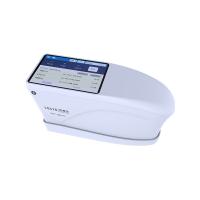
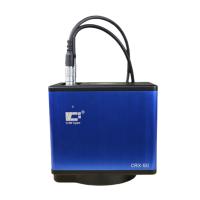
The Spectrophotometer is also a kind of color difference meter, but it adopts the principle of spectroscopic color measurement, which can not only test the color difference, but also analyze different color indicators.

The quality of rigid solid or flexible multi-morphic food surfaces can be determined using spectrophotometry. Rigid solid food such as fruits, potatoes and beans, etc., someone once used a Colorimeter to measure the tomato color, and constructed a regression equation of the fruit color coefficient to the lycopene content to evaluate the fruit lycopene content. For flexible and multi-morphic foods such as meat, flour and pasta, Colorimeters are often used at home and abroad to directly measure the color of meat samples. The color of meat mainly depends on the content of myoglobin and hemoglobin in the muscle, and then the objective quantitative indicators of meat color can be obtained. It helps to evaluate the meat color and grade the raw meat, and monitor the freshness of the raw meat.
The Colorimeter is commonly used to measure the color of regular and irregular meat such as steak, pork, chicken, tuna, etc., and monitor the color change of meat during the food storage period to ensure the quality of the product. The Colorimeter can measure the surface of steamed buns, noodles, bread, noodle slices, etc., and determine the reasonable deviation of the color of the sample, which is convenient for qualitative and quantitative quality control. Using a Colorimeter to measure the color of liquid food, you can know the purity of the food and judge whether it has deteriorated. Although there are many quality indicators for liquid food, chemical methods are mainly used, and the detection steps are cumbersome, and a large amount of organic solvents are required, which increases the detection cost and causes harm to the Testers. Therefore, its color can be used as one of the basis for quality evaluation to carry out non-destructive testing, such as heating peanut oil as the research object, using a Colorimeter to construct the relationship between color parameters and chemical indicators; for the color of different red bayberry juices, use color difference analysis Compared with the method of sensory evaluation, the results show that the two have a high degree of consistency and quality; they can also indirectly measure a certain component in food, such as amylose, which is used as a good rice grading grading The main basis is to use a Spectrophotometer to measure the absorbance of the chromogenic solution. By measuring the chromaticity value of the sample chromogenic solution, the content of amylose can be calculated to achieve high detection precision.
The measurement of color is a subject involving physical optics, visual psychology, etc.
Emerging science in various disciplines, with the continuous development of optics, electronic technology and optoelectronic technology, and the wide application of electronic computers, many color measuring instruments have appeared. The so-called color difference meter is a common photoelectric integral color measuring instrument. It uses the standard light source inside the instrument to irradiate the measured object, and performs an integral measurement in the entire visible light wavelength range to obtain the three stimuli of the transmitted or reflected object color. Value and chromaticity coordinates, and the color difference value between the two tested samples is given by a dedicated microcomputer system. This is an optical analysis instrument that is easy to operate and cheap, and is widely used in industrial production, scientific research experiments, quality inspection, commodity inspection and measurement departments.
Basic composition of color difference meter
The photoelectric integral Colorimeter imitates the principle of human eye color perception, adopts light receivers that can sense red, green, and blue colors, amplifies the photocurrents they feel respectively, and obtains the stimulus amount of each color, and then obtains this A signal of one color. The overall optical condition of the photoelectric integrating instrument should meet the Luther condition.
The color difference meter mainly includes four parts: measuring head, data processor (including display and printer), DC power supply and accessories. The measuring head of the Colorimeter is composed of an illumination source, a color filter, a silicon photocell, an insulating glass, a convex lens, a light guide tube, a baffle, an integrating sphere, etc. in:
1) The integrating sphere is an important component of the color measuring instrument, which largely determines the service life, measurement accuracy and long-term repeatability of the color measuring instrument.
2) The data processing system includes amplifying circuit, A/D conversion, central processing unit, display, printing and other data output. A microcontroller is used for data processing, and various chromaticity data are output through liquid crystal display and printing.
3) Internal light source lighting system: special light-emitting tubes with low energy consumption are used. After correction, they are used as the standard lighting body D65 for color measurement, and the stable voltage of 220V+22V, 50Hz+1Hz is guaranteed to ensure the stability of the light source. The internal lighting source of the Colorimeter is usually the standard A light source, but in practical applications, it is necessary to measure the chromaticity value of the object under the standard D65 and C light sources, so it is necessary to simulate the D65 light source so that the total spectral sensitivity of the instrument meets the Luminescence value under D65. condition.
4) Spectral tristimulus value: CIE1964 is selected to supplement the data of the observer's 10° angle of view; the geometric condition of the instrument illumination is o/d.
5) Observation conditions: in line with the 0° incidence/45° reception conditions stipulated by CIE. Under spectral conditions, the overall response is equivalent to the tristimulus values X10, Y10, and Z10 (hereinafter abbreviated as X, Y, and Z) under the CIE standard illuminant D65 and the 10-field color matching function, and finally five tables for color measurement can be obtained Color system: CIEY10x10y10 (1964), CIE: X10Y10Z10 (1964), L*a*b* (1976), L*C*H Yi (1976) and HunterLab and three color systems for color difference calculation: Eab* ( In L* in a* in b), in Eab* (in L* in C* in H*) and Hunter in E (in L in a and in b). The measured data of different colorimetric systems can be converted by the computer, displayed in numbers, and can be printed out.