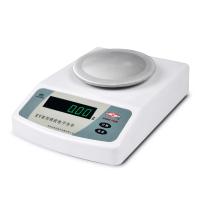
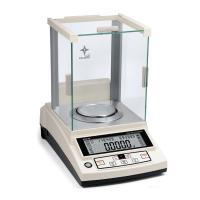
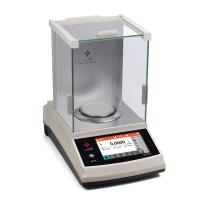
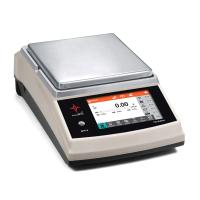
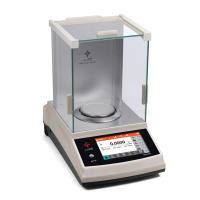
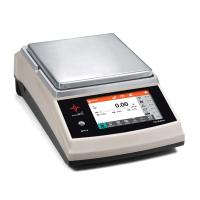
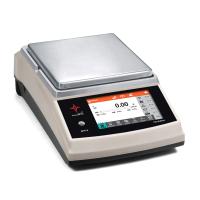
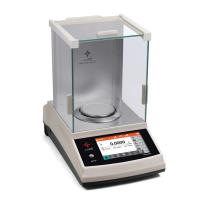
When explaining how to calibrate a digital scale, you can rest easy: calibrating a digital scale is not that complicated. While scale calibration is important, here you'll learn why you should calibrate your digital scale and how often.
We are not only talking about precision scales and analytical balances capable of measuring in grams and milligrams, but also industrial scales in pounds for sales of formulations, determining percentages, totaling, counting and other functions used in industry today .
Why You Should Know How to Calibrate a Digital Scale
First, in many cases, this is required by law. For example, calibration standards used for inspection, measurement and test equipment should be traceable to national or international standards.
One of these is the National Institute of Standards and Technology's Weights and Measures Program requirement, which provides detailed information on this topic.
The FDA document states that if national or international standards are not feasible or available, manufacturers should use independent replicable standards.
Why Calibrating Your Scale Is Important
Periodically we come across situations where scale accuracy can vary. For example, at the deli counter, the clerk weighs your slices of cheese and salami, and the scale has a sticker certifying that it passed a calibration test on a specific date. When weighing in grams, milligrams and smaller samples, the importance of a precisely calibrated digital scale cannot be overemphasized. In R&D laboratories and other demanding applications, scales should be calibrated regularly as part of Good Laboratory Practice (GLP).
Accurately calibrated scales are also of self-evident importance in more mundane applications such as weighing and shipping packages and products, ensuring that both buyers and sellers "get paid" or "sold paid for." This can be expressed by weight or by a counting scale, for example, the number of nuts or bolts in a box. So, now you understand the importance of calibrating your digital scale. enter now
How to Calibrate a Digital Scale
When purchasing a scale, you can choose to specify either an externally calibrated or internally calibrated model.
1. How to calibrate an externally calibrated scale
Externally calibrated scales are common and run between certain models in the analytical balance/precision scale category and platform and heavy industrial models. In the precision scale category, they are less expensive than internally calibrated models with comparable performance parameters. However, externally calibrated scales do require the purchase of test weights. Test weights are priced according to the weight classes defined by the International Organization of Legal Metrology. Accuracy classes range from E1 (exact) to M3.
所需的测试重量基于秤的最大重量范围。测试重量应尽可能接近秤的最大重量;建议的重量在用户手册中规定。
如何校准外部校准的数字秤相对简单。操作步骤在操作手册中有详细说明,仅需将测试砝码放在称重板上,并在控制面板上选择校准即可。体重秤将自行调整,练习完成。顺便说一下,这些测试砝码还需要作为正在进行的GLP的一部分进行重新校准。重新校准砝码的频率取决于使用频率,使用条件以及符合标准方面的安全需求。
二、如何校准内部校准的分析天平
相反,内部校准的分析天平使用天平内部的砝码和技术人员执行的练习来完成任务。 带有自动内部调节功能的天平:
1.如果温度波动>2⁰C
2.上一次重新校准后约4小时
3.当天平从待机状态切换到称重模式并且满足条件(1)或(2)时。
操作手册中详细说明了程序。当即将执行自动重新校准练习时,天平还会向技术人员提供“ 2分钟警告”。
购买电子秤的技巧
秤的购买者,无论是数字秤和分析天平,还是设计用于较重称量任务的其他仪器,都要制定选择标准并将其与制造商目录中的产品进行比较。这是一个简短的摘要,重点介绍了精密秤和分析天平:
一、容量似乎很明显,但不一定如此。请记住,如果要在容器中称量样品,则需要考虑容器的重量,该重量以皮重计。例如,如果要在50克容器中称量100克样品,则秤的容量应大于150克。去皮也适用于用于盛放小样品的秤盘。
二、读数,也称为可读性和分辨率,是设备可以读取和显示的最小重量差。对于分析天平,通常为0.1毫克。对于台式和平台秤,它将According to秤的称量而变化。
三、线性描述了在称重范围内的天平上读数与实际负载的正偏差或负偏差。例如,天平上的10克测试砝码应显示10克。天平上20克测试砝码的读数应为20克。当两者都放在天平上时,它应该显示30克。但是没有什么是很好的。高端分析天平的线性度通常为±0.2或±0.3 mg。
4. Repeatability refers to the ability of an analytical balance to display the same result when an object is repeatedly placed on the weighing pan and removed. Some people think it's a given, but it doesn't have to be when it's measured in milligrams. Typically, the difference between the largest and smallest results is used to specify repeatability.
5. Repeatability is sometimes confused with repeatability, but it is different. For example, will a technician in a West Coast lab use the same analytical scale and model and follow the same procedures to obtain the same results as a technician in an East Coast lab? Or would the results be the same if done on the same scale by different people at different times in the same lab?
The importance of understanding the difference between precision and precision cannot be overemphasized. As we explain to our customers, an accurate scale is always right because it shows the correct weight. This can be further ensured if the scale is calibrated regularly.
Precision means the result is always the same. Unfortunately, a scale with excellent precision can also be wrong, and therefore not very accurate.
Terms like calibration and linearity relate to precision, while repeatability and reproducibility relate to precision.

Tips to Protect Weighing Accuracy
NOTE: These are intended primarily for precision scales and analytical balances used in laboratories and similar locations.
Plan in advance where the instrument should be placed for "permanent" storage on the instrument. Or at least as long as possible. Once it has been positioned and calibrated for that position, repositioning requires recalibration. You may ask, why is this important? This is because the effect of gravity varies from location to location. .
1. Avoid vibration
Avoid areas with heavy traffic or other sources of vibration and oscillation that may skew measurements. If your lab benchtop doesn't provide a stable work surface, consider weighing benches with heavier benchtops, such as granite and vibration-absorbing rubber parts.
2. Environmental factors
Airflow and temperature fluctuations are avenues for inaccurate weighing. Analytical balances come with an easy-to-open and close clear plastic housing that protects the weighing plate from even the slightest draft that could affect the measurement results .
Believe it or not, the movement of the technician's hand can create slight variations that can affect the weighing result. Sample weighing should be performed with the door closed.
Likewise, ambient temperature fluctuations need to be avoided. When looking for a location for your analytical balance, avoid areas exposed to direct sunlight or near HVAC vents.
Additional Tips for Protecting the Accuracy of Digital Scales
1. Let the equipment warm up
Analytical balances should also be given time to "warm up" before starting weighing exercises. Analytical balances can take several hours during initial commissioning. Technicians can choose to switch off the analytical balance in standby mode to avoid subsequent warm-up, or, if the equipment is completely switched off or moved, a longer warm-up time may be required. Details are provided in the instruction manual.
2. Sample size
Once a sample has been placed on the tared pan in an analytical balance, it must not be replaced. Changing the sample size is called dynamic weighing, otherwise it is called adding or removing a certain number of samples. This may cause incorrect measurement results to be displayed. Instead, remove the sample from the analytical balance and add the spare sample with a fresh, tared pan. Do not exceed the maximum weighing range of the device.
3. Stabilization
Stability relates to the time you should allow between placing a sample on the balance and taking a reading.