When formulating a primer, the following issues should be considered.
(1) Selection of pigment volume concentration
The pigment volume concentration of the primer is often related to the gloss of the primer film and the critical volume concentration (CPVC value) of various pigments. The gloss of the primer paint film is preferably semi-gloss. If the gloss of the primer is too high, it will affect the combination with the topcoat. On the contrary, the matte paint film will easily and weaken the gloss of the topcoat. To obtain a semi-gloss coating film, the PVC value of its formulation varies with the nature of the pigment, filler mixture and paint base. If the pigment volume concentration (PVC value) in the primer formula exceeds the PVC value of the semi-gloss paint, the paint film will have a matte surface; if it is lower than the PVC value of the semi-gloss paint, the gloss of the paint film will be higher than that of the semi-gloss paint. At the same PVC value, the gloss and performance of the primer coating film are also affected by the particle shape, particle aggregation, and particle cluster dispersion of various pigments and fillers selected. Therefore, when formulating the actual primer formula, many factors should be considered. When ensuring the comprehensive performance of the primer coating film, the storage stability, construction performance and quality cost of the primer should also be considered. When selecting pigments and fillers, the materials used should not be too simple. In fact, several kinds of pigments and fillers are used in combination in each primer formula, and they are matched with each other to play their own characteristics. According to the critical volume concentration Cvc value range of the pigment, the PVC value of the primer should be controlled between 40% and 55%.
(2) The relationship between the gloss of the primer coating film and the matching topcoat
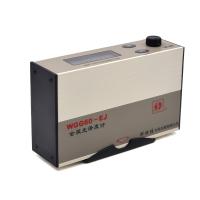
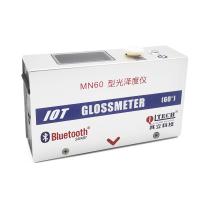
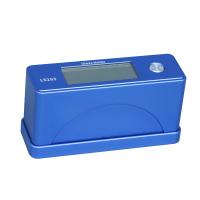
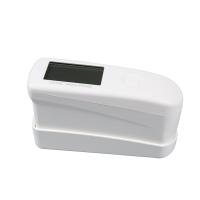
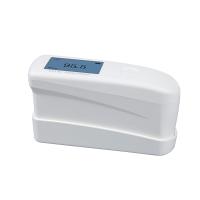
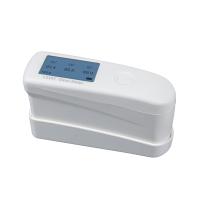
The gloss of the primer coating film has a great influence on the surface gloss of the matching coating of the topcoat. When the thickness of the same topcoat is 18-20μm, the surface gloss of the matching coating has the following changes when measured with a photoelectric gloss meter:
| Matching coating | 1 | 2 | 3 |
| Primer gloss, % | 5 or less | 20~30 | over 80 |
| Topcoat gloss (without primer), % | 100 | 100 | 100 |
| Coating gloss after topcoat and primer match, % | 86 | 95 | 100 |
It can be seen from the above matching evaluation that the gloss of the general primer should be controlled between 20% and 30%, which is equivalent to the gloss of the semi-gloss paint film.
(3) Reasonable ratio of coloring pigments and fillers in the primer
In principle, the amount of coloring pigment to be added is to meet the need to cover the bottom with a single coat of paint. That is to say, the usage index of the primer pigment is equal to the hiding power index of the primer. The excess pigment volume can be supplemented by fillers until the semi-gloss paint film is reached. The pigments used in the primer generally include iron red, iron black, zinc yellow, zinc oxide, lithopone, titanium dioxide, etc. The hiding power of these pigments is strong except for zinc yellow. The fillers used in the primer include talcum powder, barium sulfate, and light calcium carbonate. There are also differences in the types and volume ratios of fillers selected for each pigment. If barium sulfate is used, more can be used, and when light calcium carbonate is used, it should be used less. Therefore, when choosing fillers in the primer, we should try to adopt the method of using multiple varieties in combination, so that their respective characteristics can be fully utilized and the overall performance of the primer can be improved. However, the shortcomings of each filler will also affect the performance of the primer. For example, everyone should be reminded that if the water content of light calcium carbonate is higher than 2%, the storage stability of the primer will deteriorate.
Among the primer varieties, the PV value of the pigment volume concentration of the surfacer is slightly higher than that of the general primer, but lower than the PVC value of the putty, which is usually controlled within the range of 50% to 60%.