In a broad sense, the distribution of solid powdery substances in gas, liquid or another solid powdery substance is called dispersion, and in terms of paint, dispersion refers to the distribution of solid powdery pigments (fillers) in the resin. A stable colloidal dispersion system formed in a solution (that is, a paint).
The dispersion process of pigments in paint is relatively complicated, but it must go through at least three processes, namely, wetting process, depolymerization process and stabilization process.
First of all, the surface of the pigment particles used in the production of color paints is generally adsorbed with a layer of air and moisture, and the gaps between the particles are also filled with air. The first prerequisite for the dispersion of pigments in paint is the need to replace air and moisture with paint and form a new coating on the surface where the pigment has been exposed. The process by which the paint replaces air and moisture and forms a coating on the surface of the paint is called the wetting process.
If the pigments produced by the color paint are all present in the particles formed when it is manufactured (called primary particles), since the particle size is usually between 5mm and 1m, the surface of this fine particle is covered by the paint. It can easily form a dispersion system after wetting. However, the pigments purchased by paint factories are all in the form of mixtures of primary particles, agglomerates and aggregates, as shown in Figure 17-25. Primary particles are single crystals or associated crystals formed during the pigment manufacturing process. As mentioned above, the particle size is fine. Agglomerates are large pigment particle clusters with a loose structure that are connected by edges and corners between primary particles. Aggregates are large groups of pigment particles with a compact structure formed by combining primary particles with multi-facets or crystal faces growing together. The agglomerates are mostly formed during the drying of the pigment filter cake and the subsequent dry grinding process, while the aggregates are formed during the precipitation and ripening stage during the pigment manufacturing process. The agglomerates and aggregates are collectively called the secondary particles of the pigment.
During the dispersion process, it is not enough to wet the surface of these secondary particles with paint, because the pigment particle clusters with large particle size and small surface area cannot maintain a stable dispersion state, so external mechanical force is required (principally shear forces) deagglomerate these large particles to return them to or close to their original particle size, expose them to the paint in the form of small particles with large surface areas, and make all exposed surfaces Wet by paint. This process of restoring pigment agglomerates and aggregates to or close to their original particles with the help of external mechanical force is called deagglomeration process.
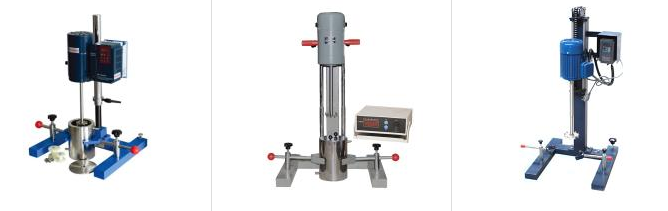
The pigment particles that have been wetted and deagglomerated continue to distribute into the mass of paint, so that there is enough paint to wrap around the pigment particles and isolate them from each other, thereby reducing the attractive force between the pigment particles, Avoiding the mutual contact of pigment particles, this kind of pigment particles that have been depolymerized and wetted is dispersed for a long time by a sufficiently thick, continuous, non-volatile film-forming substance, so that the dispersion system can be dispersed without additional machinery. Under the control of force, there will be no process in which pigment particles coalesce again to form large particles, which is called the stabilization process. Obtaining a stable pigment dispersion system is the ultimate goal of color paint production.
To sum up, simply speaking, the dispersion of pigments in paints is composed of three processes: wetting, depolymerization and stabilization. However, in fact, these three processes are not completely separated, but occur simultaneously and alternately. For dispersing pigments in paint to form a dispersion system, the relationship between these three processes is: wetting is the basis, depolymerization is for more fully wetting, and reaching a stable state is the ultimate goal.
On the contrary, if the pigment is not well dispersed in the paint and cannot reach a relatively stable state, then the dispersed pigment particles may approach again and aggregate into large particles, forming what we call pigment flocs. The flocculation process of the pigment is the reverse process of the dispersion process. Although the flocs, aggregates and agglomerates of pigments are large particle clusters formed by the coalescence of primary particles, the flocs are essentially different from the latter two, that is, the surface of the pigment flocs is still Covered by paint, the particle gap is also filled by paint, while the surface of pigment aggregates and agglomerates is covered by air and water, and the gap is also filled by air, so the micro-flocculation state is often the paint used by workers.