When it comes to laboratory balances, there are many options. One of the main differences between balances, aside from maximum capacity, is readability. The term readability is often used interchangeably with terms like repeatability (precision) and accuracy, but they each have different definitions that are important to understand when determining which balance is right for your application.
So, what is readability? How is it different from accuracy?
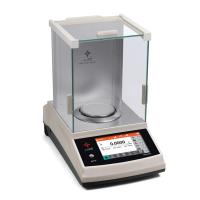
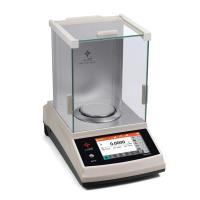
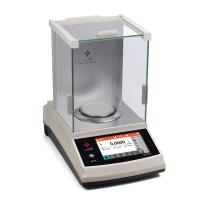
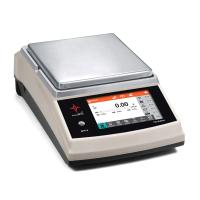
Readability is the smallest difference between values that can be read from the display. Balance displays with different readability are shown below. Readability should only be considered a specification of the balance and not a complete indication of the correctness of the actual reading. This will be described in detail below.

Accuracy is more representative when determining how "good" a balance is. Can be defined as how close any measured value is to the true value of the applied weight. It is not an independent value assigned to a balance, but is determined by a number of factors, including precision, trueness, and linearity of measurement. The importance of high-precision balances cannot be overemphasized if the authenticity of measurements (over the entire measuring range) is to be ensured. Of course, this needs to be combined with sufficient readability to achieve this. Calibration proves the accuracy of the balance. Repeatability and linearity tests can be performed if calibration weights are properly maintained and known to be correct. The manual for your balance will usually give details on how to perform this type of test.
Precision/repeatability is the amount of variation you make repeated measurements of the same mass under the same conditions (eg, same use, same environmental conditions, which can reduce bias) independent of the true value. It is usually expressed as the standard deviation of multiple measurements (usually 5 or 10).
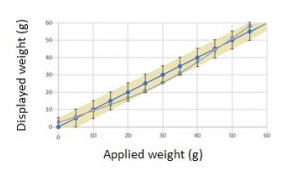
Linearity is the ability of a balance to follow a linear relationship between an applied mass and the displayed value. A nice linear relationship will follow a straight line, as shown in blue in the image below. However, the balance will have some form of allowable variation relative to the linear relationship (beige shaded area), which is represented by ± values (black error bars).
Corner load (and corner load error) is used to describe the difference in measurements when weight is applied to the corners of the balance pad instead of the center. Corner loading errors mean that there is therefore a reading difference. This type of error also contributes to the accuracy of the balance.