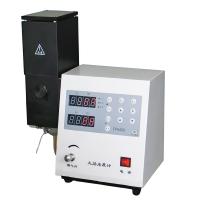
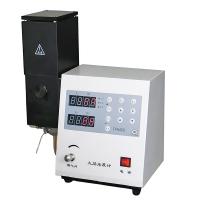
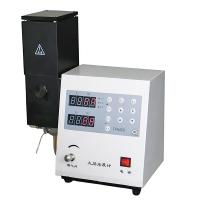
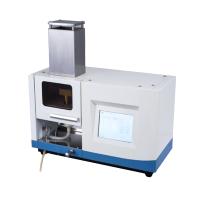
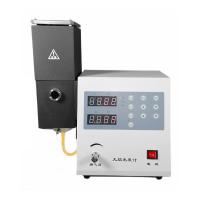
Flame photometers work by exciting and de-exciting atoms, which then emit light to measure the levels of specific elements, including K, Na, Li, Ca, and Ba. Within a certain range, the intensity of the luminescence is proportional to the number of atoms of that type present in the sample. Also known as flame atomic emission spectroscopy, it is a branch of atomic spectroscopy. For elements that do not give rise to colored compounds, such as sodium, this method of measurement is a particularly useful alternative to colorimetry. Although not as commonly used as it used to be, flame photometry still has a range of industrial and clinical applications.

Types of Flame Photometers
Flame photometers work on the same principle, but there are some differences between the models available. Some filters are limited in number and can only monitor levels of a few different elements. Several types of flame photometers are available in clinical (research) and industrial models with features designed to serve a variety of purposes. Industrial models display results directly in ppm, while clinical models have built-in linearization circuitry to display sodium and potassium readings in mmol/l, which is necessary to monitor the primary function of these elements in plasma.
Flame photometers have the ability to measure multiple atomic emissions. But they can't measure all of them at once. Common types are single-channel and dual-channel instruments, a term that relates to the number of ions that can be measured simultaneously. The benefit of a dual channel instrument is the ability to measure two parameters simultaneously without recalibrating the instrument in between. In single-channel models, recalibration is required when measuring new parameters. However, the simpler single-channel models cost less.