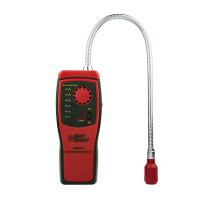
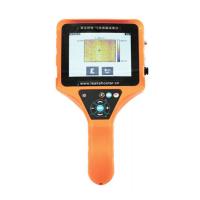
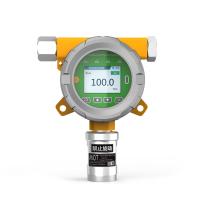
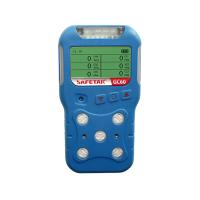
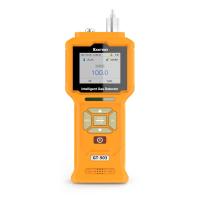
Ever had a time when you couldn't tell if a device was underperforming? This works fine at first glance, but it seems like you're burning more fuel to get the same amount of work done. The above points lead to a decrease in efficiency. So, how do we measure it? Of course using a combustion analyzer. But what is a combustion analyzer?
Combustion analyzers help us monitor and determine the efficiency of fuel burning equipment by measuring a number of parameters. Let's see how it works.

The Science Behind Combustion Analyzers
Today, the main aspect or parameter that these combustion analyzers detect and measure is the flue gas content.
Flue gas is a mixture of different gases that are a by-product of the fuel combustion process. Therefore, measuring the amount of this gas is a good indicator of efficiency.
Key Terms : This is a very basic explanation. In reality, metrics and metrics are much more complex. So, before we move forward, we need to familiarize ourselves with some key terms.
Combustion Efficiency : It is an indication or measure of how well a fuel burning device burns fuel.
Stoichiometric Combustion : This is a completely theoretical assumption. It assumes that good heat is generated by good fuel and air mixing, thus giving us good combustion efficiency.
Differential Pressure or Draft Pressure : This is the difference between the pressure inside the fuel burning equipment and the atmospheric pressure. This metric is used to identify problems and measure efficiency.
Thermocouples : These are basic temperature sensors that utilize the junction between two wires made of dissimilar metals.
Measured Parameters : Various sensors require data to measure several parameters before the combustion analyzer can perform relevant calculations to determine the current state of the burner.
These parameters can often be an exhaustive list, so we note down the general parameters. they are:
Combustion Air Temperature: This is the temperature of the air before combustion.
Dew point: The pressure and temperature point at which steam condenses into liquid water.
Differential pressure: The pressure difference within the burner and the pressure around the equipment.
Individual Gas Temperatures: Individual gases that supplement the flue gas; their temperatures were also measured.
The indicators above are overall parameters. There are various other measures which do not necessarily belong to the above parameters but are still required for a reliable burner overall efficiency calculation.
In addition, the analyzer can measure the total oxygen content entering the burner, the composition before combustion, and the oxygen remaining after combustion. These measures also extend to levels of sulfur dioxide, carbon monoxide, nitrogen monoxide and, of course, carbon dioxide.

How does a Combustion Analyzer work?
Like the ones we've pre-established, these combustion analyzers basically look at the flue gas levels in the burner.
The analyzer uses combustion metrics for its calculations, assuming that the fuel being burned (whether oil, coal, or natural gas) has undergone perfect stoichiometric combustion.
Step 1: Stoichiometric Combustion Assumption
Under normal atmospheric conditions, completely stoichiometric combustion is very rare. However, the working pressure inside these burners is not atmospheric pressure. We obtained results very close to desirable stoichiometric combustion.
Step 2: Measure the Subtlety
Having said that, analyzer metrics also take into account the nuances of fuel chemistry and overall flue gas temperature. The volume percentage of oxygen is also an important indicator.
Step 3: Measure the built-up gas
Next, the accumulated gas is measured against water vapor. As dilution proceeds, trace totals in the combustion gases (oxygen and fuel) are accounted for, taking note of the nitrogen and carbon dioxide levels.
Step 4: Final Calculations
With water vapor dilution, make the necessary calculations. The ratio of fuel to air, differential pressure, temperature all fall into this equation. All of the above help the combustion analyzer calculate and produce results that indicate how efficient the burner is. These numbers also help us determine if the burner is underperforming and needs some fine-tuning.

Why use these combustion analyzers in the first place?
The capabilities of these combustion analyzers often go well beyond simply providing an indicator of combustion system efficiency. They can be used to increase the efficiency of boilers and help identify where energy savings can be made. It can also help you improve worker safety in the workplace. When they measure the compositional composition of flue gases, they can be used to help improve overall air quality.
Choose Your Own Combustion Analyzer
Initially, these combustion analyzers were quite large and heavy. These analyzers are heavy and are usually housed in a protective case with an analog display (a mechanical display using a pointer). However, modern technology allows us to come up with more compact analyzers. Today, they consist of a plastic case covering the sensitive interior, complete with an easy-to-read digital dial. These are designed to be ultra-portable and can be used in the field.
Get only the features you need
Now, to choose a good combustion analyzer for your particular application, you should find out what components you want and need to measure, such as the quantity of gas components.
Direct In Situ or Extraction Analyzers
Both have their pros and cons, but the basic difference is this: one measures the essentials from inside the burner, the other extracts the necessary elements and measures the parameters from outside the burner.