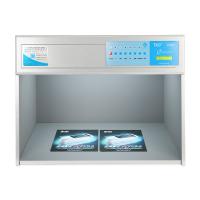
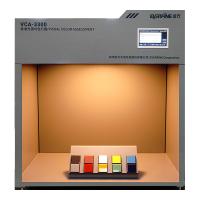
Color has three components: light source, object, and observer. Any one of these three factors changes, people will feel that the color is changing. When the same object is irradiated by light of different colors or different projection angles, different color effects . The illuminant and all colors that radiate light to the eyes, such as pigments, dyes or color samples, are regarded as color stimuli, which make the observer produce color perception. Therefore, according to the fact that color is a physical process of color stimulation, people can quantitatively express color stimulation with instruments , and color can also be physically measured. Colorimetry is the science of measuring color.
What we care about is the color of the paint film after painting, that is, the result . The following first discusses the interaction between the light source and the object from the three aspects of surface reflection, absorption, and scattering, as well as their common interaction, and the standard light source used in the coating industry.
(1) Surface reflection
When the light beam reaches the surface of the object, part of the light is reflected by the surface of the object, and the other part enters the interior of the object and is refracted . If the surface of the object is optically smooth, the angle of incidence is the same as the angle of reflection, and when they are distributed symmetrically on both sides of the normal, this type of reflection is called specular reflection, that is, reflection like a mirror. When the incident ray is perpendicular to the surface of the object (that is, parallel to the normal), the incident angle is 0° and the grazing angle is 90°. The reflected light R varies with the angle of incidence and the difference in refractive index between the two phases.
The refractive index of most resins is approximately equal to 1.5, and the refractive index of air is approximately equal to 1. When the incident angle is close to 0°, about 4% of the incident light is reflected, and 96% is refracted into the paint film. When the incident angle is close to 90°, the reflectivity is close to 100%, and no light enters the paint film.
When the thickness of the paint film is small (60~250nm), the light refracted into the paint film will be reflected, which will cause interference. Due to the interference, the intensity of reflected light of certain wavelengths can be increased, causing the color of the paint film to change.
(2) Absorption
The dyes, pigments, and certain colored resins used in paints are collectively called colorants, and colorants absorb certain wavelengths of light more strongly than others. These absorptions are controlled by their chemical structure. Each colorant has an absorption spectrum that controls the absorption of different wavelengths of light. The same amount of colorant, the smaller the particle, the greater the degree of light absorption. The longer the beam travels through the colorant-containing medium, the more light is absorbed.
(3) Scattering
When a ray of light passes through a dark room, it can show the dust particles in the air. This is because the dust particles interact with the light and make part of go away from the original direction, which is the scattering of light. When light strikes a polymer paint film containing fine pigment particles, it is scattered . The essence of light scattering is that the electrons in the particle molecules are forced to vibrate under the action of the electric field of the light wave, become a secondary light source, and emit electromagnetic waves in all directions. This wave is called scattered light. Light scattering is global, that is, diffuse light.
The coverage of the paint film on the substrate is divided into: the paint film absorbs the light irradiated on it, so that it cannot reach the bottom (such as black paint with carbon black), and the surface of the substrate cannot be seen. The scattering between them prevents the light from reaching the bottom of the substrate (such as white paint) and does not see the surface of the substrate. White pigments mainly rely on scattering to have hiding power. Most colored paints work by both absorption and scattering. Black pigments with high absorbing power also have great hiding power. Adding a small amount of black pigments such as carbon black to white titanium dioxide can achieve the required covering power while reducing the amount of titanium dioxide.