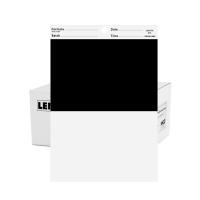
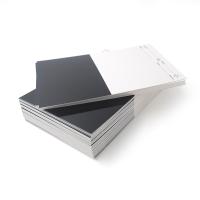
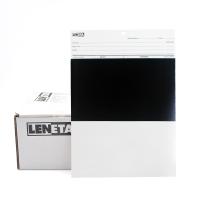
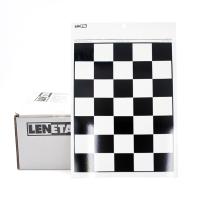
The hiding power of the pigment is the ability of the pigment in the paint film to cover the substrate without revealing the original color of the substrate. When the paint is applied on the substrate with black and white stripes, the mass (g) of the pigment required to cover the surface area of 1m2 of the substrate represents the hiding power , g/m2. The hiding power of the colored paint made after adding pigments to the surface is called the hiding power of the colored paint. Hiding power is an important indicator for evaluating the performance of colored paints. Selecting pigments with strong hiding power can reduce the amount of pigments used in the colored paints and meet the requirements of covering the substrate.
Hiding power is due to the difference between the refractive index of the pigment and the refractive index of its surrounding medium (polymer resin in the paint film) . When the difference between the two is zero, that is, when the refractive index of the pigment is equal to that of the polymer resin in the paint film, the paint film is transparent; the greater the difference between the two, the stronger the hiding power. Hiding power is the result of light scattering and absorption by pigments, and its level is determined by the composition of the paint.
Calcium carbonate is applied to the wall in a wet state. Because the refractive index difference between it and water is not large, the covering power seems to be poor, but after drying replaced by air, and the difference in refractive index increases, resulting in greater covering power. increase in magnitude. The hiding power is also related to the size and distribution of the pigment particles, the pigment particles are small and the hiding power is strong. For most pigments, the effective particle size is half the wavelength , that is, 0.2-0.4 μm. During the drying process of the paint film, the distance between the pigment particles decreases, and the effect of the gap size between the pigment particles on the hiding power is:

In the formula, HP is the hiding power; S is the diameter of the void between the pigment particles, and K is the proportionality constant.
The PVC of a paint is 4.5%, the average distance between pigment particles is 1.54μm, HP = 0.61K, after the dry paint film is formed, PVC = 15%, the distance is 0.70μm, HP = 0.41K. After the paint film dries, the pigment concentration increases and the hiding power decreases.
At present, there are three methods for measuring the hiding power of paints.

① Mass per unit area method
Determine the minimum amount of paint required to cover a unit area, and express the hiding power in g/m2. Black and white grid glass is usually used, and standard black and white grid paper can also be used. CHINA's national standard GB 1726-79 (88) "Determination of Coating Hiding Power " stipulates the use of black and white grid panels, which can be brushed or sprayed.
②Minimum paint film thickness method
The hiding power of the paint is determined by the minimum wet film thickness required to cover the bottom surface, and the results are expressed in μm. The measuring instrument uses a half black and white optical glass plate with a millimeter scale marked on its side, and a transparent glass top plate with a certain height at one end form a wedge-shaped space. For a small amount of samples, move the top plate back and forth until the black and white boundary line on the bottom plate cannot be seen through the top plate and paint layer, and record the reading from the boundary line to the front end of the top plate. Since the angle of the wedge-shaped space is known, it can be obtained The minimum wet film thickness, or convert the amount of paint per unit area through the conversion table attached to the instrument. This method uses less paint, and the test speed is fast, but it is still a visual test, and there are problems with the accuracy of the test results.

③Reflectance comparison method
In order to overcome the difficulty of visually detecting the end point, ISO and national standards recommend the use of reflectance meters for more accurate evaluation of hiding power, but this method is mainly suitable for white and light-colored paints. Coat the sample with different thicknesses on the transparent polyester film, place it on black and white glass plates after drying, and measure the reflectance with a reflectance meter, Rb is the reflectance on the black plate ; Rw is the reflectance on the white plate , according to CR=Rb/Rw, so as to obtain the contrast ratio CR.
When the contrast ratio is equal to 0.98, it is considered to be fully covered, and the hiding power can be obtained according to the thickness of the paint film. This method is more accurate in judging and can overcome the shortcomings of the above two methods, but the operation is more complicated. CHINA has equivalently adopted the ISO standard, and formulated the national standard GB 9270-88 "The Determination of the Contrast Ratio of Light-Colored Paint by Polyester Film Method". This method can also be used to measure the contrast ratio at different spreading rates (m²/L), that is, the corresponding hiding power.