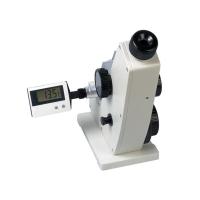
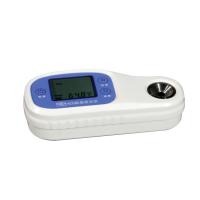
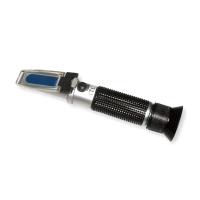
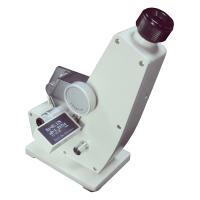
A refractometer is a simple instrument used to measure the concentration of aqueous solutions. It requires only a few drops of liquid and can be used as a laboratory device in food, agriculture, chemistry and manufacturing.
refraction
When light enters the liquid, it changes direction. This is called refraction. A refractometer measures the degree to which light changes direction, known as the angle of refraction. The refractometer takes the angle of refraction and relates it to an established value of the refractive index (nD). Using these values, the concentration of the solution can be determined. For example, a solution has a different refractive index depending on its concentration.
The prisms in a refractometer have a greater refractive index than the solution. Read the measurement at the point where the prism and solution intersect. In low concentration solutions, the refractive index of the prism is much greater than that of the sample, resulting in larger refraction angles and lower readings. In contrast, this happens with highly concentrated solutions.
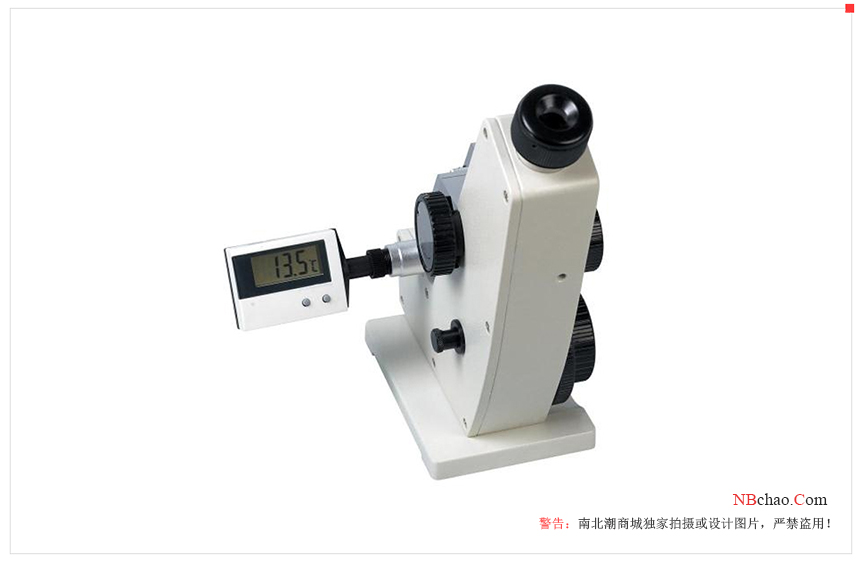
Brix scale
The % Brix scale shows the percent concentration of soluble solids content in a sample (aqueous solution). Soluble solids content is the sum of all solids dissolved in water, starting with sugars, salts, proteins, acids, etc.; the measured reading is the sum of these values. Calibrate the Brix scale to the grams of sucrose in 100 grams of water. When measuring sugar solutions, the % Brix reading should exactly match the actual concentration.
| sample solution | Brix |
| Cutting oil | 0 to 8 |
| tangerine | 4 to 13 |
| Carbonated drinks | 5 to 15 |
| apple | 11 to 18 |
| grapes and wine | 14 to 19 |
| Concentrated Juice | 42 to 68 |
| condensed milk | 52 to 68 |
| jams and jellies | 60 to 70 |
Common Refractive Index
Refractive index readings are temperature dependent
| sample solution | temperature | Refractive index |
| Methanol | 25°C | 1.326 |
| acetone | 25°C | 1.357 |
| ethanol | 25°C | 1.359 |
| acetic acid | 25°C | 1.37 |
| benzene | 25°C | 1.498 |
| Paraffin oil | 20°C | 1.412 |
| palm oil | 20°C | 1.456 |
| olive oil | 20°C | 1.471 |
| Methyl salicylate | 25°C | 1.522 |
| Iodomethane | 25°C | 1.74 |