General pH Information
What is the pH?
The pH (hydrogen potential) measurement shows whether a solution is acidic or basic (it can also be basic or alkaline). A pH is considered neutral if there are equal amounts of acidic and basic molecules in the solution. Very soft water is usually acidic, and very hard water is usually alkaline, although abnormal conditions may cause abnormalities. The pH scale is logarithmic, from 0.0 to 14.0, with 7.0 being neutral. A reading of less than 7.0 indicates an acidic solution, while a higher reading indicates an alkaline or basic solution. Some extreme substances can score below 0 or above 14, but most fall into this category.
What is Automatic Temperature Compensation (ATC)?
When measuring pH with a pH electrode, the temperature error of the electrode varies according to the Nernst equation by 0.03pH/10C/pH unit away from pH7. The error due to temperature is a function of temperature and the pH being measured. Temperature compensation can be done manually or automatically. Manual temperature compensation is usually accomplished by entering the temperature of the fluid being measured in the instrument menu, and the instrument will then display a "temperature compensated" pH reading. Automatic temperature compensation requires input from a temperature sensor and continuously sends a compensated pH signal to the display. Automatic temperature compensation is useful for measuring pH in systems with widely varying temperatures.
EC/TDS
What are ECs?
Electrical conductivity (EC) is defined by the ability of a solution to conduct an electric current.
What is TDS?
Total Dissolved Solids (TDS) is defined as the amount of solids dissolved in a solution.
What is their relationship?
The relationship between the content of solids such as salts found in fertilizers is directly proportional to their electrical conductivity, so the higher the solids, the higher the electrical conductivity. This is because when fertilizers are dissolved in water, they become "ionic," which means they become positively or negatively charged, so they can conduct electricity.
How does an EC/TDS meter work?
Two electrodes to which an alternating voltage is applied are placed in the solution. This produces an electrical current that depends on the conductive properties of the solution. The meter reads this current and displays it in conductivity (EC) or ppm (TDS).
conversion factor
TDS meters read conductivity; the meter automatically converts this value to TDS, which is usually displayed in ppm.
Temperature compensation
Temperature affects the activity of ions in solution, but not the concentration, so a meter with temperature compensation is suitable for this situation.
How to measure TDS?
through a conductivity meter. Conductivity is measured and TDS is calculated by a fixed math formula in the meter.
What about the conversion factor?
Studies have shown that a conversion factor between 6.64 and .70 is a good indicator of total dissolved solids in growing applications.
If my TDS meter has a conversion factor of 0.5, how do I convert to the correct value of 0.7?
Multiply by 1.4; for example: 500 x 1.4 =700.
What is the difference between microSiemens (µS) and milliSiemens (mS)?
Both are units of electrical conductivity. 1000 MicroSiemens (µS) = 1 Millisiemens (mS).
How to convert between millisiemens (mS) and ppm?
Multiply by 1000 to convert to microSiemens. Then multiply by 0.7: eg. Your reading is 2.14 microSiemens (x 1000 = 2140 microSiemens). 2140 x 0.7 = 1498 ppm. Or simply multiply by 700. (2.14 x 700 = 1498)
What if you want to switch to EC measurement?
If you don't have a meter that reads both EC and TDS, you can also follow the directions given to prepare the fertilizer solution and take the EC reading. This will be your value. Alternatively, check with your fertilizer manufacturer for the correct EC reading for that particular fertilizer.
What is the relationship between electrical conductivity (EC) and dissolved solids (TDS)?
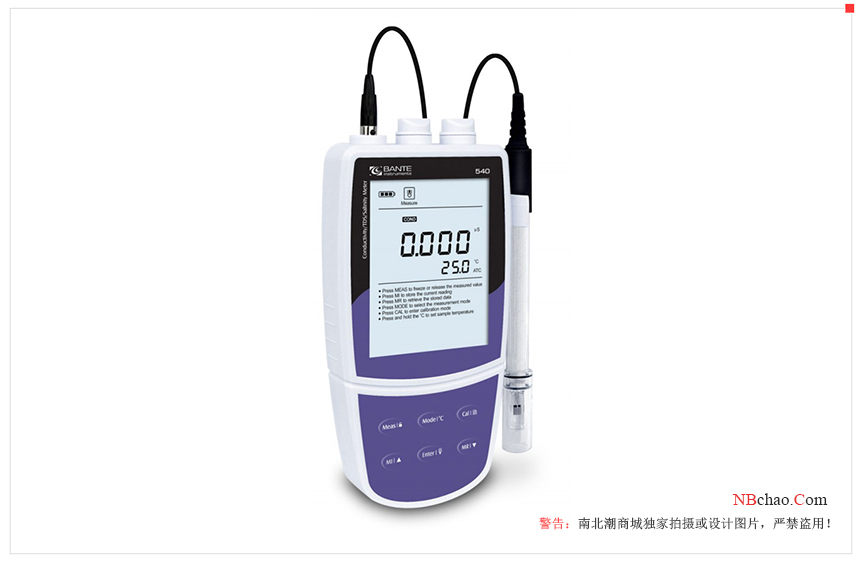
Despite the close relationship between TDS and conductivity, they are not the same thing. Total Dissolved Solids (TDS) and Electrical Conductivity (EC) are two separate parameters. TDS is the sum of solids dissolved in water. EC is the ability of something to conduct electricity (in this case, water conducts electricity).
The only true way to measure TDS is to weigh what remains in the water after the water has evaporated. You know those spots you see on glass after you wash it and let it dry? That's TDS! This residue has mass and can be weighed, but can be tricky if you're not in a lab. Therefore, since the hydrogen and oxygen molecules of H2O have little charge, we can estimate the TDS content from the conductivity of the water. The ECs of most other metals, minerals and salts are charged. AA TDS meters measure EC levels, which are then converted to TDS measurements. Since different metals, minerals and salts will be more or less conductive than others, different conversion factors can be used.
ppm (parts per million) is a common ratio for measuring TDS (Total Dissolved Solids).
µS (microSiemens) is a common scale used to measure EC (conductivity).
Turbidity
What is turbidity and why is it measured?
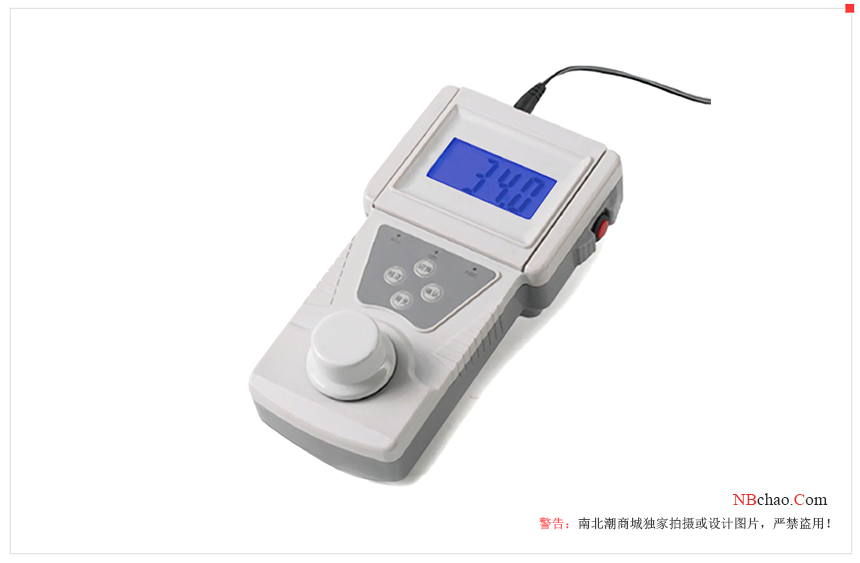
浊度是对水浑浊度的一种度量-水越浑浊,浊度越大。浊度是由浮游植物引起的悬浮物引起的,浮游植物是人类活动,扰乱土地,例如可能导致高沉积物含量的建筑。
浊度很重要,因为饮用水中的高浊度会导致发展成胃肠道疾病。水体(如湖泊,河流和水库)中的高浊度可以减少到达较低深度的光量,这可以抑制淹没的水生植物的生长,从而影响依赖于它们的物种,如鱼类和贝类。
葡萄酒中的浊度会影响香气和品质。浊度还会在微滤过程中引起膜污染。
选择性离子
氮
氮是植物生命所需的元素,也是肥料中的关键成分。它存在于蛋白质,维生素,激素,叶绿素等中。氮增加了叶子和果实的产量。过量的氮会导致对疾病的抵抗力下降。
磷
磷有助于芽,根,开花和木质化的形成。它也是植物DNA和RNA的重要组成部分。磷的缺乏会导致生长缓慢,果实变小和根部膨胀降低。
钾盐
钾在许多生理活动中起重要作用,例如碳水化合物的形成,增加果实的大小,增强风味,对花的颜色和香味具有积极作用。钾还使植物更抗病。
溶解氧
根需要适当充氧,以避免严重的问题,包括水分胁迫,导致萎,开花期腐烂和根腐本身。氧气耗竭的主要原因包括形成大量的根,这会阻碍水的流动并导致水的停滞。建议对溶解氧进行测试,因为该问题可能不被注意并开始对工厂造成严重的不利影响。
电极
我的pH电极需要弄湿吗?
所有玻璃电极都有一个需要保持水合的灯泡和一个需要保持湿润的参考结,以防止内部电解质溶液从参考结过度泄漏。
我应该将pH电极存放在什么地方?
称心情况下,由于存储溶液的化学组成与电极本身的化学组成相同,因此,更好使用缓冲液4或7。切勿在纯净(蒸馏水)中存放!在连续浸入电极的情况下,由于它们总是湿润的,所以存储不是问题。
如果我在pH电极上看到白色晶体怎么办?
它只是电解质(盐),通过将电极浸泡几个小时,除非长期干燥,否则电极会很好。
我应该如何保养pH电极?
定期用弱酸或专业配制的清洁剂清洁电极,当然,请始终正确存放电极。
pH电极能持续多长时间?
如果正确保养,电极可以使用长达2年。
我的EC / TDS电极需要弄湿吗?
否。
为什么pH电极的尖端形状不同?
从一般的水到食品,土壤,水果和蔬菜,血液,合成产品以及许多其他应用,pH值其重要性不言而喻参数。为此,制造商针对所有主要应用开发了不同的pH传感器。这确保了在特定应用中电极的易用性和更长的使用寿命。电极构造中使用的不同类型的结,电解质和材料也是设计的一部分。以下是典型的
吸头及其用途:
球形吸头:它是市场上常见的吸头,因为它主要用于实验室实验室中的普通液体。
锥尖:其形状易于渗透到半固体,乳剂溶液,奶酪和肉中。主要用于食品工业。
平头:其结构旨在用于水果和蔬菜皮,样品滴,人体皮肤等表面测量。
刀尖:刀探针可穿透半冷冻食品,肉类,难穿透的食品或其他产品。还有许多其他类型的技巧。以上是常见的。
单结和双结之间有什么区别?
常规电极通常是单结。这些电极只有一个结,用于使参比电极系统与样品接触。在不利条件下,例如高压,高温,强酸或强碱溶液等,电解液通过连接处的正向流动通常会反向,导致样品溶液进入参考隔室。如果不加以检查,则参比电极最终会被污染,从而导致电极完全失效。汉娜的双结系统,顾名思义,有两个结,其中只有一个与样品接触。在不利条件下,样品进入的趋势很明显。但是,由于参比电极系统与中间电解质区域物理隔离,电极的污染最小化。这导致电极寿命长。如果采取适当的维护程序,恢复的机会也会更高。
我的溶解氧电极干燥。我该怎么办?
取下红色和黑色的塑料盖或膜组件。将底部1英寸浸入电解液中5分钟。用电解质冲洗膜,然后重新填充干净的电解质。轻拍膜盖的侧面,以确保没有气泡残留。调整膜盖内的O形圈。传感器朝下,拧紧膜组件。
我可以使用蒸馏水或去离子水存储pH电极吗?
不可以,请勿将其用于储存,否则会损坏电极。
传感器/探针
我应该使用哪种铂金或黄金ORP传感器?
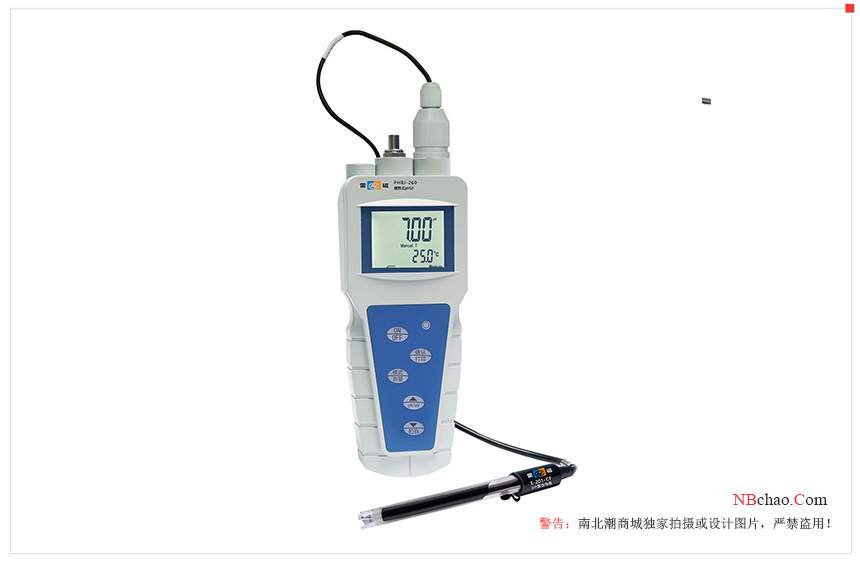
铂传感器:用于氧化反应(500mV以上),例如泳池和水疗中心,市政饮用水。金传感器:用于还原性环境(低于500mV),例如电应用,采矿业(氰化物)。
我的读数不稳定。我该怎么办?
探头处于极化状态,固定电压约为800mV。探针极化对于以相同的重复精度进行稳定的测量重要性无庸赘述。在探头正确极化的情况下,氧气穿过敏感隔膜并溶解在探头内部包含的电解液中,从而不断地“消耗”氧气。
测试人员
HANNA测试仪可以使用1.5V电池吗?
是的,它们的工作原理与1.4V相同。
口袋测试仪可以使用哪种电池?
您可以使用357或LR44型电池。
校准
我应该多久校准一次pH计?
可能会有所不同。但是,通过使用新鲜的校准溶液进行定期检查,您可以确定何时需要校准以及何时需要校准。
我应该多久校准一次EC / TDS仪表?
由于没有向外部开放的接头,因此通常不如pH计那么频繁。更好使用新鲜的校准溶液进行定期检查,以确定何时需要校准。
如何校准pH计?
大多数pH计的工作方式相同,但您应始终检查手册中的内容。此处提供校准程序的概述。通过按CAL按钮或按住ON / OFF按钮直到屏幕上出现CAL,将仪器置于校准模式。
此时,大多数仪表将要求使用7.01缓冲液,并且所有仪表都需要首先校准至pH 7缓冲液。
将电极放入缓冲液7中,使电极的底部浸入水中。汉纳仪表已编程为自动识别选择的缓冲区(请检查产品特定的规格以找出哪种解决方案)。当仪表等待读数稳定时,时钟符号或沙漏符号将闪烁(在某些手持式仪表上,读数将闪烁)。如果仪表无法识别缓冲区,则会在屏幕上显示WRONG消息。
仪表达到稳定的读数后,它将自动校准。然后仪表将请求使用下一个缓冲溶液,屏幕现在将显示“ USE 4.01”。
此时,从缓冲液7溶液中取出电极,并在自来水(或去离子水)下冲洗,然后将电极放入缓冲液4溶液中。
仪表将通过闪烁或显示沙漏/时钟符号再次显示读数稳定。
我的新pH值,电导率或DO仪是否已校准?
是的,建议您在使用前校准仪表。
仪表
为什么我的浊度仪上显示“ Err 1”?
"Err 1" is an error code indicating a decrease in optical flow. Urine cups should be cleaned with a solution and a tissue designed for this purpose. If this step hasn't removed your error code, the light source needs to be cleaned. This should be done annually, or more frequently if desired. The light source inside the cavity should be cleaned with a cotton swab dampened with alcohol.
What should I do if my photometer readings are erratic?
Zeroing and measurement should be performed using the same sample cell. Interference may be due to condensation or particles on the barriers. Clean the outside of the catheter with a solution designed for this purpose and a tissue.
How to change the gauge from °C to °F using the MODE and SET/HOLD buttons?
Press the MODE button once to turn on the meter. After power on. Press and hold the MODE button. You will see OFF CAL TEMP. When you see TEMP, let go of the button. Now, press the Set/Hold button to change °C to °F. Then press the MODE button twice to return to measurement mode.
agriculture
How to measure pH and EC in soil using the extraction method?
The extraction methods of pH and EC are as follows. 1- Mix 3 6 oz of soil. Water 2 - Let the mixture sit for 15-20 minutes 3 - Strain the liquid into a clean cup 4 - Measure These pH and EC measurements are simplified by measuring directly in the soil with a pH meter and an EC meter.