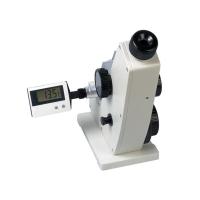
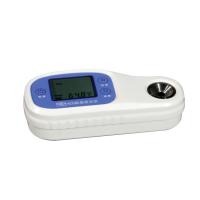
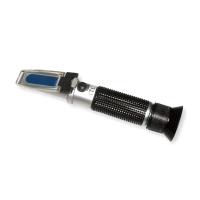
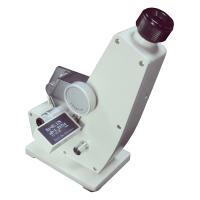
This guide will teach you everything you need to know about brewing with a refractometer. We'll guide you step-by-step on how to get the most out of your refractometer, and share some tips you may not have seen before.
What is a Refractometer?
As opposed to brewing, a refractometer is an instrument used to measure the concentration of sugar in a solution, i.e. the gravity of the wort. With a refractometer, light travels through the sample and "refracts" the light path to some extent, depending on the concentration of sugar in the solution. When viewed through the lens, the sugar concentration in the liquid will be displayed in a visible scale (specific gravity, plato, brix, etc.).

When to Use a Refractometer?
Refractometers are used at multiple stages throughout the brewing and fermentation process. Common places are during the hot stages of the brewing process (mashing and boiling) and also to measure the original gravity of the wort.
Since the presence of sugar and alcohol interferes with the refraction of light, it is not often used during fermentation. This interference causes errors in the measurement of sugar concentration.
Professionals using refractometers
Small, light and easy to store
Only a small amount of sample is required for measurement
Measurements can be taken quickly because large samples can be cooled without having to wait long
Disadvantages of Using a Refractometer
Do more maintenance to keep your refractometer in good shape
May reduce accuracy if not maintained/stored properly
Cannot be used accurately to measure gravity throughout fermentation/final gravity
preparation and storage
It is important to ensure that the refractometer is clean and free of scratches before using it. If the glass prism under the plastic coverslip is dirty, it is better to perform the following steps:
preparation
Use a pipette to place a few drops of distilled water on the glass prism.
Shake off excess water and wipe off any remaining water with a soft clean cloth (never touch the glass prism with your fingers!)
It is also important to make sure your refractometer is properly calibrated. To calibrate your refractometer, follow these steps:
calibration
Use a pipette to pour a few drops of distilled water onto the glass prism.
Carefully close the plastic coverslip to ensure no air pockets are created
Observe the scale through the sight glass of the refractometer.
Using the adjustment tool provided, turn the calibration screw until the reading on the scale intersects "0"
storage
After using the refractometer, it is also important to repeat the preparation steps and store the refractometer in a sturdy case

How to use - step by step
Now that you understand the basics of refractometers and where they can be used in your brewing process, follow these steps to accurately measure your samples.
Make sure your glass prisms are clean and free from scratches. If it is dirty, follow the preparation steps above.
Calibrate your refractometer using the calibration procedure above.
Collect a small sample (10-20 mL) and cool for 30-60 seconds.
Use a pipette to place a few drops of the sample on a glass prism.
Carefully close the plastic coverslip, avoiding any air pockets between the glass prism and the plastic coverslip
Look through the sight glass and read gravimetric measurements with the refractometer scale.
Once you're done, follow the storage instructions discussed above.
Is my ferment stuck?
Have you ever fermented while using a refractometer? You may have experienced the fermentation going as expected and suddenly stopping around 1.030-1.035, then there is a good chance that your fermentation is not actually stuck, but is actually done! Remember, as we discussed earlier, when alcohol and sugar are together, they interfere with the way light is refracted. In fact, this is the case. There is an error in the measurements you are reading due to the presence of alcohol and sugar. Good news, your fermentation is most likely done.