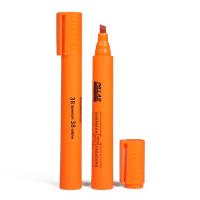
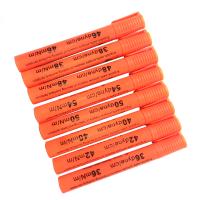
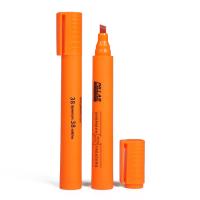
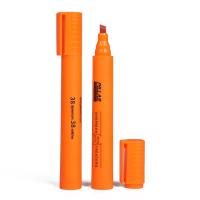
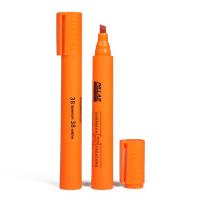
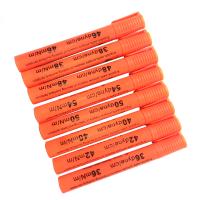
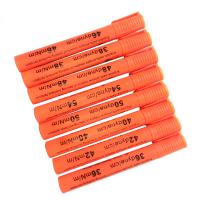
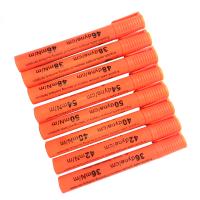
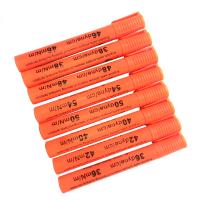
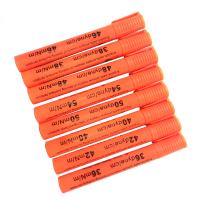
Dyne testing finds countless applications throughout the industry in functions including basic research, product development, process control, incoming inspection, finished product disposal, sales and marketing. Typically, it measures the level of treatment of polymers exposed to flame, corona, or plasma surface modification; however, inevitably, after nearly 50 years, many less traditional applications have also been explored. Hope the following will help.
• Where feasible, use consumables, samples and ambient temperatures for testing at 20°C to 25°C. If not possible, a test study is recommended to relate temperature changes to numerical results. Always keep test consumables at ambient temperature.
• Film extruders should be extensively tested and every roll on every machine should be fault free. Potential product liability and lost customer satisfaction far outweigh the cost of an effective quality control program.
• Remember that the dyne level decays very rapidly after corona treatment. It is actually possible to lose 10 dynes/cm instantly! This is due to contact with process rolls (especially heated metal rolls), surface blooming of additives and interfacial transfer between treated and untreated surfaces in the final winding roll. If you're a slitter, rewinder, or extruder, you can test downstream in the process, or when your customers test before they come in for inspection, adding specs to make up for bigger losses.
• Patterns of treatment differences on a sample can often be determined by performing a drop-back test. A methodical troubleshooting analysis often leads to a concrete cause. For example, increasing throughput across the web indicates that the treatment electrodes are misaligned with the web; periodic variations along the web may be related to non-concentricity.
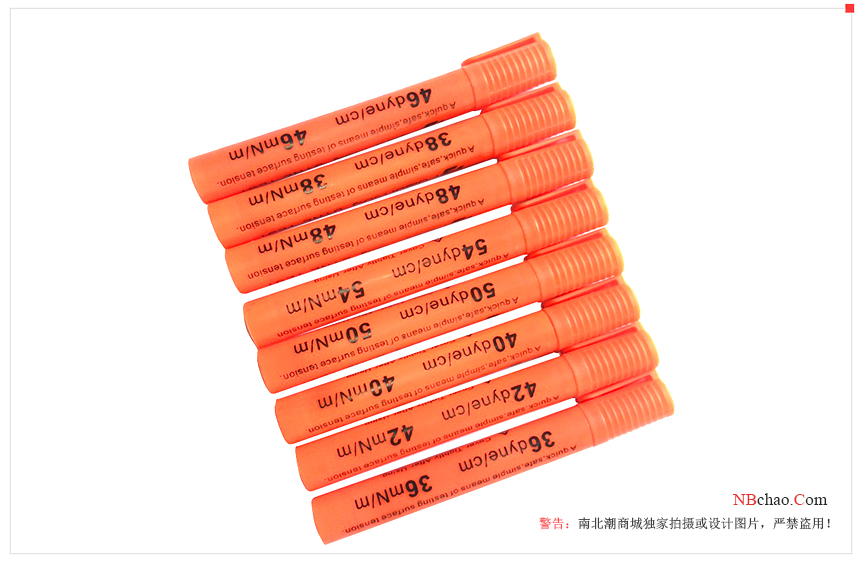
• A simple test for post-processing on PE or PP is to use a 34 dyne/cm marker. Any wetting - even for less than two seconds - signals the need for some kind of treatment.
• Test fluids or markers that have turned green or have severely lost color density are no longer reliable. We guarantee validity until the expiry date (5 months for liquids, 6 months for test marks).
• Never open the bottle or marker! Evaporation, water vapor, and airborne pollutants can all affect dyne levels and may render them ineffective before their expiration date.
• Printers, coaters, and laminators should be sampled and tested as soon as possible prior to printing stations (or similar locations). It might be worth doing a dyne test on the roll before it goes on the machine, and then comparing those results with material that goes through the web handling process and arrives at the print station. This will indicate process losses attributable to process roll contact and coil handling.
• Polyester film readings consistently below 42 dyne/cm are almost certainly "print primer". This chemical process actually lowers the surface energy but makes the surface attractive to a wide variety of compounds used in inks and coatings.
• Cleaning system can be monitored by dyne test. The surface energy of metals is much higher than that of surface contaminants. Therefore, the higher the dyne level, the cleaner the part. Always use a test fluid to measure cleanliness, even our spring-loaded valve tip markers will eventually become overwhelmed by repeated exposure to contamination.
• The presence of mold release agents can be similarly determined on many plastic parts. Again, the test fluid is suitable for this application.