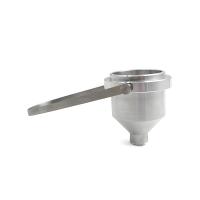
Dip coating is to immerse the object to be coated in the paint, then take it out, let the excess paint on the surface drip, remove the excess paint, and form a coating after drying.
(1) Characteristics and application of dip coating
Advantages of Dip Coating
① The utilization efficiency of dip coating is high, reaching 90%~100%. ② Dip coating is very labor-saving, except for loading and unloading , the process can be fully automated. The production efficiency is high, the equipment and operation are simple and continuous production is possible, and it is most suitable for mass production of a single variety . ③On the same dip coating production line, workpieces with greatly different shapes can be coated at the same time. Dip coating is especially suitable for small hardware parts, steel pipe racks, sheets, and equipment with complex structures or electrical insulation materials. These objects will lose a large amount of paint by spraying, and it is labor-intensive and time-consuming to use methods such as brushing. Some parts are difficult to paint, and dipping saves labor and materials. ④ Dip coating can be used to obtain a clear dividing line between the coated area and the uncoated area of the workpiece.
Limitations of Dip Coating
① All exposed surfaces of the workpiece are coated, and the wet paint film often has tears, flow marks, drips or gobs. Carefully consider the hanging method according to the dripping situation of the paint, control the viscosity and temperature of the paint, and the speed of taking the workpiece out of the tank, so as to reduce the above defects as much as possible. ② The object to be coated should not be too large, the workpiece should not have a concave surface where the paint liquid is accumulated , and the object to be coated should not float in the paint liquid. ③ Products that can only be dip-coated with the same color on the surface are not suitable for volatile and quick-drying coatings , and safety and fire prevention measures should be improved. The dip coating method is mainly used in the coating of thermosetting coatings, and there are also examples of self-drying coatings .

Volatile or quick-drying paints should not be used. Due to solvent volatilization, etc., the viscosity of the paint liquid increases rapidly, and it is difficult to control the viscosity of the bath liquid. Coatings containing heavy pigments are not suitable for application because the pigments are easy to sink and cause inconsistent paint film colors. Due to the certain activation period and curing time of the two- component coating, it is not suitable to use the method of dip coating.
离心浸涂法适用于形状不规则的小部件,如螺管、弹簧、手轮等的整体涂饰。将零件放在金属网篮中,并将它浸入涂料贮槽中,取出后立刻送入离心滚桶中,经短时间高速旋转(约1~2min,转速约在1000r/min左右),甩去多余的涂料,然后进行干燥。
大型浸漆槽装有加热或冷却设施、连续循环泵和过滤器等附属设备。
(2)浸涂的方法
漆膜的厚度主要决定于物件提升的速率以及漆液的黏度。
①因为浸涂形成有梯度的涂层,工件上部比下部的薄。如果从槽中取出工件的速度慢,而溶剂的挥发迅速,就可以形成厚度接近均一的漆膜。实际生产中因为兼顾效率,取出的速度不会太慢,漆膜的上下部有一定的厚度差。实验确定合适的提升速率。提升速率快,漆膜薄;速率慢,漆膜厚。浸涂操作有时造成工件上、下部的漆膜具有厚度差异,尤其是在被涂物的下边缘出现肥厚积存。在小批量浸涂时可用刷子手工除掉多余积存的漆滴,也可用离心力除去这些漆滴。

②浸涂要使涂层厚度均匀,涂料的配方要合适,生产过程要稳定。涂料用一种混合溶剂,把高、中、低挥发速度不同的溶剂复合起来,以得到外观光滑、均匀的涂层。在色漆中,需要加入触变剂以防止颜料沉淀和流挂,这些弊病常见于工件的角落和直角处。浸涂槽中另一种常加的成分是消泡剂,消除因搅拌或工件浸入产生的气泡。涂料黏度在溶剂挥发时会增加,涂料各组分之间发生化学反应时也会增加,需要补加溶剂调整黏度。要抑制涂料组分间发生化学反应,中长油度涂料要加入抗氧化剂,以避免在槽中的氧化交联形成漆皮,烘烤期间要挥发出去,对丙烯基邻甲氧基苯酚就是浸渍用醇酸树脂涂料的一种抗氧化剂。
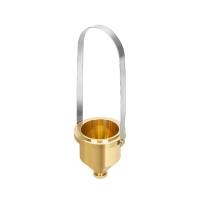
Viscosity should be measured 1-2 times per shift. If the viscosity increases by more than 10% of the original viscosity, solvent should be added in time. When adding solvent , stop the dip coating operation, after stirring evenly, measure the viscosity, and then continue the operation. Because the viscosity of the paint is too thin, the paint film is too thin; the viscosity is too high, the appearance of the paint film is poor, the waste is serious, and the remaining paint drips endlessly. Paint viscosity is controlled at 20~30s (coating -4 cups) or 20~100mPas
The working temperature of dip-coating is 15-30°C, the thickness of one-time dip-coating is controlled at 20-30um, and the thickness of the thermosetting coating that is not easy to wrinkle can reach 40um. Do not stir when dipping to avoid air bubbles in the paint. When the workpiece is dip-coated , the largest plane should be close to vertical, and the other planes should be 10°~40° from the horizontal, so that the remaining paint can flow completely on the painted surface, and try not to produce paint pockets or "bubbles".
③ The soaking time of wood products should not be too long, so as to prevent the wood from absorbing excessive paint solvent, resulting in slow drying and waste.
④ After dip-coating large objects, wait until the solvent is basically volatilized before sending them into the drying room. When inspecting, the paint is not sticky to the hand and has no fingerprints.
⑤ In order to prevent the solvent from spreading in the workshop and dust from falling into the paint tank, the paint tank should be protected. During non-working hours, small paint dipping tanks should be covered, and large paint dipping tanks should be drained of paint and cleaned with solvents at the same time. Ventilation equipment is required on the dipping tank to prevent the hazard of solvent vapor.