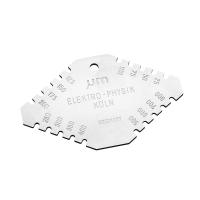
The coating used in various corrosive environments must reach the necessary thickness in order to effectively exert its anti-corrosion effect. The minimum thickness that needs to be achieved is usually called the critical thickness. The thickness of the anti-corrosion coating is usually larger than the critical thickness, generally 150-200 μm is appropriate, while the thickness of the anti-corrosion coating should be 250-300 μm.
How to control the thickness of the coating? In the past, people used to always control the thickness of the coating film by the amount of paint used, but often due to different construction methods or other conditions, even though the amount of paint used is the same, the thickness of the coating film is very different. Therefore, it is also necessary to measure the thickness of the dry coating film, but its value can only reflect the thickness of the coating film statistically and cannot be used to control the thickness of the coating film.
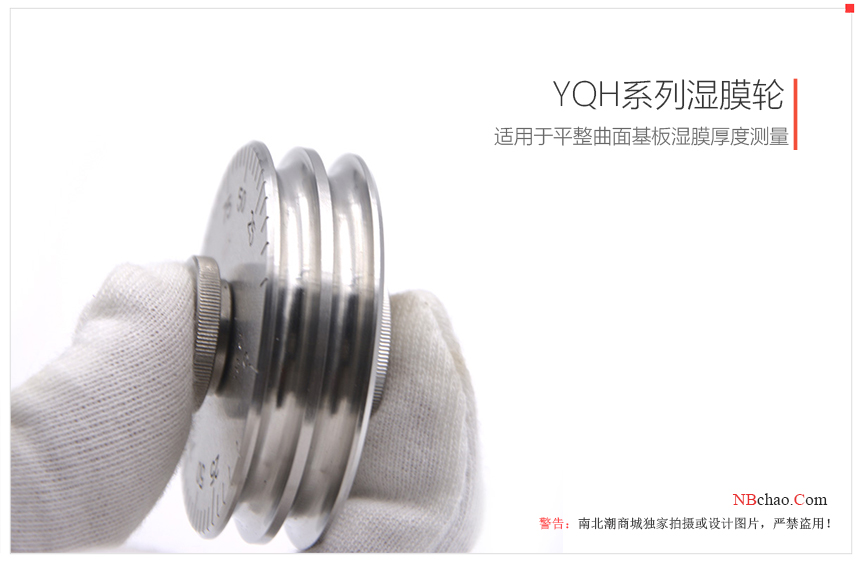
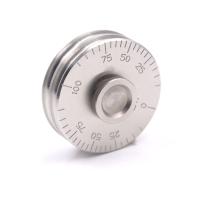
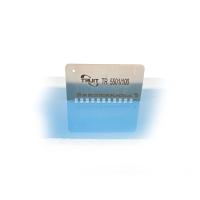
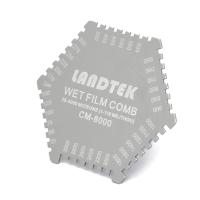
In order to accurately control the thickness of the coating film, the thickness of the wet film can be measured during construction. It is directly measured with a wet Film Thickness Gauge. If the thickness is found to be insufficient, another coat of paint can be applied until the required thickness is reached. In order to ensure the coating quality of anti-corrosion engineering, a paint film flaw Detector can be used to check whether there are tiny gaps in the paint film. The thickness of coatings for different purposes should be controlled roughly as shown in the table.
| Coating use | Thickness to be controlled/μm |
| General coating | 80~100 |
| decorative coating | 100~150 |
| protective coating | 150~200 |
| High Build Coating | 350 or more |
Coatings for marine environments with salt spray | 200~300 |
| Coatings impinged with aggressive liquids | 250~350 |
| Extra Heavy Duty Anti-Corrosion Coating | 300~500 |
| abrasion resistant coating | 250~350 |
During construction and application, the uneven thickness of the painted film or the thickness does not meet the specified requirements will have a great impact on the performance of the coating. Therefore, how to correctly determine the thickness of the paint film is an important part of the quality inspection. When selecting the method for measuring the thickness of the paint film, the occasion of the paint film to be tested ((laboratory or field), substrate (metal, wood, glass), surface condition (flat, rough (wet, dry) and other factors, in order to rationally use the testing equipment and improve the accuracy .