Coating drying time is divided into surface drying time and actual drying time, which have different measurement methods
①Determination of surface drying time
The commonly used methods are cotton ball blowing method, finger touch method [GB 1728-79 (88)] and small glass ball method (GB 6753.2-86).
The cotton ball blowing method is to put a degreased cotton ball on the surface of the paint film, and gently blow the cotton ball along the horizontal direction with your mouth. If it can be blown away and no cotton filaments are left on the film surface, the surface is considered dry. The finger touch method is to lightly touch the surface of the paint film with your fingers. If you feel a little sticky, but no paint sticks to your fingers, the surface is considered to be dry or called finger dry.

The small glass ball method is to pour about 0.5g of small glass balls with a diameter of 125~250um on the surface of the paint film at a height of 50~150mm. When the small glass balls on the paint film can be gently brushed off with a brush, they will not When the surface of the paint film is damaged, it is considered that the surface is dry, and the time is recorded. Judge whether it is qualified according to the product regulations.
| serial number | name | degree of dryness |
| 1 | dry to the touch | Sticky but not sticky to fingers |
| 2 | non-stick dry | The paint surface is not sticky and dusty |
| 3 | dry surface | Non-sticky paint surface, non-stick cotton ball |
4 | semi-hard dry | Gently poke the paint film with fingers without leaving finger marks |
| 5 | dry out | Fingers press the paint film strongly without leaving finger marks, and fingers quickly poke the paint film without leaving traces |
| 6 | Sand dry | dry to sandable condition |
| 7 | completely dry | In a completely dry state without defects, the mechanical properties of the paint film meet the technical specifications |
| 8 | Over-drying (baking temperature is too high or time is too long) | Slight over-drying, paint film loss of gloss, discoloration, mechanical strength decline Severe over-drying, the paint film is scorched, and the mechanical strength is seriously reduced |
②Measurement of actual drying time
The commonly used methods are filter paper pressing method, cotton ball pressing method, blade method and thick layer drying method. CHINA's national standard GB 1728-79 (88) has detailed regulations. In the ISO9117-1990 standard, the method of applying a load to the coating to determine .

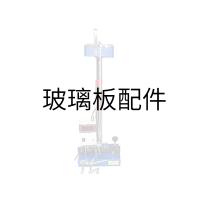
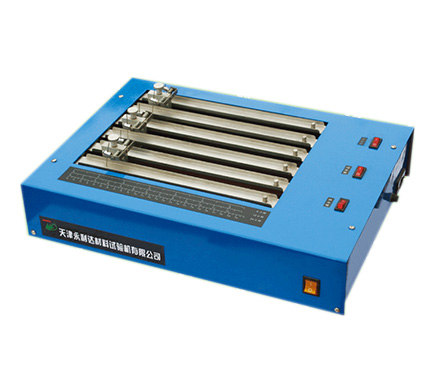
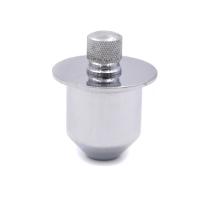
The filter paper method is to press a piece of qualitative filter paper on the paint film with a drying Tester (as shown in Figure 9-7) , remove the Tester after 30 seconds, turn the sample over and the filter paper can fall freely, which is considered to be actually dry. Similarly, remove the Tester and absorbent cotton balls after 30 seconds in the cotton ball pressing method. If there are no traces of cotton balls and loss of light on the paint film, it is actually dry. The blade method uses a safety blade and is suitable for thick coatings and putty films. The thick layer drying method is mainly used for insulating varnishes.
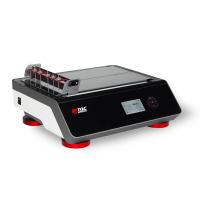
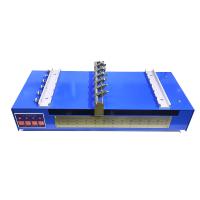
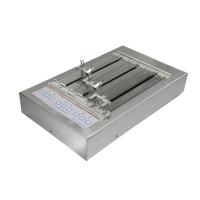
The drying of the paint and the formation of the coating film are a very slow and continuous process , so in order to observe the entire change in the drying process, an automatic drying time Tester can be used. Use the motor to drive the gear through the reduction box, and walk in a straight line on the paint film at a slow speed , and the whole process takes 24 hours. As the paint film gradually dries, the gear marks gradually change from deep to shallow until they disappear completely. The other is to use a motor to drive a funnel filled with fine sand , and move slowly on the sample plate coated with paint film, and the sand will continuously fall on the paint film to form linear sand traces, so as to measure the drying time in different stages. time needed. More professional ones use the needle tip to slowly draw a circle with a radius of 5cm on the paint film, and it takes 24 hours to draw a circle, so that the drying degree of the paint film over time can be observed on a small test panel area.