Dispersion is one of the important properties that can determine the quality of pigments used in paint coatings.
Pigments with poor fineness are difficult to knead with binders; paints made of such pigments are prone to layering and precipitation during storage and can quickly deteriorate (becoming stalks, so the paints are still used before use) Re-grinding is required).
Pigment dispersion has a great influence on the optical shield of the paint, such as the hiding power and tinting power of the pigment, as well as its oil absorption and touch resistance.
For example, the tinting strength of precipitated barium sulfate is greater than that of barite because of the greater dispersion of its particles.
Generally, the hiding power of the pigment increases with the increase of its particle dispersion. However, this relationship between hiding power and dispersion can only exist within certain limits. When the dispersion degree of the pigment continues to increase, its hiding power may decrease instead.
It is recognized that when the pigment particle size is equal to half of the light wavelength (about 0.2μ), the hiding power of the pigment is the greatest. As the particle size continues to decrease, the paint becomes translucent and may even become transparent.
Therefore, not only too large pigment particles have an impact on the hiding power of the paint, but too small particles can also affect the hiding power of the paint. For example, if there are particles larger than 10μ and smaller than 0.1μ in yellow ocher, the hiding power of the paint can be deteriorated. If the particle size is within this range, the larger the particle size, the better the quick-covering power of yellow ochre.
The degree of dispersion of pigments has great significance for products such as printing oil volume. Br Georgievsky pointed out that the largest particle of pigment in printing ink is about 0.5μ, while in advanced ink, its particle size can only change within a small range. Ordinary printing inks contain pigments with very large particles.
However, if the pigment contains more than 18% of particles with a size of 2~5μ, and more than 1% of particles with a size of 5~10μ, it can be considered that this is a poor quality printing oil.
In most cases, all pigments (especially natural mineral pigments) have multiple degrees of dispersion, that is, they can be regarded as a mixture of several single dispersion systems, and each system in the mixture is composed of composed of particles. Usually, these monodisperse systems are not composed of particles of a completely uniform size, but of particles that vary in size within a narrow range. When we describe the method of measuring the degree of dispersion later, we will rely on the concept of a single dispersion system.
When determining the degree of dispersion of pigments, attention needs to be paid to the tendency of most pigment particles to form aggregated particles. The finer the particles, the greater their tendency to aggregate. The secondary particles (aggregated particles) formed due to the aggregation of the original primary particles (single particles) exist in almost all pigments. These secondary particles often mask the real situation when performing pigment dispersion studies. Therefore, when making a more accurate determination of the dispersion of pigments, it is necessary to use substances that can prevent particle aggregation, such as surface active substances.
The degree of pigment dispersion has a great influence on the protective performance of the paint film.
Some authors believe that a size equal to the dry film thickness should be considered as the largest possible particle size of the pigment particles. If the particles are larger than the thickness of the paint film, the surface of the paint film will be uneven, and the pigment particles will not be completely buried in the paint film; under mechanical action, these protruding particles will be easily removed from the paint film (Excavation) Accordingly, the paint film becomes porous, thereby deteriorating its protective performance. Of course, at the same time, the characteristics of the film-forming substance should also be taken into consideration.
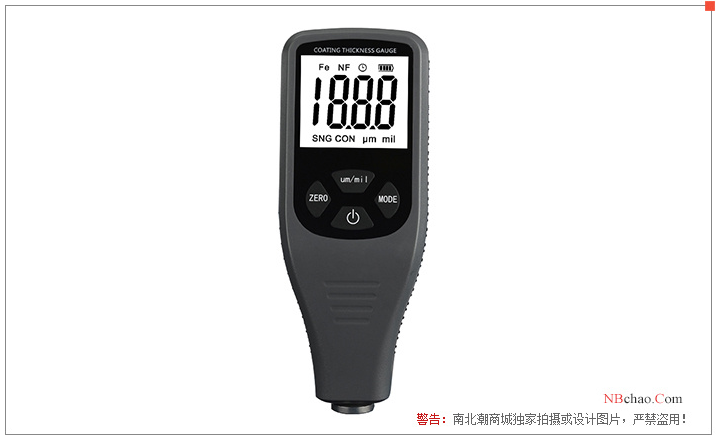
The smaller the space that is not filled by the pigment in the color paint, that is, the more solid particles in its unit volume, or in other words, the smaller the particles in the color paint, the stronger and more durable the color paint film is.
The smaller the pigment particles, the greater the water resistance and impermeability of the paint made from them. At the same time, it was also pointed out that pigments composed of particles of several different sizes have better protective properties than pigments composed of particles of the same size (ie, a single dispersion system).
The shape and structure of the particles also have a great influence on the pigment properties
According to the shape of the particles measured under the microscope, pigments can be divided into two types: single crystal (same shape) and polycrystalline (different shape). Most pigments are single crystal
It has been proved by research that oil-based base paint with coarse particles with sharp edges can form a water-permeable paint film. Technical workability and protective properties of pigments according to the works of HH Sapergier and HC Russudova
The energy varies with the shape of the particles. Chrome yellow composed of orthorhombic particles differs in performance from chrome yellow composed of monoclinic particles. The role of particle structure and shape becomes more apparent when the study of particle structure is performed using x-ray analysis in addition to microscopy.
For example, using x-ray analysis methods, it has been shown that some pigments that are amorphous under the microscope are actually crystalline. For example, iron oxide was originally considered amorphous under the microscope, but X-ray analysis has confirmed that it is composed of particles with a crystalline structure.
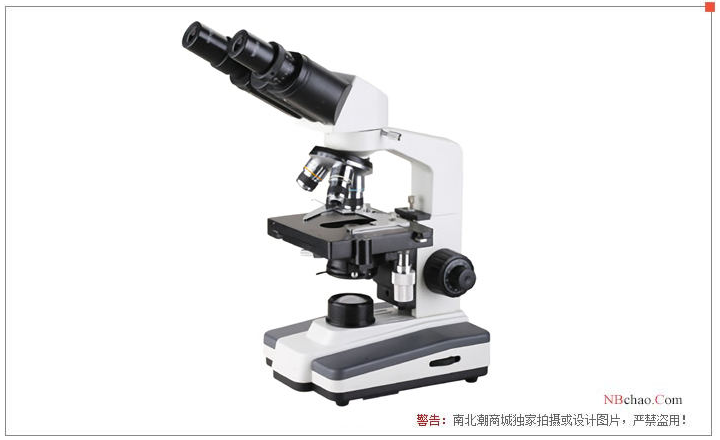
Some iron oxide samples with technical construction properties were analyzed by X-ray. It is proved that they are all composed of particles with crystalline structure, and the difference in their performance depends on the difference in the degree of dispersion of their particles.
The same pigment may have different crystal forms, and the properties of the paint can change accordingly. For example, a coating film made of zinc white with a large amount of colloidal particles is inferior to a coating film made of white pigment composed of relatively coarse needle-shaped zinc oxide particles in terms of resistance to atmospheric action. This phenomenon can be explained by the formation of brittle paint films by colloid-sized particles.
The relationship between pigment structure and its properties can be more accurately determined using electron microscopy.