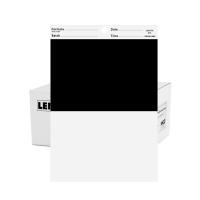
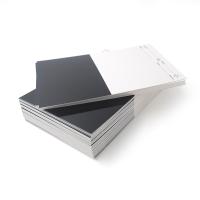
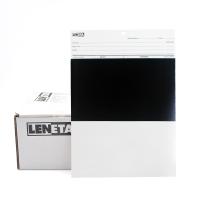
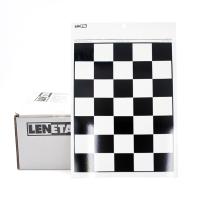
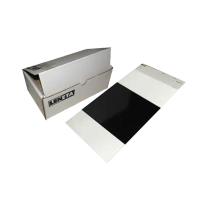
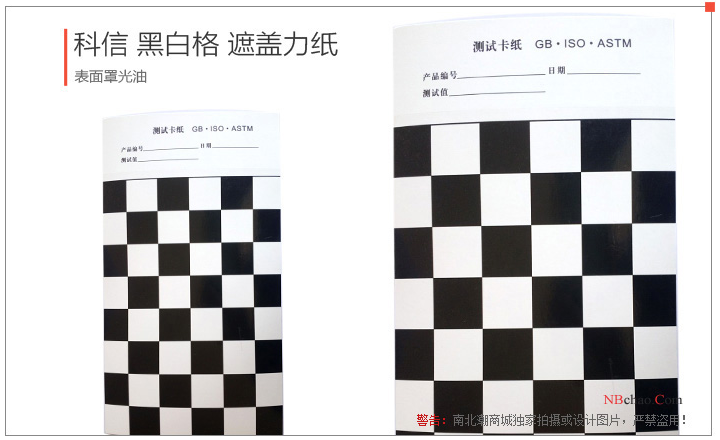
When the paint is painted into a uniform film, the background color on the inside and outside of the paint can no longer appear. This performance of the paint is called hiding power (covering power). This property is related to the optical phenomena that occur in pigmented paint films.
When a beam of light is projected on the colored paint film, part of the light is directly reflected back from the surface of the paint film, while the other part of the light is reflected in a diffuse state by the pigment particles in the colored paint film. The hiding power of a pigment directly depends on factors such as the amount of reflected light, the difference in refractive index between the pigment and the binder, and the size (dispersion) of the pigment particles.
The reflected light is the sum of the mirror images (opposite images) formed when the light passes from one medium to another. Therefore, the finer the pigment particles, the better the ability of a certain amount of pigment to cover the surface, because the finer the particles, the more mirror images (anti-images) reflected by a certain amount of pigment, and the greater the total amount of reflected light . But when the particle size becomes smaller than half the wavelength of light, the hiding power of the pigment begins to decrease. For example, if the particle size is less than 0.2 µ, a paint with very good hiding power cannot be produced.

Pigments with a particle size of about 1 μ have very good hiding power. When the particle size of the pigment is such that a certain area of the surface can be covered with a minimum amount of paint. For example, the particle size of zinc white is very close to this moderate size, so zinc white has better hiding power than lead white of the same weight, although lead white has a higher refractive index than zinc white.
Gurevich (Institute of Paint Science) pointed out that the hiding power of titanium dioxide increases gradually with the particle dispersion up to 0.3μ. With the increase of particles with a diameter less than 0.3μ in the pigment, the covering power will continue to decrease. In conclusion, it can be considered that the hiding power of highly dispersed pigments should decrease with decreasing particle size.
The hiding power not only depends on the size of the pigment particles, but also depends on the difference in size of each particle and the respective content of particles with different particle sizes in the pigment. Such as pigments with the same degree of dispersion. It can be deduced that there are free spaces not filled by particles in the cluster of spherical particles. In the case of a variety of pigments with different dispersion degrees (that is, when there are particles of different diameters), some particles with smaller diameters try to scatter in the middle of larger particles, resulting in the formation of denser pigment piles (pigment clusters). group), thus increasing its hiding power. It is generally believed that in order for the small particles to be dispersed among the large particles, the radius of the small particles should be at least 1/4 of the diameter of the larger particles. Therefore, pigments with various degrees of dispersion in such a ratio between large particles and small particles can form denser clusters (groups) in the paint film than pigments with the same degree of dispersion, so their covering power should also be greater. .
Gurevich considers this interpretation to be incorrect and states that the increased hiding power is due to the reduced oil absorption of the pigments in this case, thus also increasing the hiding power of the pigmented paint. When converted into dry pigments, its hiding power does not change with the density of particle clusters (groups) in the paint.
It should also be pointed out here that due to the result of grinding, the hiding power of the paint paste has increased. When grinding a pigment with a coarse dispersion, the hiding power of the color paste is improved because the large aggregates of the particles are dispersed. Highly dispersed pigments, the increase in hiding power is due to the disintegration of pigment agglomerates in the binder (oil), because when the pigment is mixed with the oil, the pigment is not in the form of individual particles but in aggregates. The lumps were scattered in the oil.
In addition to dispersion, hiding power also depends on the refractive index of the pigment. The larger the refractive index, the better the reflection of light and thus the higher the hiding power. The hiding power of a pigment depends on the difference in refractive index between the pigment and the binder (film-forming substance) surrounding the pigment particles. The larger the difference, the higher the hiding power.