According to different purposes and requirements, there are many testing methods for the peel strength of pressure zone rubber products. The following three types are commonly used (see Figure 2-2-2).
1.180°peel test and 90°peel test
It is mainly used to characterize the adhesion of pressure-sensitive adhesive products to hard or thick adherends. The 180°peel test is easy to operate and the dispersion of test results is small, so it is a test method commonly used in pressure-sensitive adhesive products (especially pressure-sensitive adhesive tapes). However, compared with various other peel test methods, the nature of the substrate of the adhesive product during the 180° peel test has a greater impact on the test results; some adhesive tapes (such as glass fiber reinforced adhesive tapes) are tested at 180° Bend and sometimes break. The 90° peeling test method is rarely used in practice because it requires a specially designed workpiece fixture with a relatively complex structure to keep the peeling angle at 90° throughout the test process. The 90° peel test is more suitable for theoretical research and analysis, because the properties of the substrate have less influence on the test results.
2.T peel test
It is mainly used to determine the adhesive force of pressure-sensitive adhesive products to soft or thin adherends or the adhesive force between the adhesive surfaces of adhesive products (ie, the adhesive force). This test method is not used in the routine performance characterization of pressure-sensitive adhesive products, and only some special adhesive products have such requirements. The adhesive peel test between the adhesive surfaces of adhesive products is also commonly used to quickly detect whether the adhesive force (ie, adhesive force) of the pressure-sensitive adhesive on the substrate is sufficient. If the pressure-sensitive adhesive peels off from the substrate after several times of adhesive peeling tests, it is necessary to further improve the adhesion of the pressure-sensitive adhesive product.
3. Cylinder Peel Test
Similar to the climbing drum peel test for honeycomb sandwich panels. The test requires a specially designed workholding fixture that rotates the cylinder continuously to maintain a consistent peel angle. Using a roll of adhesive tape instead of a cylinder, the unwinding force of the tape can be determined by such a peel test. Unwinding force, especially fast unwinding force is an important adhesive property of pressure sensitive tape.
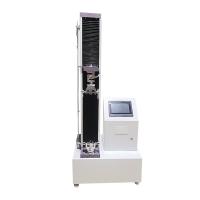
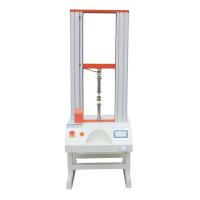
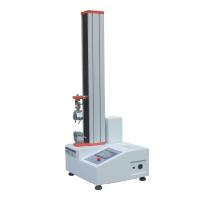
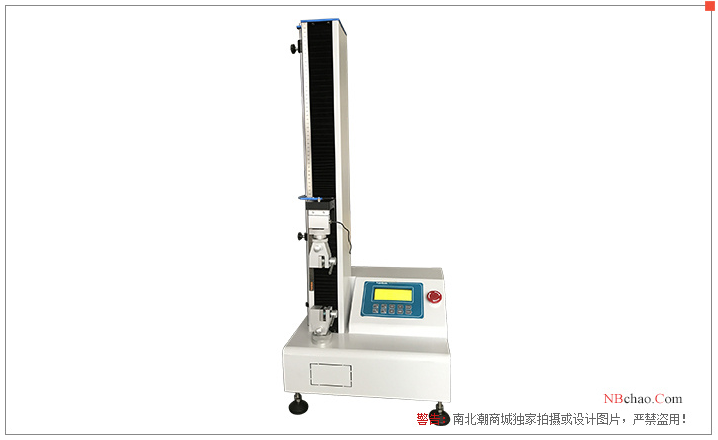
The above peel strength tests can be carried out by ordinary mechanical Tensile Testing Machine, but it should be equipped with a drawing device that can automatically record the peel load. Because the testing machine without a drawing device can only measure the maximum value of the peel strength, and the automatic drawing device can draw the change of the peel strength during the entire test process—that is, the peel strength curve—from which the maximum value can be measured. Values, and many other information such as average values and steady-state values can also be obtained. At present, most research institutes and manufacturers of pressure-sensitive adhesive products in CHINA use the intelligent electronic Tensile Testing Machine and electronic peeling testing machine produced and sold by Jinan Languang Electromechanical Technology Development Center. The latter is specially used for the 180° peel strength test of pressure-sensitive adhesive products, and the maximum value and average value of the peel strength can be obtained.