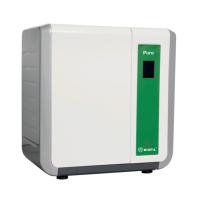
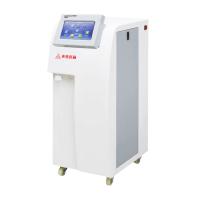
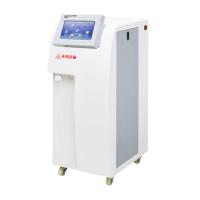
With the emergence of laboratory ultrapure water machines, most laboratories have bid farewell to the era of traditional electric distilled water or purchasing water outside. The laboratory ultrapure water machine relies on its stable water quality, effective, environmentally friendly and fully automatic control features. Has been recognized by most chemical analysts in the laboratory. However, due to numerous ultrapure water equipment brands and different functional characteristics, it is difficult for ordinary laboratories to know which ultrapure water machine brand is easy to use and which is more economical.
In fact, choosing a brand can in turn guarantee the quality and service of a big brand. For laboratories, a common reagent is water, which is usually used throughout our experiments. The stability and purity of water quality are important, so we are very important to the water quality requirements in the purchase process. Correct selection of the correct pure water instrument can help researchers reduce uncertain factors in the experiment, improve the quality of the experiment, and avoid many unnecessary troubles.

Click on the picture to view the product
Before choosing a suitable ultrapure water machine, we should first understand what kind of water our experiment needs. Usually we divide laboratory pure water into 3 grades: grade I ultrapure water, grade II high purity water and grade III pure water. Currently commonly used water quality standards include ASTM (American Society for Testing and Materials) standards, CLSI (Clinical Laboratory Standards Committee) standards, and national laboratory pure water standards GB/T6682. Then, according to the different application fields of the experiment, choose different levels of water quality, and then choose the ultrapure water machine that meets the requirements according to the level of pure water to be selected and the daily water consumption.
According to experience, you can follow the following purchasing principles, corresponding to it.
Choose laboratory ultrapure water machine according to the experimental content
There are inorganic experiments and organic experiments. Inorganic experiments only need water quality with a resistance greater than 18 megohms, while organic experiments usually need to remove organic substances in the water. Therefore, in addition to resistance greater than 18 megohms, an indicator of total organic carbon is also required. If it is a biological experiment, the bacteria in the water should also be removed.
Choose laboratory ultrapure water machine according to the type of instrument
Customers can choose domestic laboratory ultrapure water machines according to the types of instruments used. The resistance of the water in the liquid phase is greater than 18 megohms. And to remove organic matter. Atomic absorption, atomic fluorescence, and environmental monitoring instruments should use water greater than 18 megohms. In addition to the resistance greater than 18 megohms, the water used for life science instruments such as PCR needs to be sterilized, organic matter removed, and heat source removed.
Choose laboratory ultrapure water machine according to the current water source
If the customer's current water use is qualified, they can also inform the domestic laboratory ultrapure water machine manufacturer of the source of the pure water, and their technicians will suggest the corresponding specifications and models according to the situation.
The above three principles are based on actual application experience and can be used for reference. However, for accurate model selection, try to provide detailed water quality parameters, such as electrical resistance, trace elements, bacteria, and total organic carbon levels.
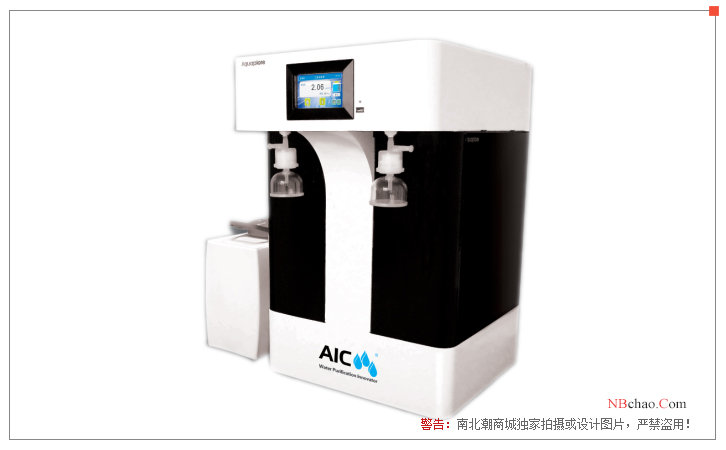
When purchasing an ultra-pure water machine, the customer must provide the manufacturer with the water quality of the raw water, such as a lot of sediment, high hardness, groundwater, etc. The process of the domestic laboratory ultra-pure water machine is determined according to the quality of the raw water. , There is a lot of sediment, a pretreatment device needs to be added, the hardness is high, a softening device needs to be added, and the salt content is high, a two-stage reverse osmosis process must be used. If you choose an ultrapure water machine with pure water as the water source, you only need to provide the water quality requirements and water consumption.
Other factors affecting the purchase of laboratory ultrapure water machines
In addition, we usually have to consider the following factors:
1. Water quality monitoring
Water quality monitoring is an important guarantee for the quality of produced water. High-quality pure water instruments need to include real-time online conductivity (resistivity) Detectors and temperature monitoring. At present, the use of high-precision conductivity meters (or resistivity meters) to measure the ion level of ultrapure water has become the standard configuration of ultrapure water devices. It should be noted here that because the conductivity value to be measured is very low (the resistivity is very large), it is necessary to pay attention to whether the accuracy of the conductivity meter can meet the requirements. Generally, the cell constant of the conductivity meter is required to be 0.01cm-1 ( Participate in relevant requirements of GB/T6682). And can accurately display the resistivity of temperature compensation. At the same time, it also has an automatic alarm function for unqualified water quality, and the water quality alarm parameters can be changed according to the actual needs of users.
2. Microbial (bacteria) indicators
Microbial contamination is a problem that is often overlooked. Once microbial contamination occurs, it will quickly spread to the entire domestic laboratory ultrapure water system, and gradually form a bacterial film, which is difficult to remove. They continuously release organic matter and ions into the water, causing secondary pollution of pure water. Using such water for experiments will have a great influence on the results of the experiments. For example, ghost peaks appear during ion chromatography and effective liquid phase analysis.
In order to prevent microbial contamination, we should choose domestic laboratory ultra-pure water equipment with no dead volume, circulating pipelines, ultraviolet sterilizers, and terminal sterilization filters, which can greatly inhibit the growth and development of microorganisms in the system. proliferation.
3. Simple and convenient to use
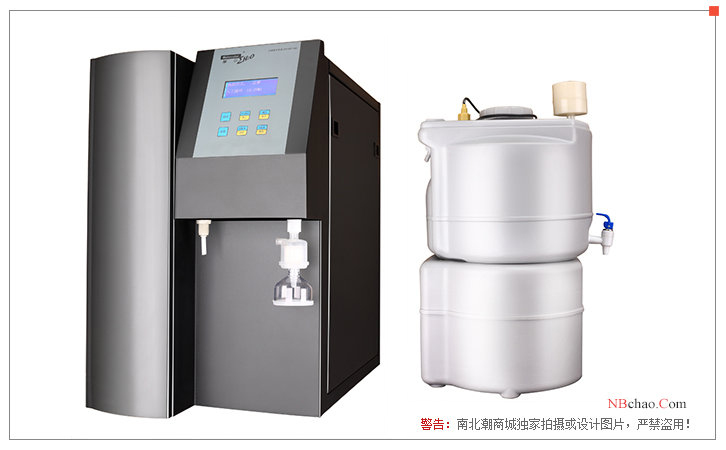
Whether an instrument is convenient to use is an important symbol to measure the quality of an instrument. Many times we hope that the instrument is as simple and convenient to use as a point-and-shoot camera: simple and clear operation interface, no overly complicated control system, and not too many parameter settings. As for the ultrapure water machine, whether it is convenient to use depends on whether the domestic laboratory ultrapure water instrument can allow the operator to only operate the water key without other additional operations.
4. Easy maintenance
The ion exchange resin, activated carbon, terminal filter and other filter columns used in the laboratory ultrapure water machine all have a certain service life, and we need to replace them regularly to ensure that the water quality meets the standard. Many people think that ion exchange resin can be continuously regenerated and recycled, but it is not. Expired or regenerated resins will release high concentrations of pollutants into the water, and repeated use of regenerated resins will also cause damage to the resin particles, releasing particles and organic matter into the water, and accelerating the growth of microorganisms. Therefore, the early warning function of the instrument itself is very important. It can remind you to replace the consumables before the consumables are exhausted and the water quality effectively deteriorates.