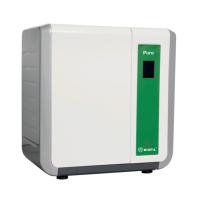
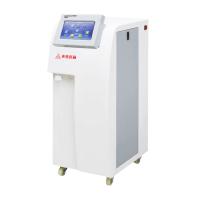
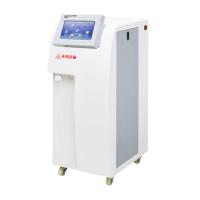
The reverse osmosis membrane in the ultrapure water machine has always been the core component of the ultrapure water equipment, but the more such a core component, the greater the impact on the whole when there is a problem. Generally, the reason for the occurrence of the reverse osmosis membrane is nothing more than It is a clogging problem. Because some old-fashioned ultrapure water machines cannot perform backwashing, the pollutants on the reverse osmosis membrane accumulate more and more, making the membrane pores all blocked and the water cannot be discharged. Finally, the membrane is blocked due to the infinite pressure of the pump. breakdown, resulting in damage. Some common causes of reverse osmosis membrane clogging are described below :
1. Chemical dirt
In the raw water of ultrapure water equipment, there are a large number of inorganic ions. Before the raw water is untreated, the ion concentration usually does not reach saturation and scale does not form. But when the raw water passes through the reverse osmosis system and the source water is calculated based on the recovery rate of the 75% reverse osmosis system, the concentrated water has been concentrated 4 times. At this point the ion concentration of the water has reached its saturation level. It will crystallize and form scale, which is the problem of chemical Graduation in ultrapure water equipment clogging problems.

2. Adsorption of pollution
Some well water sources belonging to the range of brackish water generally contain low-priced iron ions and manganese ions, which have certain reducing properties. The main cause of membrane fouling caused by such water sources is the colloidal particle fouling produced by iron, aluminum, manganese, etc. on the membrane surface. Blocking. When O2 enters the feed water containing Fe2+, the high alkalinity water source forms iron carbonate and iron silicate, the reducing bacteria are mixed in, the formation of iron scale is faster and faster, and the colloidal iron caused by the conversion of iron flocculant. The characteristic performance after metal pollution is that the permeate flow decreases and the pressure difference increases.
3. Biofouling
We all know that in addition to a large number of inorganic ions in water, there are also a large number of microorganisms, especially surface water, which has a high microbial content. If we use natural water as raw water for ultrapure water equipment, a large number of microorganisms will enter the reverse osmosis system, and the environment we need to use is generally 20 degrees Celsius to 40 degrees Celsius, which is very suitable for microorganisms. Microorganisms will multiply rapidly and grow to high levels in this environment as they grow. As the microbial content increases, it becomes a problem of biofouling. For the biofouling problem, we need to treat the raw water in the pretreatment stage to minimize the microbial content of the equipment entering the ultrapure water. At the same time, we also need to regularly disinfect the equipment.

4. Colloidal contamination
Both groundwater and surface water contain iron, aluminum, silicon, organic matter and other substances, which form colloids with coagulants, coagulants, scale inhibitors, etc. added during pretreatment and deposit on the membrane surface to cause colloidal pollution. Colloid pollution is difficult to deal with because it has the same charge, is relatively stable, and is not easy to settle. However, when the RO membrane filters water, it is trapped on the membrane surface, forming hydrates, and easily contaminating the membrane, resulting in a decrease in water flux. Generally, this tendency is evaluated by the pollution index (SDI). Generally, when SDI<3, no such fouling will occur on the membrane surface; when SDI>3, fouling will occur.
5. Suspended microparticles
The security filter will cause leakage of filter media, corrosion debris and foreign matter (such as small core wool) due to "short circuit" or defects, or when the reverse osmosis initial flushing is not effective, the membrane elements may be polluted and the water inlet channel will be blocked. And the formation of amorphous precipitates on the membrane surface. But this is rarely the case.

6. Water hammer phenomenon
For the reverse osmosis system, due to the unreasonable design, there is a large amount of air in the membrane shell filled with the membrane at the initial debugging stage. When the liquid to be treated enters the membrane shell instantaneously, due to the compressibility of the air, it is impossible to completely discharge When the air reaches a certain pressure in the membrane shell, it will burst and release suddenly, causing the reverse osmosis membranes to collide, squeeze and move with each other in the membrane shell, resulting in "water hammer" phenomenon. In the reverse osmosis system, the hazard of water hammer is to cause irreversible damage to the reverse osmosis membrane elements. Of course, this phenomenon can also be avoided through perfect design.
7. Other
Hydrocarbons and silicone-based oils and fats cover the surface of the membrane, causing the membrane to be polluted; membrane hydrolysis, organic solvents, and oxidizing substances can also cause essential changes in the membrane material.