How is the coating graded by the number of defects?
Answer: Prepare 3 samples according to the standard of GB/T 1765-89, make original records, keep 1 sample as a comparison sample, and 2 samples for testing. The test results are individually and comprehensively rated. This paper mainly conducts individual ratings.
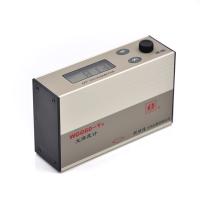
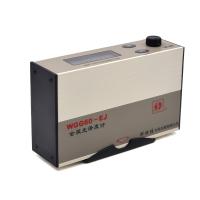
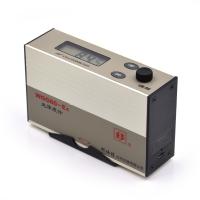
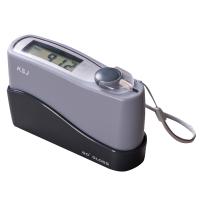
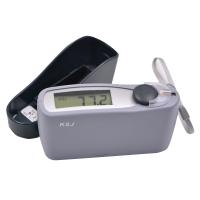
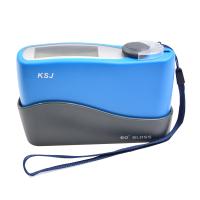
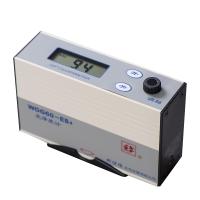
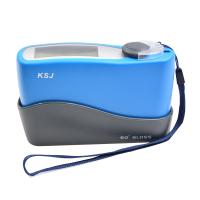
(1) Lost light. According to the GB/T1743-89 standard, measure the gloss of the coating film after aging, and compare it with the original gloss, and express the degree of gloss loss by the percentage of gloss loss.
| grade | Gloss loss percentage/% |
| 0 | <5 |
| 1 | 6~20 |
| 2 | 21~50 |
| 3 | 51~80 |
| 4 | >80 |
(2) Discoloration. According to GB/T9761-88 standard colorimetry and according to GB 250-64 standard to determine the degree of discoloration of the sample color relative to the original sample color, the grades are shown in the table below.
| grade | The degree of discoloration is according to the level of GB 250-64 standard |
| 0 | 5 |
| 1 | 4 |
| 2 | 3 |
| 3 | 2 |
| 4 | 1 |
(3) Pulverization. Rub back and forth twice on the surface of the sample with your fingers (the length of the scratch is 5-7cm), and grade it according to the table .
| grade | Pulverization |
| 0 | Powder free |
| 1 | Wipe the surface of the sample vigorously, and stick a small amount of pigment particles on your fingers |
| 2 | Wipe the surface of the sample vigorously, and there are many pigment particles sticking to the fingers |
| 3 | Lighter force, more pigment particles stuck to fingers |
| 4 | Gently wipe, the whole finger is covered with a lot of pigment particles or exposed |
(4) Cracks. Cracks are rated according to the table below .
| grade | crack condition |
| 0 | no crack |
| 1 | It is faintly visible by visual inspection, but clearly visible under a 4x magnifying glass; the area of tiny cracks visible by visual inspection is only less than 10% |
| 2 | It can be seen that the area of tiny cracks is above 11%; the area of deep cracks is below 11% |
| 3 | More than 11% of deep cracks, less than 10% of cracks reaching the bottom layer |
| 4 | More than 11% of the cracks reach the bottom layer |
(5) Blistering. Lathering was rated according to the table.
| grade | Blistering |
| 0 | no bubbles |
| 1 | sparse a few air bubbles |
| 2 | Densely distributed in bubbles |
| 3 | Bubbles |
| 4 | dense distribution of bubbles |
(6) Rust. Rust is rated according to Table 7.
| grade | Rusty condition | |
| Rust less than 1mm/piece | Rust point greater than 1mm/piece | |
| 0 | no rust | no rust |
| 1 | ≤10 | ≤5 |
| 2 | 11~15 | 6~9 |
| 3 | 16~19 | 10~11 |
| 4 | ≥20 | ≥12 |
(7) mildew. Long mildew is rated according to the table .
| grade | Mold condition |
| 0 | No mildew |
| 1 | The moldy spots are about 1mm in diameter and sparsely distributed |
| 2 | The diameter of the mildew spot is about 2mm, or it spreads and grows in the range of 2mm, and the distribution is sparse |
| 3 | Mildew spots with a diameter of about 1 mm are densely distributed on the surface, and those with a diameter of about 2 mm are medium densely distributed |
| 4 | Mildew spots with a diameter of more than 5mm or the surface densely covered with mildew spots and filaments |
(8) SPOT. The spots are rated according to the table.
| grade | spot growth status |
| 0 | no spots |
| 1 | A few spots on the surface have little effect on the appearance |
| 2 | Sparse spots on the surface that interfere with appearance |
| 3 | Dense spots on the surface directly affect the appearance |
| 4 | Dense spots on the surface seriously affect the appearance |
(9) Shedding. According to the size of the shedding area, see the table below.
| grade | Shedding area/% |
| 0 | no shedding |
| 1 | ≤0.5 |
| 2 | 0.6~1 |
| 3 | 1.1~3 |
| 4 | ≥3.1 |
(10) CONTAMINATION. Staining was rated according to the table.
| grade | Effect of staining degree on appearance |
| 0 | Unsullied |
| 1 | Very light staining, little effect on appearance |
| 2 | Slightly stained, detracting from appearance |
| 3 | Moderate tarnish, directly affects the appearance |
| 4 | Severely stained, seriously affecting the appearance |
Note: When evaluating individual grades, the damage caused by the periphery of the sample and the plate hole within 5mm, or external factors are not included.